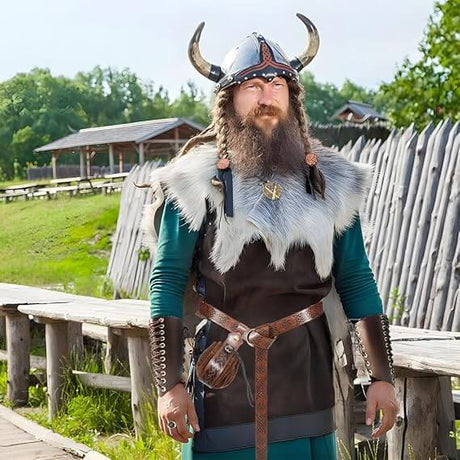
When we imagine the ancient North, our minds often fill with the sounds of clashing steel and the roar of the North Sea. We think of warriors whose legacies are written in blood and iron. However, there is another power in Asgard that is just as sharp as a sword and far more enduring: the power of the word. At the center of this linguistic mastery stands Bragi, the Norse god of poetry, eloquence, and music.
For many in the United States today, we are rediscovering the vital importance of storytelling. From the surge in podcasting to the resurgence of spoken-word poetry, we are realizing that whoever tells the best story effectively shapes reality. Bragi is the divine ancestor of this movement. He is the one who takes the raw, chaotic experiences of the gods and refines them into verses that can survive the passage of centuries.
In this comprehensive guide, we will explore the mystery of Bragi, the "Long-Bearded One" whose tongue is carved with runes of wisdom. We will look at his relationship with the Mead of Poetry, his role as the greeter of fallen heroes, and why he remains the patron of every writer, speaker, and dreamer.
The Origin of Eloquence: Who is Bragi?
Bragi occupies a unique space in the Norse pantheon. While some scholars debate his origins—some suggest he may have been a historical Viking poet elevated to godhood—in the myths, he is the son of Odin. This lineage makes perfect sense. Odin went to extreme lengths to steal the Mead of Poetry from the giants, and Bragi serves as the living embodiment of that stolen gift.

The Origin of Eloquence: Who is Bragi?
The Runes Upon His Tongue
The most striking physical description of Bragi isn't his armor or his strength, but his tongue. It is said that runes are carved directly into it, granting him the ability to speak with a level of beauty and persuasion that is literally supernatural. He is the master of "Skaldic poetry," a complex and intricate form of verse that requires both immense intellect and creative flair.
I remember attending a lecture by a linguist in Boston who spoke about the "weight" of words. She argued that certain phrases have the power to change a person's physical heart rate. That is the essence of Bragi. He doesn't just relay information; he transmits emotion. He is the god who ensures that the deeds of the past are never forgotten, turning temporary victories into eternal legends.
Bragi by the Numbers: The Impact of Poetry and Legacy
While we cannot measure a god's power in a lab, we can look at the cultural and historical "data" that surrounds the role of the poet in the Norse world and how it translates to modern interests.
| Metric | Historical Significance | Modern American Relevance |
| Cultural Role | The Skald (Court Poet & Historian) | The Content Creator / Journalist |
| Linguistic Power | "Brage-full" (The Toasting Cup) | The "Bragging" Rights of achievement |
| Social Function | Legal & Moral Record-Keeper | Social Media / Public Record |
| Artistic Domain | Alliterative Verse & Kennings | Songwriting & Screenwriting |
As the table shows, the influence of Bragi is woven into our very language. The English word "brag" is often thought to derive from his name and the "Bragarfull," the cup over which warriors would make oaths and recount their deeds. In the U.S., where personal branding and storytelling are key to success, Bragi is a highly relevant archetype for anyone trying to find their voice.
The Mead of Poetry: The Source of the Song
To understand Bragi, one must understand the Mead of Poetry. This magical substance was created from the blood of Kvasir, the wisest being who ever lived. Anyone who drank it would become a poet or a scholar. Odin’s theft of this mead from the giant Suttung is one of the most famous heists in mythology.
The Consumption of Wisdom
Bragi is effectively the steward of this mead. He is the one who pours the inspiration into the hearts of mortals. This connects to a universal human experience: the "flow state." Whether you are a programmer in Austin or a musician in Nashville, that moment where the ideas seem to come from somewhere outside of yourself is the moment Bragi is leaning over your shoulder.
The presence of Bragi suggests that creativity isn't just a hobby; it is a divine spark. It is the only thing that can bridge the gap between the world of the giants (raw nature) and the world of the gods (consciousness). When we speak our truth clearly and beautifully, we are performing a ritual that is as old as the world tree itself.
The Greeter of Valhalla: Bragi’s Social Duty
Bragi doesn't just sit in a corner and write. He has a very specific and public job in Asgard. Whenever a great king or a legendary warrior dies in battle and enters the gates of the afterlife, Bragi is the one who stands to greet them.

The Greeter of Valhalla: Bragi’s Social Duty
Preparing the Stage for Heroes
He prepares the hall, ensures the mead is flowing, and—most importantly—composes the poems that welcome the fallen home. He is the master of ceremonies. This role tells us that in the Norse mind, a hero’s journey wasn't complete until it had been turned into a song. Recognition was the final step of the warrior's path.
This resonates deeply with the American tradition of eulogy and memorial. We see this in our own "tales" of national heroes. We don't just remember the dates they lived; we remember the stories told about them. Bragi reminds us that we have a duty to honor the excellence we see in others by speaking about it. Silence is the enemy of legacy.
Addressing the Counterargument: Is the Pen Truly Mightier than the Sword?
A common counter-perspective in the study of Norse myths is that Bragi is a "lesser" god because he doesn't engage in the violent physical feats of Thor or Tyr. In a culture that famously valued martial prowess, is the poet really that important?
The answer lies in the concept of dórr, or "fame" and "glory." The Vikings believed that your soul might go to Valhalla, but your "name" stayed on Midgard. If there were no Bragi, there would be no memory of the warriors. A hero who is forgotten is a hero who has truly died.
Therefore, Bragi is actually the most dangerous god in the pantheon. He controls the narrative. He decides who is remembered as a saint and who is remembered as a villain. In our modern "cancel culture" or "hero-worship" cycles, we are seeing the raw power of the Bragi archetype. The sword can kill a man, but the word can kill an idea—or make it immortal.
Real-Life Examples: The Presence of Bragi in Modern Life
We can see the spirit of the Silver-Tongued God in several areas of our current society:
- The Power of the Speechwriter: High-level politicians in D.C. rely on "modern Bragis" to craft messages that can move an entire nation. The right speech at the right time is as effective as any policy.
- The Songwriter’s Room: In the music industry, the person who can turn a heartbreak into a universal anthem is tapping into the Mead of Poetry. They are translating human pain into divine art.
- The Trial Lawyer: A lawyer who can weave a compelling story for a jury, using eloquence to seek justice, is utilizing the runes carved on Bragi’s tongue.
I once worked with a non-profit leader who was trying to raise money for environmental protection. She struggled until she stopped presenting spreadsheets and started telling stories about the specific families who lived on the land. Her donations tripled. She had found her "Inner Bragi." She realized that facts provide the skeleton, but story provides the skin and the soul.
The Future of Storytelling and the Digital Word
As we look toward a future dominated by Artificial Intelligence and automated content, the human touch of Bragi becomes even more precious. We are entering an age where information is cheap, but meaning is expensive.
| Future Trend | Likelihood | The Bragi Perspective |
| AI Storytelling | Very High | Machines can mimic the form, but not the "soul" of the poet. |
| The Return of Oral Tradition | High | A shift toward live performance and authentic voice. |
| Virtual Valhallas | Moderate | Using digital spaces to archive and celebrate human legacy. |
The gods of the future will be the ones who can maintain their authenticity in a world of mirrors. Bragi stands as a model for this. He doesn't just repeat words; he creates truth through beauty.
How to Invoke the Eloquence of Bragi
You don't need a golden harp or a long beard to bring Bragi’s energy into your daily life. Here are a few ways to cultivate your own silver tongue:
- Read Out Loud: The Norse myths were meant to be heard, not just read. Feel the weight of the words in your mouth.
- Practice the Art of the Toast: The next time you are at a dinner or a wedding, don't just mumble a few words. Take the time to craft a "Bragarfull"—a speech that honors the person you are toasting.
- Journal Your Victories: Don't let your own "heroic deeds" go unrecorded. Write down your wins, no matter how small. Turn your life into a saga.
- Listen More Than You Speak: To be a great poet, Bragi first had to be a great listener. He had to understand the world before he could describe it.

How to Invoke the Eloquence of Bragi
Conclusion: The Poet of the Gods
Bragi is the reminder that our voices are our most powerful tools. He is the god who stands between the silence of the grave and the eternal echo of a life well-lived. He teaches us that while the body is temporary, the story is forever. He is the guardian of the Mead, the greeter of heroes, and the master of the runes.
When we find the courage to speak our truth, when we take the time to write a poem, or when we simply tell a story to a child, we are walking in the footsteps of the Long-Bearded God. We are participating in the ancient work of making sense of the world through the magic of language.
In the end, Asgard is held together not just by the walls built by giants, but by the verses composed by Bragi. He ensures that the glory of the gods and the bravery of humans live on, echoing through the halls of history as the most powerful and moving tales of valhalla.