In the vast, frost-bitten landscapes of Norse mythology, where gods command the elements and giants reshape the earth, transportation requires something far more powerful than a standard beast of burden. While Thor crosses the skies in a chariot pulled by goats, the All-Father, Odin, rides upon the most magnificent creature ever to gallop through the Nine Realms. This is Sleipnir, the legendary eight-legged horse whose speed knows no equal and whose steady hooves can traverse the air, the sea, and even the dark borders of the underworld.
For many readers in the United States, the image of a horse with eight legs might seem like something out of a modern sci-fi fever dream. However, in the context of ancient Scandinavian belief, Sleipnir is a masterpiece of mythic engineering. He represents the ultimate hybrid of grace and power, a loyal companion to the king of the gods, and a symbol of the fluid boundaries between life and death. He is not just a pet; he is a cosmic vehicle.
In this in-depth exploration, we will dive into the truly bizarre origins of Sleipnir, examine the unique biology that allows him to outrun the wind, and analyze why his presence was essential for the gods to maintain their grip on the universe. From the walls of Asgard to the gates of Hel, the story of this stallion is a journey into the heart of Norse wonder.
The Bizarre Birth of a Legend: Loki and Svadilfari
To understand Sleipnir, one must first understand the chaotic circumstances of his birth. Most legendary creatures are born from traditional unions or divine manifestations, but the origin of Sleipnir is one of the most unusual anecdotes in the entire Norse canon. It begins with a high-stakes construction project and a very clever, very desperate trickster god.

Sleipnir: The Eight-Legged Stallion and the Ultimate Steed of Odin
The Giant Builder's Wager
When the gods were first establishing Asgard, an unnamed builder approached them and offered to construct a wall so strong that no giant could ever breach it. His price, however, was steep: he demanded the sun, the moon, and the hand of the goddess Freya in marriage. The gods, urged by Loki, agreed to the deal on the condition that the builder finish the wall in a single winter without the help of any man.
The builder accepted but asked to use his stallion, Svadilfari. To the gods' horror, Svadilfari was a beast of incredible strength, hauling massive boulders at a rate that suggested the wall would be finished on time. Fearing the loss of Freya and the celestial lights, the gods threatened Loki, insisting he find a way to sabotage the work.
Loki’s Transformation
Loki’s solution was as creative as it was strange. He transformed himself into a beautiful mare and lured Svadilfari away into the woods. Without his horse, the builder failed to meet the deadline and was subsequently dealt with by Thor. However, months later, Loki returned to Asgard with a gray, eight-legged foal in tow. This foal was Sleipnir, the offspring of Loki and the stallion Svadilfari.
This story highlights the fluid nature of the Norse gods. Loki, acting as the mother, produced a creature of such purity and power that even the All-Father couldn't help but claim him as his own. It is a reminder that in the world of myth, greatness often emerges from the most unconventional and chaotic circumstances.
Sleipnir by the Numbers: The Statistics of a Supernatural Steed
While we cannot put Sleipnir on a modern treadmill, we can look at the comparative "data" provided by the Poetic Edda and the Prose Edda to understand his standing among other mythic creatures.
| Attribute | Sleipnir’s Data | Comparative Context |
| Leg Count | 8 | Double the capacity of a standard horse |
| Parentage | Loki (Mother) & Svadilfari (Father) | A unique "God-Beast" hybrid |
| Speed | Faster than the wind | Capable of outrunning the fastest giants |
| Terrain | Land, Air, Sea, Underworld | Total multi-environment traversal |
| Symbolism | Shamanic travel & transitions | Linked to the "Eight-Spoked Wheel" |
As the table shows, Sleipnir is a singular entity. In the United States, we often use the phrase "horsepower" to measure the strength of our engines. If we were to apply that to Sleipnir, his rating would be off the charts. He is the original high-performance vehicle, designed to move between the physical and spiritual worlds with seamless efficiency.
The Symbolic Power of Eight Legs
Why eight legs? This is the question that most frequently puzzles modern readers. In the ancient world, the number eight held deep significance. It often represented the eight directions of the compass or the eight spokes of a wheel, signifying completeness and universal movement.
The Shaman’s Vehicle
Many scholars, including experts in Indo-European mythology, suggest that Sleipnir represents the "shamanic horse." In ancient northern traditions, a shaman would often enter a trance to travel to other worlds. This journey was frequently visualized as riding an eight-legged horse, which was actually a metaphor for a coffin being carried by four men (eight legs in total).
Therefore, Sleipnir is not just a fast animal; he is a bridge between the living and the dead. This is why he is the only horse capable of carrying Hermod down to the underworld to attempt the rescue of Baldr. When Odin rides Sleipnir, he isn't just traveling geographically; he is traveling dimensionally. He is the master of all realms because his steed can touch every corner of existence.
Sleipnir in Action: The Ride to Hel
The most gripping real-life example of Sleipnir’s capability occurs after the death of the god Baldr. The gods were desperate to negotiate for his return from the goddess Hel. Hermod, the messenger of the gods, volunteered for the mission, and Odin lent him his prized horse for the journey.
Traversing the Untraversable
For nine nights, Hermod rode Sleipnir through valleys so deep and dark that he could see nothing. They reached the river Gjöll and the golden bridge, eventually arriving at the gates of Hel. The gates were locked and formidable, but Sleipnir did not hesitate. With a single, powerful leap, the eight-legged horse cleared the gates entirely, landing safely on the other side.
I remember talking to a veteran rider in Kentucky who described the feeling of a horse "gathering" itself for a jump. He said there is a moment of pure weightlessness where the animal becomes more than just muscle and bone. Multiply that feeling by a thousand, and you begin to understand the mythic power of Sleipnir. He is the creature that makes the impossible jump look easy. He is the ultimate symbol of overcoming the finality of the grave.
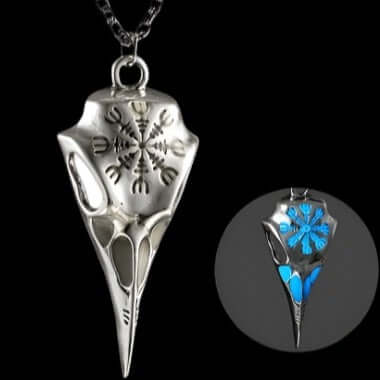
- See more: The Raven
Addressing the Counterargument: Is Sleipnir a Monstrosity?
In some interpretations of mythology, creatures that are born from unnatural unions are seen as "monsters." Loki’s other children—the Fenris Wolf, the Midgard Serpent, and Hel—are all portrayed as antagonists who will eventually bring about Ragnarok. By extension, one could argue that Sleipnir is a freak of nature, a biological anomaly that shouldn't exist.
However, the counterargument lies in Sleipnir’s loyalty and function. Unlike his siblings, Sleipnir chose the side of order. He serves as the primary tool for the preservation of Asgard. This tells us that in the Norse worldview, "monstrous" origins do not dictate one's destiny.
Sleipnir is the "refined" version of Loki’s chaos. While the Wolf represents the hunger that destroys, the Horse represents the speed that connects. He is proof that the most strange and unusual parts of ourselves can be harnessed for the greatest good. He is the "oddity" that becomes the "essential."

Sleipnir in the Modern World: From Art to Architecture
The influence of the eight-legged horse hasn't faded with the Viking Age. You can find traces of Sleipnir across the United States and the wider Western world today.
- In Literature and Film: Think of the supernatural steeds in fantasy epics like The Lord of the Rings or the high-speed, multi-terrain vehicles in modern sci-fi. They all owe a debt to the archetype of the "perfect mount" established by Sleipnir.
- In Symbolism: Many motorcycle clubs and travel brands use the imagery of an eight-legged creature or an eight-spoked wheel to signify the freedom of the road and the ability to go anywhere.
- In Archaeology: Stone carvings in Gotland, Sweden, still show Sleipnir carrying riders to the afterlife, serving as a reminder of our enduring fascination with the journey beyond this world.
I once met a tattoo artist in Seattle who specialized in Norse designs. He told me that Sleipnir was his most requested mythological creature. When I asked why, he said, "Because everyone wants to feel like they have a way out of a dark place. Everyone wants a horse that can jump the gates of Hel."
The Future of the Mythic Steed: Sleipnir in the 21st Century
As we look toward the future, the concept of Sleipnir continues to evolve. We are currently living in an era of "hybrid" technology—vehicles that can fly, float, and drive. We are, in a sense, trying to build a mechanical Sleipnir.
| Technological Trend | Likelihood | Mythic Connection |
| VTOL Vehicles | Very High | Vertical take-off mirroring Sleipnir’s leap over Hel’s gates. |
| Brain-Machine Interfaces | High | The "telepathic" bond between Odin and his steed. |
| All-Terrain Exploration | Moderate | Mars rovers as the new "boundary-crossing" horses. |
The more we advance, the more we realize that the ancient Norse were onto something. They understood that the ultimate form of power is the ability to move freely across boundaries. Whether those boundaries are geographical, digital, or spiritual, the spirit of Sleipnir remains our guiding light.
How to Connect with the Energy of Sleipnir
You don't need a divine stallion in your backyard to embrace the qualities of Sleipnir. Here are a few ways to bring this mythic energy into your own life:
- Develop Versatility: Don't just be good at one thing. Be a "multi-terrain" person. Learn to navigate different social circles, different industries, and different challenges with the same steady gait.
- Overcome Your "Hel-Gates": We all have barriers that seem too high to climb. Take a lesson from Sleipnir. Sometimes, you don't need to knock the door down; you just need to gather your strength and jump over it.
- Appreciate the Unusual: Don't dismiss something just because it looks different or has a strange origin. Remember that the greatest horse in history was born from a trickster's sabotage.
- Stay Loyal to Your Journey: Sleipnir never wavered in his service to Odin. Find your purpose and carry it with the same unwavering discipline and speed.
Conclusion: The Steed That Connects the Worlds
Sleipnir is more than a myth; he is a testament to the power of adaptation and the beauty of the strange. He is the creature that allowed the gods to be everywhere at once, the faithful companion who turned the All-Father into a truly universal traveler. He reminds us that even in a world of giants and fire-demons, there is always a way forward if you have the right "legs" under you.
As we navigate the complexities of our own modern Nine Realms, we can look to the gray stallion as a symbol of hope and mobility. We can remember that no valley is too dark and no gate is too high if we approach it with the spirit of the White God's steed. He is the ultimate guardian of the path, the one who ensures that the stories of the gods continue to move forward.
The legend of the eight-legged horse is a vital, thundering heartbeat in the history of the North. He is the rhythm of the wind and the shadow on the moon, a creature whose hooves still echo in the most heroic and unforgettable tales of valhalla.
"Tales of Valhalla is an expert chronicler of the Viking Age, blending scholarly research with master storytelling to revive the Old North. From the hidden depths of Norse mythology to the tactical grit of the sagas, they provide authentic, rich insights into the warriors, leaders, and legends that forged history." - Specialist in Norse mythology and Viking history