The American author Mark Twain famously observed that there is no such thing as a truly new idea. We simply take older concepts, place them into a mental kaleidoscope, and turn them to create fresh, intriguing patterns.
Nowhere is this phenomenon clearer than in modern storytelling. Storytellers across every medium lean heavily on foundational archetypes. The legendary narrative patterns established thousands of years ago continue to form the bedrock of the books we read, the movies we watch, and the ways we interpret human nature.
While Greek and Roman pantheons often dominate classical discussions, Norse myths hold a uniquely potent grip on our contemporary imagination. From Marvel’s blockbuster film franchises to the grim winter realms of Game of Thrones, these ancient Scandinavian legends shape how we view the climate, society, power, and our own mortality.
Unlike the timeless, sun-drenched immortal gods of Mount Olympus, the deities of Nordic lore inhabit a harsh, finite, and perilous landscape. They age, they bleed, and they walk toward an inescapable doom. This inherent realism creates a profound psychological connection for a modern world navigating its own uncertainties.
Below, we explore the six ancient Norse myths that continue to resonate strongly today, examining why these old tales feel astonishingly relevant in the twenty-first century.
1. Yggdrasill: The Green Myth of Ecological Interconnectedness
Long before modern scientists formulated the concept of a global ecosystem, ancient Scandinavian storytellers envisioned the cosmos as an immense, living organism: Yggdrasill, the Great Ash Tree of Life.
Its towering branches extend into the highest heavens, while its deep roots sink into the realms of the dead and the icy domain of the giants. Yet Yggdrasill is far from immune to harm. Creatures constantly nibble at its bark, stags feed upon its leaves, and a dragon gnaws relentlessly at its roots. The tree sustains all living things, yet it suffers continuous damage from the very life it supports.

Yggdrasill: The Green Myth of Ecological Interconnectedness
In traditional biblical narratives, natural disasters like floods, droughts, and plagues often stem from divine wrath or moral judgment. The myth of Yggdrasill offers a radically different paradigm: a dynamic, delicate balance.
                          [ Asgard: Realm of Gods ]
                                      |
=============================================================================
                  YGGDRASILL (The Universal Ecosystem)
=============================================================================
         /                            |                            \
[ Roots to Hel ]              [ Trunk: Midgard ]          [ Roots to Jötunheimr ]
 (Realm of Dead)              (Human Existence)             (Realm of Giants)
In her research, Dr. Carolyne Larrington, a professor of European literature at Oxford University, points out that Yggdrasill functions as an early environmental framework. It depicts a natural world that gives generously, but cannot be exploited indefinitely without severe consequences.
This ancient warning feels urgently modern. Consider the real-world parallel of ash dieback disease, a fungal infection that has devastated millions of ash trees across Europe and North America over recent decades. Walking through a forest stripped bare by environmental disease offers a stark visual reminder of the vulnerability written directly into the Yggdrasill legend.
The myth reminds us that humanity does not exist outside of nature. We are nested inside an intricate, fragile web. If the tree totters, every creature taking shelter in its boughs shakes alongside it.
2. Valhalla: The Pursuit of Undying Fame and Modern Celebrity Culture
In the golden hall of Valhalla (Valhǫll), ruled over by the chief god Odin, fallen warriors gather to feast, train, and prepare for the ultimate battle at the end of time.
For an ancient warrior culture, physical survival ended with death. True immortality could only be secured through reputation: achieving deeds so grand that poets would sing of them for generations.
| Historical Era & Context | Cultural Expression of Valhalla | Lasting Cultural Impact |
| Ancient Norse Society | Sagas, Runestones, Oral Poetry | Embedded honor, courage, and legacy into social structure. |
| 19th-Century Unification | Walhalla Memorial (Regensburg, Germany) | Utilized mythical halls to forge national identity and political unity. |
| 20th-Century Counterculture | Hunter S. Thompson, Led Zeppelin, Wagner | Reimagined as a symbol of wild, rebellious, and artistic excellence. |
| 21st-Century Digital Age | Social Media, Video Games (AC: Valhalla) | Shifted from battlefield bravery to a drive for digital legacy and viral fame. |
Today, traditional religious frameworks regarding the afterlife hold varying degrees of influence across modern Western culture. In their place, the human craving for enduring legacy has shifted toward personal renown and cultural visibility.
We see the legacy of Valhalla every time someone strives to leave a lasting mark on the world. Whether through artistic creation, career achievements, or digital influence, the desire to be remembered mirrors the ancient warrior’s pursuit of a place in Odin's hall.
We remain deeply fascinated by the idea of standing out from the crowd and leaving a mark that outlasts our brief time on earth.
3. Ragnarök: The Myth of Absolute Endings and Renewal
The concept of Ragnarök—the ultimate "doom of the gods"—stands as one of the most compelling narratives in world mythology.
Unlike pantheons where divine beings rule eternally, Nordic lore builds toward a definitive, apocalyptic confrontation. Fire and ice consume the world, the sun darkens, monstrous wolves swallow the heavens, and the major gods fall in battle against chaotic forces.
+-----------------------------------------------------------------------+
|                       THE CYCLE OF RAGNARÖK                           |
+-----------------------------------------------------------------------+
|  [ Golden Age ] ---> [ Moral Decay / Winter ] ---> [ Cosmic Battle ]  |
|         ^                                                 |           |
|         |                                                 v           |
|  [ World Reborn ] <--- [ Destruction by Fire/Ice ] <--- [ Death ]     |
+-----------------------------------------------------------------------+
This narrative structure echoes through modern media. The iconic motto "Winter is Coming" from George R.R. Martin’s Game of Thrones carries the exact same thematic weight as the three consecutive, sunless winters (Fimbulwinter) that precede Ragnarök.
Similarly, modern storytellers continuously revisit this cycle of collapse and rebirth. In his retelling of ancient folklore, author Neil Gaiman emphasizes that Ragnarök is not merely an event set in the distant future—it represents a repeating pattern. Old structures decay, fall apart, and make room for something new.
This ancient cycle offers a powerful lens through which to process shift and disruption. It reminds us that while endings can be chaotic and painful, they are often the necessary prelude to renewal and fresh beginnings.
4. The Blind Wanderer: Odin and the Eternal Search for Wisdom
In popular culture, supreme deities are often depicted as all-knowing and detached from the physical realm. Odin breaks this mold entirely.

Though he sits atop the pantheon, Odin is fundamentally a restless wanderer. Driven by a thirst for knowledge, he traverses both human and divine realms disguised as an old traveler in a broad-brimmed hat and cloaked mantle.
                      [ Odin's Sacrifice ]
                               |
            +------------------+------------------+
            |                                     |
    [ Loss of One Eye ]                  [ Hanging from Tree ]
            |                                     |
   V                                     V
(Gains Deep Intuition)                  (Unlocks Secret Runes)
            |                                     |
            +------------------+------------------+
                               |
                  [ True Wisdom Achieved ]
Wisdom in Norse myths is never handed down for free; it carries a steep cost. When Odin travels to the sacred Well of Mímir to drink its enlightening waters, the keeper demands a heavy price: Odin must sacrifice one of his own eyes. Later, to learn the secret wisdom of the magical runes, he hangs himself from the windswept branches of Yggdrasill for nine days and nights, pierced by his own spear.
This archetypal wanderer directly inspired J.R.R. Tolkien’s depiction of Gandalf the Grey in The Lord of the Rings. It also informs how we understand intellectual growth today.
Real insight requires effort, sacrifice, and the willingness to let go of old perspectives. Odin’s story reminds us that true understanding isn't about effortless genius—it is earned through real experience, resilience, and personal sacrifice.
5. The Paradox of Masculinity: Heroic Valor vs. Destructive Rage
Few cultural figures are as widely recognized—or as heavily misunderstood—as the Norse warrior.

The Paradox of Masculinity: Heroic Valor vs. Destructive Rage
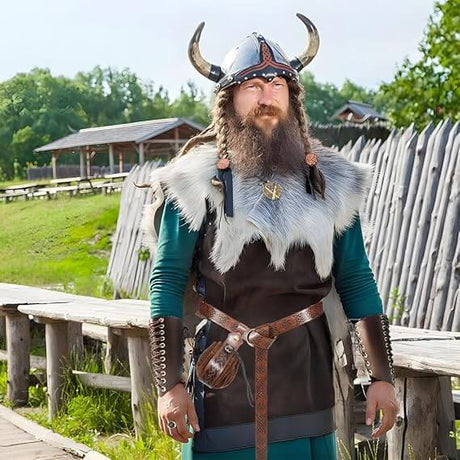
On one hand, historical reality shows a sophisticated maritime culture made up of skilled traders, poets, navigators, and craftsmen who valued honor and family loyalty. On the other hand, popular culture often focuses on the violent image of the wild berserker—an unstoppable force of destruction.
                         THE DUALITY OF THE VIKING
                                     |
            +------------------------+------------------------+
            |                                                 |
    [ The Heroic Archetype ]                          [ The Berserker ]
            |                                                 |
  * Protection of Kin                               * Unchecked Rage
  * Poetic Skill & Honor                            * Destructive Impulses
  * Emotional Restraint                             * Chaos & Violence
            |                                                 |
            +------------------------+------------------------+
                                     |
                    [ The Struggle for Balance ]
This internal conflict between constructive strength and unchecked aggression forms a core theme in ancient Scandinavian narratives. The classic heroes of the sagas are rarely simple, flawless figures. They struggle constantly to balance personal pride and fierce emotions with social duty, justice, and compassion.
In contemporary conversations surrounding male role models and mental health, this ancient tension remains profoundly relevant. The stories do not celebrate mindless violence for its own sake; instead, they warn against the destruction that occurs when strength loses its connection to empathy, community, and self-control.
6. Thor and the Evolution of the Modern Superhero
Long before modern comic books filled cinema screens with caped crusaders, the common people of Scandinavia looked to Thor (Þórr) as their primary protector.

While Odin was often viewed as the complex patron of kings, poets, and warriors, Thor was the accessible deity of the everyday person. Armed with his mighty hammer, Mjölnir, he guarded the human realm of Midgard against the destructive forces of the giants (Jötnar).
   [ Ancient Archetype: Thor ]  ================>  [ Modern Archetype: Superhero ]
   - Defends common humanity                       - Protects the vulnerable
   - Wields Mjölnir (Raw force)                    - Signature powers/weapons
   - Struggles with hubris/temper                  - Inner flaws & personal growth
   - Stands against chaotic giants                 - Battles cosmic threats
Thor’s transition into a modern comic book hero illustrates how ancient archetypes adapt to fit contemporary values. In original folklore, Thor was straightforward, quick-tempered, and prone to solving problems with direct force. Modern retellings add depth to this template by giving him a distinct arc of personal growth.
Through his struggles with humility, family relationships, and responsibility, his superhuman abilities are balanced by relatable human challenges.
Thor embodies a timeless desire: the hope that when chaos threatens our world, strength guided by a commitment to protect others will step forward to meet it.
Why These Ancient Legends Endure
The lasting power of Norse myths lies in their grounded, realistic view of existence. They do not promise easy answers or effortless victories. Instead, they present a world defined by change, where balance requires constant effort, and where every choice carries real weight.
These stories offer an engaging way to reflect on our own lives:
- Environmental Awareness: Yggdrasill reminds us that human society depends entirely on the health of the natural world.
- Personal Growth: Odin’s sacrifices show that meaningful wisdom requires curiosity, effort, and humility.
- Courage in the Face of Uncertainty: The narrative of Ragnarök teaches that even when facing major disruption, we can meet challenges with dignity, resilience, and hope for what comes next.
By exploring these ancient sagas, we do more than study history. We discover familiar human struggles, values, and questions reflected back at us through time.
The ancient poets who crafted these narratives understood something fundamental about the human spirit. Empires fall, landscapes change, and technology advances, but our core human questions remain remarkably consistent. As long as we search for meaning in a complex world, the ancient tales of valhalla will continue to illuminate our path forward.