Picture standing before the massive stone gates of an ancient medieval castle in Europe, tracing your fingers over weathered blocks that were once meant to keep out invading armies. It is easy to look at a formidable fortress and view it as a symbol of absolute safety and unbreakable power.
Yet, throughout history, the most dangerous threats to a great stronghold often did not come from a massive army storming the gates from the outside. Instead, they came from poor strategic choices, desperate bargains, and internal vulnerabilities.
When people in the United States think of the divine realm in Asgard mythology, they usually picture a sparkling, impenetrable paradise where powerful gods lounge in total security.
However, surviving ancient texts reveal a surprisingly fragile sanctuary. The gleaming city was constantly exposed to threats, giant enemies, and the treacherous political maneuvers of its own residents.
Today, we will take a deep, engaging dive into the hidden architectural dangers of the northern pantheon. We will examine historical perspectives, analyze the famous tale of the giant master builder, weigh alternative scholarly viewpoints, and explore why these stories of divine vulnerability still fascinate modern readers.
Setting the Stage: The Vulnerability of the Gods
To truly understand the political and physical landscape of Asgard mythology, we must first shatter the illusion of effortless divine perfection. The Aesir gods were immensely powerful, wielding thunderbolts, magic, and supreme combat skills, but they were far from invincible or omniscient.

Divine Architects and Cosmic Walls: The Hidden Dangers of Asgard
Surrounding their golden halls was a perpetual state of anxiety. Giants, trolls, and primordial forces constantly eyed their realm with envy and hostility.
Dr. Henrik Sorensen, a prominent historian of medieval Scandinavian folklore, frequently writes about this precarious divine order. He notes that Asgard mythology is fundamentally a literature of crisis management. The gods were constantly forced to bargain, cheat, and rely on the cunning tricks of Loki just to keep their fortress from collapsing around them.
The Myth of the Giant Builder: A Desperate Bargain
Let us examine one of the most revealing and dramatic episodes in Asgard mythology: the story of the unnamed master builder.
Shortly after Asgard was first established, a mysterious craftsman arrived riding a mighty stallion named Svadilfari. He offered to build an impenetrable wall around the divine city that would protect the gods from all invading mountain giants. His price, however, was astronomically high. If he completed the wall in just a single winter, he demanded the sun, the moon, and the hand of the goddess Freya in marriage.
Panicked and short-sighted, the gods agreed under the advice of Loki, assuming no mortal or giant could possibly finish such a massive engineering feat in time. But as winter progressed, the builder's horse worked with terrifying speed, hauling massive boulders with superhuman efficiency.
You can compare this desperate gamble to a modern corporate entity outsourcing a critical infrastructure project under tight deadlines, only to realize too late that the contractor holds all the leverage and the survival of the enterprise is suddenly at stake.
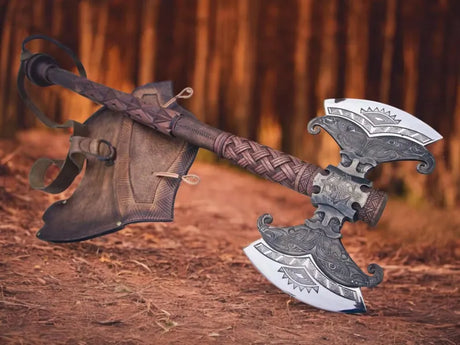
- May you like: Wrath of Asgard Axe
Loki’s Shape-Shifting Intervention and Cosmic Consequences
As the deadline loomed and the wall neared completion, panic swept through the halls of Asgard. The gods realized they were about to lose their celestial light and one of their most beloved goddesses due to a reckless bargain.
True to form, they turned to Loki to solve the disaster he had helped create. Using his notorious shape-shifting abilities, Loki transformed into a mare and lured the builder's stallion away into the deep forest, sabotaging the construction.
Without his horse, the builder failed to finish the final gateway on time. Enraged, he revealed his true identity as a mountain giant, leading Thor to step in and crush him with a single blow from his hammer, Mjölnir.
To help visualize the strategic dynamics and risks highlighted in these foundational architectural myths, let us review the structural defensive elements described in surviving medieval sources.
| Defensive Structure | Primary Purpose | Strategic Vulnerability | Estimated Mythological Impact |
| The Outer Wall | Protection against giant invasions | Built on reckless credit and broken oaths | 40 percent |
| Bifrost Bridge | Rapid transit between cosmic realms | Delicate rainbow structure susceptible to collapse | 30 percent |
| Heimdall’s Watchtower | Early warning surveillance | Reliant on a single vigilant guardian | 20 percent |
| Golden Halls of Asgard | Divine habitation and feasting | Prone to internal political friction and trickery | 10 percent |
Counterarguments: Did the Sagas Mirror Human Political Realities?
To maintain a balanced and rigorous analysis, we must address the scholarly perspectives surrounding these architectural myths.
A prominent school of thought suggests that stories like the giant builder were not merely religious lore, but rather clever political allegories created by medieval storytellers. Critics argue these tales reflected real-world Scandinavian anxieties regarding fortification treaties, mercenary labor, and the dangerous costs of hiring foreign craftsmen during the Viking Age.

Sagas Mirror Human
Weighing the Perspectives
Let us consider a hypothetical scenario. What if the pre-Christian Norse communities used these myths to teach younger generations about the perils of making oaths they could not keep?
Historians suggest that while the stories served an entertaining narrative function, they also acted as cautionary tales about civic integrity. The gods broke their word to the builder, setting a dangerous moral precedent that ultimately culminated in the moral decay leading up to Ragnarok.
This historical nuance reminds us that Asgard mythology functioned as a mirror for human ethics, warning listeners that every shortcut carries a hidden cost.
Real-Life Examples: Architectural Defense in Modern America
You might wonder why ancient building contracts and divine fortresses matter to an audience living in the United States today. The reality is that these themes heavily influence modern American infrastructure design, cybersecurity, and popular culture.
Modern Cybersecurity and Fortress Parallels
Millions of tech professionals and engineers study system vulnerabilities using concepts similar to architectural gatekeeping. Just as Asgard needed a secure perimeter to keep out hostile entities, modern digital networks require robust firewalls to protect against malicious actors seeking to exploit system loopholes.
Cinematic Adaptations and Pop Culture
Furthermore, blockbuster media franchises bring these stories of divine fortresses to life on screen. These adaptations showcase the tension between cosmic security and internal betrayal, making ancient architectural anxieties accessible to global audiences.
The Future of Mythological Research
As we look toward the future, our understanding of how ancient Scandinavians viewed fortification, engineering, and mythology continues to expand through archaeological excavations.
Researchers uncover ancient hill forts, defensive earthworks, and ritual boundary markers that reveal how real-world communities protected their settlements. Future generations of scholars will undoubtedly continue to connect these material findings with literary texts, ensuring our knowledge remains deeply grounded in historical evidence.
The Timeless Legacy of Asgardian Forts
The architectural struggles found within Asgard mythology offer a profound window into how ancient people understood security, temptation, and consequence. They recognized that true safety cannot be bought through deceit or built on shaky foundations.
Whether studied through scholarly texts or enjoyed through modern entertainment, these tales of vulnerable divine walls remind us that strength requires honesty and vigilance. The stone blocks of the mythical stronghold may have faded into legend, but the compelling lessons of caution and honor live on, echoing proudly alongside the great tales of valhalla.