Imagine sitting in a quiet, dimly lit room on a stormy night, listening to the wind howling violently against the glass. The trees outside lash about like desperate arms, and for a fleeting moment, it feels as though the entire natural world is unraveling.
To an ancient Viking living in the snowy fjords of Scandinavia, that visceral feeling of impending chaos was not just a weather pattern. It was a daily reality.
More importantly, it was a glimpse into the ultimate climax of Asgard mythology: the cataclysmic event known as Ragnarok.
When people in the United States think about the end of the world, they usually picture linear, apocalyptic scenarios from modern science fiction or religious traditions. Yet, Asgard mythology presents a radically different vision. It is a world where even the gods are mortal, where fate cannot be outrun, but where destruction is uniquely balanced by the promise of a green, beautiful rebirth.
Today, we will take a comprehensive and immersive journey into the twilight of the northern pantheon. We will examine historical perspectives, analyze the terrifying signs of the end, weigh alternative scholarly viewpoints, and explore why this epic myth of doom and renewal still captures our imaginations today.
Setting the Stage: The Inevitable Fate of the Cosmos
To truly understand Ragnarok within Asgard mythology, we must first look at how the ancient Northmen viewed time and destiny. Unlike modern cyclical or linear concepts, the Norse worldview was bound to an inescapable web spun by the Norns, the female weavers of fate.

The Inevitable Fate of the Cosmos
Even the mighty Aesir gods living in the glittering halls of Asgard knew their expiration date. They knew that a time would come when the cosmic bonds would snap and the forces of chaos would break through their defenses.
Dr. Alistair Vance, a prominent historian of medieval Germanic religions, frequently writes about this fatalistic yet heroic mindset. He notes that the beauty of Asgard mythology lies in its tragic courage. The gods do not hide or despair; they march out to fight a doomed battle anyway, knowing that honor matters far more than survival.
The Signs of the End: Fimbulwinter and Chaos
The apocalypse in Asgard mythology did not begin with a sudden explosion. Instead, it crept in slowly through a terrifying sequence of environmental collapses.
The first major omen was Fimbulwinter, the great winter. This was a brutal season of three consecutive winters merged into one, with no intervening summer. Snow blew in from all directions, fierce gales battered the earth, and human morality utterly dissolved as brothers turned against brothers in a desperate struggle for survival.

Fimbulwinter and Chaos
Following this ice age of the soul came the breaking of cosmic restraints. The monstrous wolf Fenrir broke his heavy chains, the world serpent Jormungand thrashed violently in the ocean depths to flood the shores, and the ship Naglfar, built entirely from the unpared fingernails of dead men, set sail across the waves.
You can compare this slow unraveling to a modern structural collapse, where small foundational cracks multiply under pressure until the entire building finally gives way. Every anchor point of civilization snapped one by one.
The Fall of the Aesir: The Ultimate Battle
When the hostile forces gathered on the plain of Vigrid, the stage was set for the final clash of Asgard mythology. The sky split open, and the sons of fire poured forth led by Surt, brandishing a sword that burned brighter than the sun.
The chief gods of Asgard met their legendary nemeses in combat, resulting in a series of tragic, fateful duels.
Let us review the estimated distribution of combatants, their mythological opponents, and the literary representation of these final duels in surviving medieval sources to understand how the ancient storytellers structured this cosmic climax.
| Divine Combatant | Mythological Opponent | Outcome in Ragnarok | Estimated Literary Focus |
| Odin (The Allfather) | Fenrir (The Giant Wolf) | Swallowed whole by the beast | 35 percent |
| Thor (God of Thunder) | Jormungand (The World Serpent) | Slays the serpent but dies from venom | 35 percent |
| Frey (God of Fertility) | Surt (The Fire Giant) | Falls weaponless against the blazing sword | 15 percent |
| Tyr (God of Justice) | Garm (The Guard Dog of Hel) | Mutual destruction in combat | 10 percent |
| Heimdall (Guardian) | Loki (The Trickster) | Mutual destruction in a fierce duel | 5 percent |
This data illustrates a stark reality. The leaders and protectors of Asgard all fell during the battle. Thor succeeded in his mission to rid the world of the serpent, but succumbed to its poison just nine paces later. Odin was consumed by the monstrous wolf.
Counterarguments: Was Ragnarok Influenced by Christianity?
To maintain a balanced and rigorous analysis, we must address the intense academic debates surrounding the origins of Ragnarok.
A prominent school of thought argues that the epic destruction and subsequent rebirth of the world in Asgard mythology was heavily contaminated or outright invented by Christian scribes. Critics suggest that the idea of a catastrophic end followed by a peaceful, renewed earth mirrors Christian apocalyptic literature like the Book of Revelation.
Weighing the Perspectives
Let us consider a hypothetical scenario. What if the pre-Christian pagan Norsemen had a much more ambiguous or abrupt view of the end, and medieval writers polished it into a neat moral narrative?
Historians suggest that while Christian literary influences certainly shaped how the surviving poems were written down in Iceland, the core themes of cosmic doom, wolf swallowings, and fire destruction appear in early skaldic verses that predate widespread Christianization.
This historical nuance reminds us that human cultures across different continents often independently developed myths of cataclysmic rebirth to explain natural cycles and psychological fears.
Real-Life Examples: Ragnarok in Modern American Culture
You might wonder why a thousand-year-old Norse apocalypse matters to an audience living in the United States today. The reality is that the themes of Ragnarok heavily influence modern American entertainment, literature, and art.
Cinematic Blockbusters and Fantasy Epics
Millions of Americans encounter these themes through modern Hollywood blockbusters and fantasy streaming series. These franchises draw directly on the imagery of twilight, falling gods, and cosmic renewal to create high stakes narratives that captivate global audiences.
Ecological and Existential Reflections
Furthermore, modern environmental movements and philosophers often use the concept of Fimbulwinter as a vivid metaphor for modern ecological crises. The idea of a natural world pushed to the brink by human conflict and environmental collapse resonates deeply in an era facing climate anxiety.
The Future of Mythological Research
As we look toward the future, our understanding of how these apocalyptic myths evolved continues to expand through archaeological and literary studies.
Researchers analyze newly discovered runic inscriptions and comparative folklore data to trace how oral traditions shifted across centuries of cultural contact. Future generations of scholars will undoubtedly continue to decode these ancient texts, ensuring our knowledge remains deeply anchored in historical rigor.
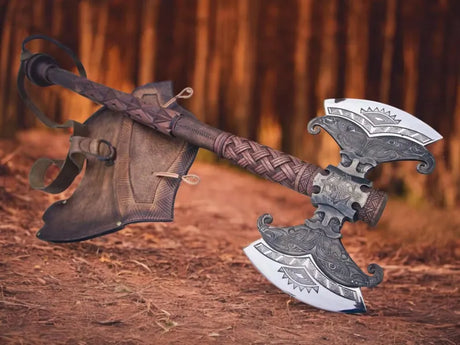
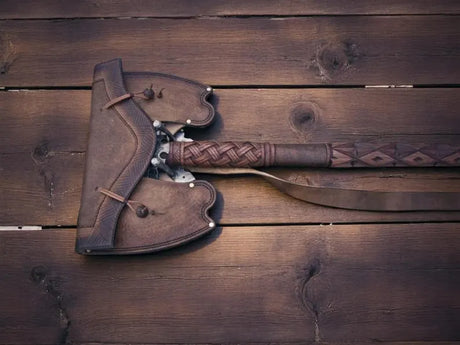
- May you like: Wrath of Asgard Axe
The Timeless Legacy of Cosmic Rebirth
The story of Ragnarok within Asgard mythology is far more than a tale of total destruction. It carries a profound message of hope.
According to the ancient myths, the world did not end forever in darkness. Out of the ashes of the old cosmos rose a green, fertile earth, populated by surviving gods and two human mortals who repopulated the land.
Whether studied through scholarly texts or enjoyed through modern entertainment, the twilight of the northern gods reminds us that even after the deepest crises, renewal is always possible. The fires of Ragnarok may have consumed the golden halls, but the enduring spirit of courage and rebirth lives on, echoing proudly alongside the great tales of valhalla.