Standing on a wind-swept coastal ridge in Scandinavia, looking out across the icy waters of the North Atlantic, brings an immediate sense of respect for the sheer physical demands of the early medieval world.
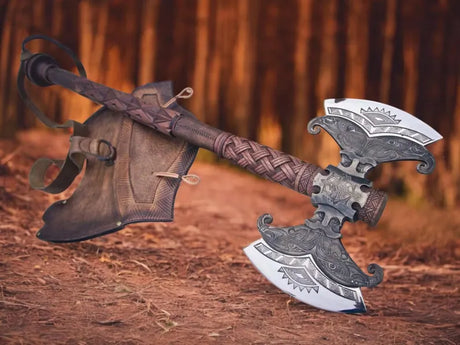
Popular culture often paints a wild fantasy image of Norse raiders as hulking, eight-foot-tall bodybuilders swinging double-headed battle axes with cartoonish ease. While that modern Hollywood trope is heavily exaggerated, historical records, saga accounts, and bioarchaeological studies confirm that Norse warriors were formidable physical specimens.
When people in the United States ask how physically tough were Vikings, the true answer lies not in mystical barbarian superpowers, but in a lethal combination of high-protein nutrition, brutal daily agrarian labor, relentless rowing, and specialized martial conditioning.
Today, we will take a detailed, evidence-based look into the physical reality of the Norse warrior. We will analyze skeletal height and mass data, dissect their daily macro-nutritional intake, explore their functional training methods, and evaluate why their physical resilience shocked contemporary enemies from England to the Caspian Sea.
The Physical Dimensions of the Norse Warrior: Height and Body Mass
To answer how physically tough were Vikings, we must first look at their physical scale. A population’s height and bone density serve as direct indicators of childhood nutrition, freedom from disease, and overall economic well-being.

How Physically Tough Were Vikings?
Eyewitness accounts from Anglo-Saxon monks, Frankish clerks, and Arab diplomats frequently describe Scandinavian raiders as tall, broad-shouldered, and powerfully built. However, modern bioarchaeological studies of over 6,000 Early Medieval European skeletons reveal a nuanced picture.
| Demographic Category | Average Height | Primary Nutritional Profile | Estimated Muscle-to-Fat Ratio |
| Average Norse Male (Viking Age) | 5 ft 8 in (173 cm) | High protein (fish, dairy, game) | High functional density |
| Average Norse Female (Viking Age) | 5 ft 2 in (157 cm) | High protein, fermented dairy, grains | High endurance density |
| Grave Skeletons with Weapons | 5 ft 9 in to 5 ft 10 in | Elite access to meat, mead, and cattle | Exceptional athletic build |
| Continental European Peasant | 5 ft 5 in to 5 ft 6 in | High carbohydrate (grains, bread, gruel) | Lower protein composition |
This bioarchaeological data highlights a key insight. While a 5-foot-8-inch average height matches modern human standards reasonably well, it made the Norse notably tall compared to medieval continental peasants who suffered under dense populations and grain-heavy diets.
Furthermore, psychological studies demonstrate that intimidated observers consistently perceive aggressive adversaries as several inches taller and up to twenty pounds heavier than their actual physical measurements. When terrified European monks looked up at a shield wall of aggressive raiders, those warriors felt gigantic.
Fueling the Machine: The High-Protein Viking Diet
Physical conditioning requires proper fuel. While feudal European peasants lived on high-carbohydrate grain diets with limited access to wild game or fresh meat, the Scandinavian homestead relied heavily on pastoral livestock, ocean fishing, and wild hunting.
Daily Staples and Macronutrient Breakdown
The Norse consumed two major meals per day—the morning meal (dagmál) and the evening meal (náttmál). Their baseline diet was rich in whole milk, butter, cheese, and skyr (a protein-rich strained yogurt).
Crucially, sagas record that Vikings frequently drank whey—the protein-packed liquid byproduct of cheese making that modern bodybuilders consume as isolate powder.
-
Proteins (35%): Fresh and salted salmon, cod, seal, reindeer, beef, pork, fowl, and whey.
-
Healthy Fats (35%): Animal lard, tree nuts, butter, whole-fat dairy, and fatty fish.
-
Complex Carbohydrates (30%): Whole-grain barley bread, rye flatbreads, berries, and ale.
Plugging these historical food sources into modern sports nutrition models reveals a macronutrient split remarkably close to what professional strength athletes use today. This high-protein, high-fat fueling strategy allowed Norse men and women to build dense muscle mass, maintain joint integrity, and sustain high energy levels during prolonged physical exertion.
Baseline Conditioning: The Heavy Labor of Agrarian Life
Long before a young Norseman ever held a steel sword or boarded a longship, his daily routine on the homestead forged an iron baseline of functional strength.
The Scandinavian climate demanded constant physical work. Children grew up hauling water in forty-pound wooden buckets, chopping hardwood, clearing dense timber, mowing fields with scythes, building timber longhouses, and wrestling livestock.
Rowing as the Ultimate Full-Body Exercise
Without question, the primary engine of Viking cardiovascular and functional upper-body conditioning was rowing.
Because Scandinavia lacked developed roads, water served as the highway system for trade, travel, and warfare. Sagas document that ship crews rotated in two-hour shifts, requiring warriors to row for up to eight hours a day when winds failed.
Rowing engages the legs, glutes, core, latissimus dorsi, rhomboids, rear deltoids, and forearms while building world-class cardiovascular capacity. Years of continuous rowing developed deep grip strength, robust core stability, and thick back musculature, preparing warriors to handle heavy shields and weapons for hours without fatigue.
Martial Training and Functional Strongman Sports
Safety in the medieval North was a personal responsibility managed by family networks and local clans. As a result, martial preparation began early in childhood.
Archaeologists have unearthed wooden practice swords and shields sized for children in sites across Norway and Sweden. By their mid-teen years, young men were expected to join seasonal raids, handling five-pound arming swords or battle axes alongside ten-pound wooden shields and twenty-pound chainmail coats.
+-------------------------------------------------------------------+
|                   THE NORSE WARRIOR ATHLETE                       |
|                                                                   |
|   [ Agrarian Labor ] ---> [ High-Protein Diet ] ---> [ Row & Sail ] |
|   * Timber & Water        * Skyr, Whey, Fish          * Core/Grip     |
|   * Livestock Care        * Game & Dairy Meat         * Stamina       |
|                                 |                                 |
|                                 v                                 |
|   [ Grappling & Games ] -> [ Martial Armor ] -> [ Battle Readiness ]|
|   * Glíma Wrestling       * 20lb Chainmail        * Stamford Bridge |
|   * Stone Lifting         * Shield Wall Push      * Absolute Tough |
+-------------------------------------------------------------------+
Glíma Wrestling and Strongman Feats
Norse culture celebrated physical competition. Feasts and seasonal assemblies (althing) featured brutal grappling matches known as glíma, where opponents attempted to lift each other off their feet and throw them onto hard ground.

Glíma Wrestling and Strongman Feats
In addition to wrestling, the Norse favored functional strongman events:
-
Stone Lifting: Heavy natural boulders were used to test raw power; several famous lifting stones still stand in Iceland today as historic landmarks.
-
Seated Tug-of-War: Two competitors sat facing each other with feet touching, pulling a single rope to test hamstring, back, and grip power.
-
Rough Ball Games: Fast-paced team games resembling modern rugby allowed young men to build sprinting endurance and collision tolerance.
These athletic contests were not mere entertainment. They allowed warriors to gauge each other's strength, assign rowing positions on longships, and prepare mentally for the chaotic physical collisions of the shield wall.
Historical Eyewitness Accounts of Viking Resiliency
To fully understand how physically tough were Vikings, we do not need to rely solely on Scandinavian sagas. Their enemies and neutral observers left detailed eyewitness accounts of their terrifying martial endurance.
Writing in the tenth century, the Muslim scholar Miskawayh described a Rus-Viking expedition along the Caspian Sea:
"The men are huge and courageous. They do not recognize defeat; no one turns back until he kills or has been killed. They carry heavy weapons... and hold off forces many times their own number."
The Ultimate Test: The Battle of Stamford Bridge (1066 CE)
Perhaps the most astonishing demonstration of Norse physical toughness occurred on September 25, 1066, at the Battle of Stamford Bridge in Yorkshire, England.
King Harald Hardrada of Norway was caught in a surprise attack ten miles from his fleet. His men had left their heavy chainmail armor behind on the ships due to hot weather. Rather than retreating, Hardrada formed a defensive ring and sent a runner ten miles back to the coast to fetch the rest of his force.
Upon hearing the news, the Norwegian reserves jumped up and ran ten miles in full sun, wearing their heavy gear and carrying battle axes.
Arriving at the battlefield after an grueling run, they immediately threw themselves into a high-intensity battle that had already lasted for hours. Though defeated by overwhelming English numbers, their ability to execute a ten-mile sprint under armor and instantly engage in deadly hand-to-hand combat stands as a legendary testament to human endurance.
Counterarguments: Were They Just Lucky Opportunities?
To maintain a balanced historical perspective, we must address critical counterarguments regarding Norse military success.
Some military historians suggest that Viking victories were not driven by superior physical toughness, but rather by tactical surprise, mobility, and targeting undefended civilian sites like monasteries.
Weighing the Historical Evidence
Consider how tactical mobility intersects with athletic condition. What good is a fast ship if the crew lacks the physical stamina to row it across stormy seas for three weeks and fight immediately upon landing?
While surprise and naval technology were crucial, primary sources confirm that when cornered in pitched battles against professional Anglo-Saxon, Frankish, or Byzantine armies, Norse warriors repeatedly stood their ground in brutal shield-wall pushing matches that required immense physical strength. Mobility provided the opportunity, but physical toughness secured the victory.
Real-Life Lessons for the Modern Athlete
You might wonder why the physical conditioning of a thousand-year-old warrior matters to readers living in the United States today. The reality is that the Norse athletic lifestyle offers valuable principles for modern fitness enthusiasts, powerlifters, and obstacle-course racers.
Functional Strength over Aesthetic Muscle
Modern bodybuilders often focus on isolated muscle groups for visual symmetry. In contrast, the Norse developed functional, compound strength through full-body movement—rowing, lifting irregular objects, sprinting, and wrestling.
Nutrient-Dense Whole Foods
The Norse diet emphasizes whole, minimally processed foods packed with natural protein and healthy fats. Incorporating protein-dense dairy like skyr, wild-caught fish, and lean meats provides optimal fuel for athletic recovery without relying on artificial supplements.
The Future of Bioarchaeological Research
As we look toward the future, our understanding of how physically tough were Vikings continues to advance through cutting-edge forensic science.
Anthropologists analyze bone density, muscle attachment points, micro-fractures, and isotopic signatures from newly discovered mass graves across Europe. These scientific studies prove that Norse skeletons possessed exceptionally dense bone structures and heavy muscle insertion marks, providing physical proof of a life spent under extreme mechanical strain.
The Indelible Mark of the Northern Athlete
Asking how physically tough were Vikings reveals a culture built on functional athleticism, high-protein nutrition, and unyielding mental resilience. They were not mythical giants, but highly conditioned human beings forged by harsh environments, constant labor, and a warrior ethos that celebrated courage above all else.
Whether evaluated through bioarchaeology, contemporary chronicles, or modern strength science, their physical legacy remains undeniable. The longships have long since landed, but the extraordinary toughness of the northern warriors continues to inspire awe, echoing proudly alongside the great tales of valhalla.