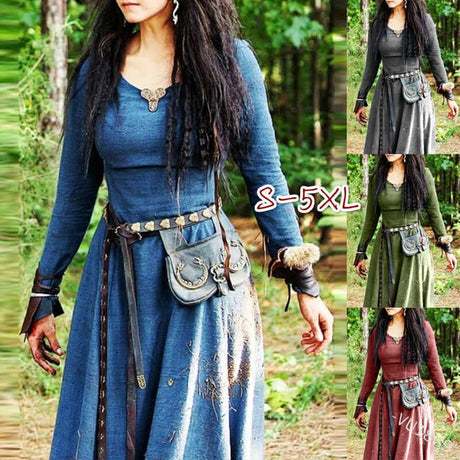
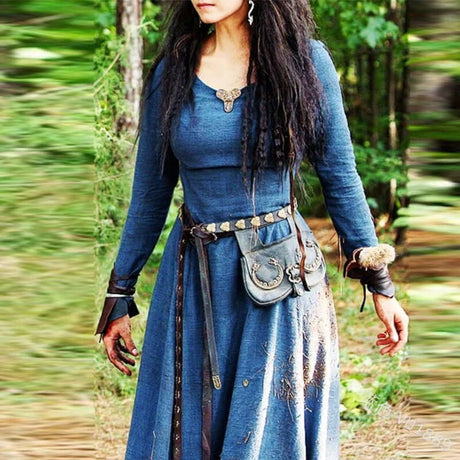
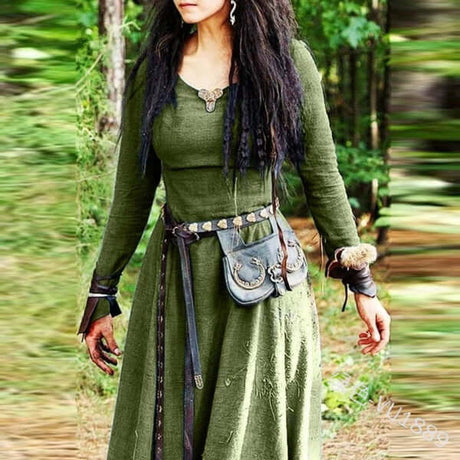
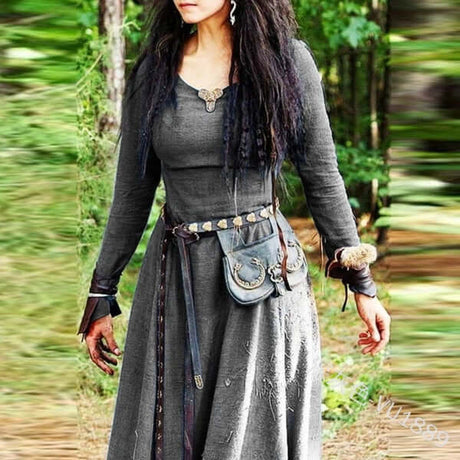
Stepping into a modern medieval festival or historical reenactment event instantly transports visitors back to an era of roaring campfires, clashing steel, and dramatic tales. Millions of enthusiasts love dressing up in period garb, exploring vendor tents, and immersing themselves in the rich heritage of the early medieval world. Yet, if you watch television shows or Hollywood blockbusters, the visual portrayal of Viking clothing is often wildly inaccurate.
Popular culture frequently paints a simplistic, leather-clad, mud-stained picture of northern warriors. However, the historical reality is vastly more complex, colorful, and sophisticated. Spanning over two centuries and encompassing a dozen geopolitical regions, the Norse world featured an incredible diversity of styles, textiles, and cultural influences.
Because organic materials like wool, linen, and leather naturally decompose and return to the earth over time, physical archaeological remnants are often scarce and fragmented. This leaves historians, archaeologists, and modern enthusiasts to piece together what people actually wore using partial textile finds, artistic depictions, and surviving literary sagas.
Today, we will take a comprehensive and engaging dive into Viking clothing. We will examine what men and women wore, explore the spectrum of historical reenactment versus cinematic design, analyze the vibrant use of color and fabrics, and weigh the ongoing debates surrounding leather armor and fur garments.
The Core Wardrobe: What Did Vikings Actually Wear?
While Hollywood designers take massive creative liberties for cinematic drama, surviving artifacts, artistic carvings, and epic literature provide a remarkably consistent baseline for what everyday Norse garments looked like.
For the most part, clothing was functional, layered, and meticulously crafted by hand on local farmsteads.

The Core Wardrobe: What Did Vikings Actually Wear?
Men’s Attire
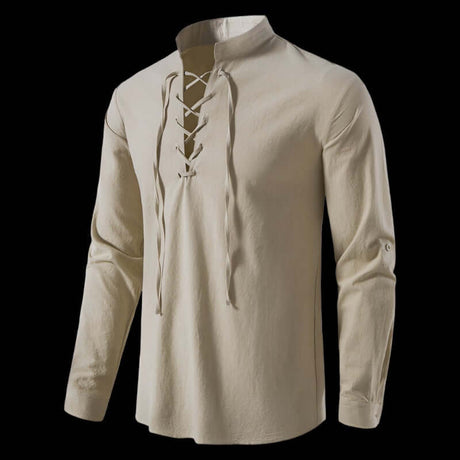
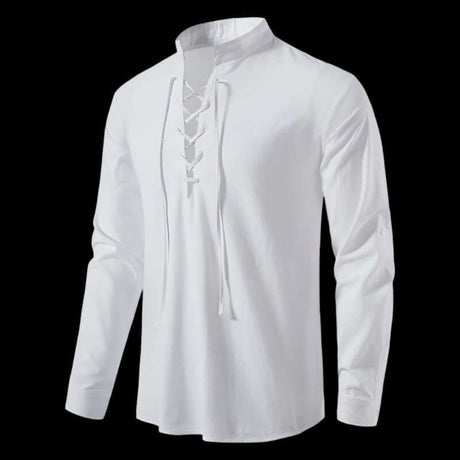
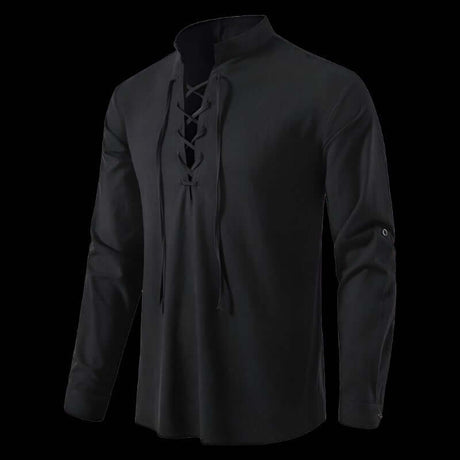
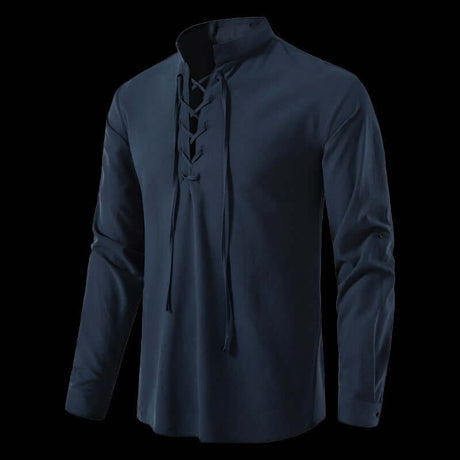
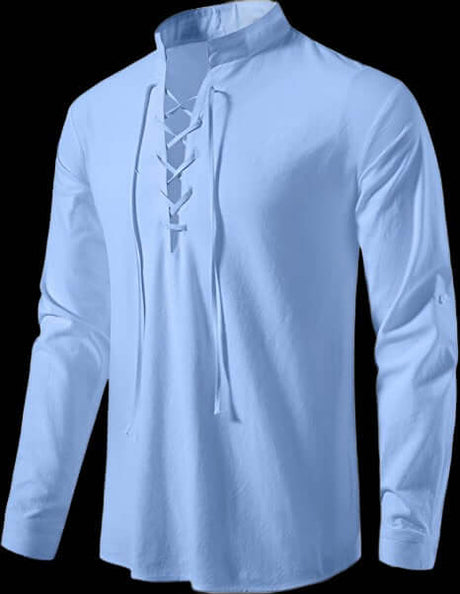
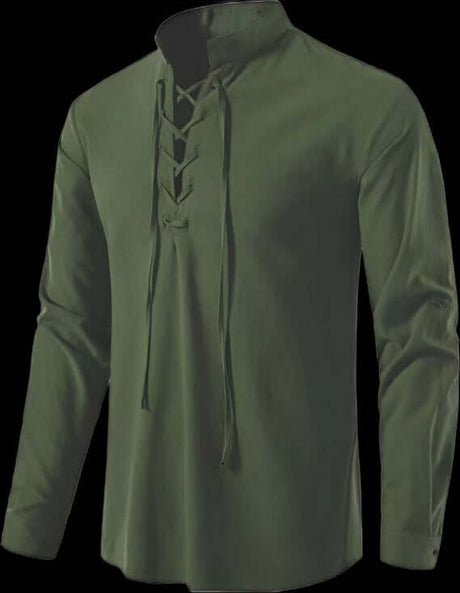
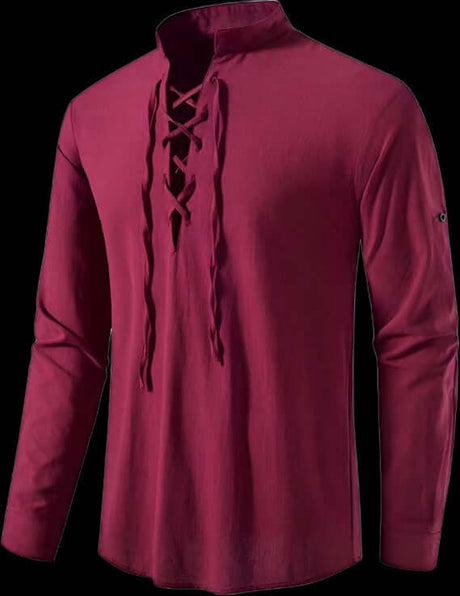
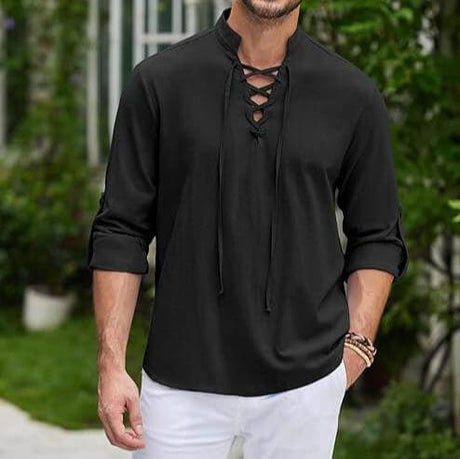
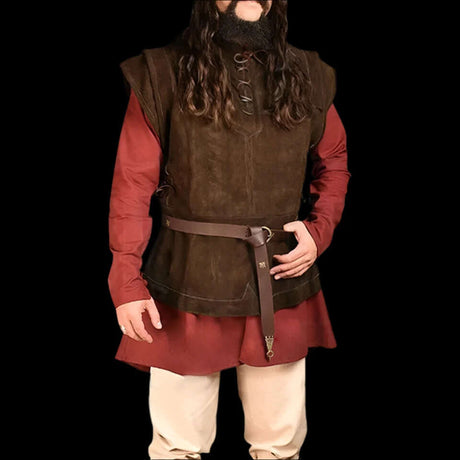
- Viking tunics: The staple upper garment, usually falling to the mid-thigh or knee with long sleeves.
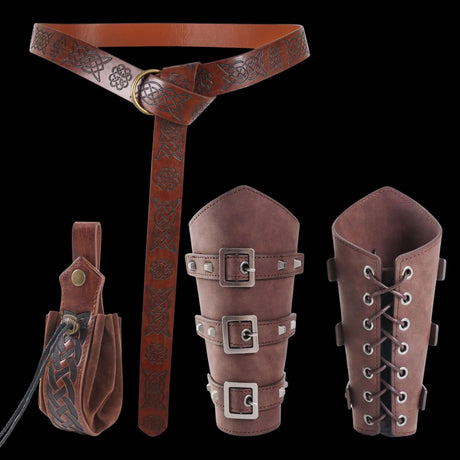
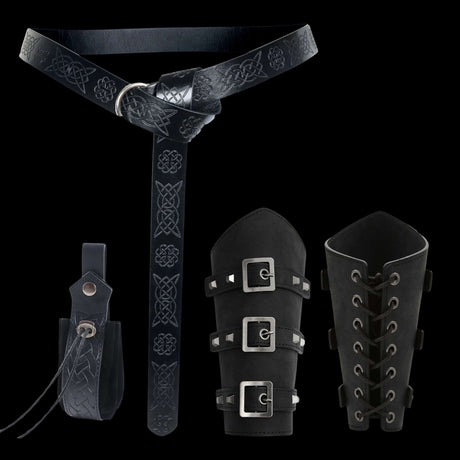
- Viking belts: Practical leather or woven belts used to secure pouches, tools, and weapons.
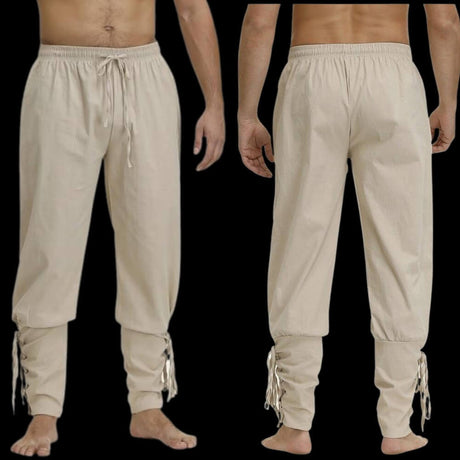
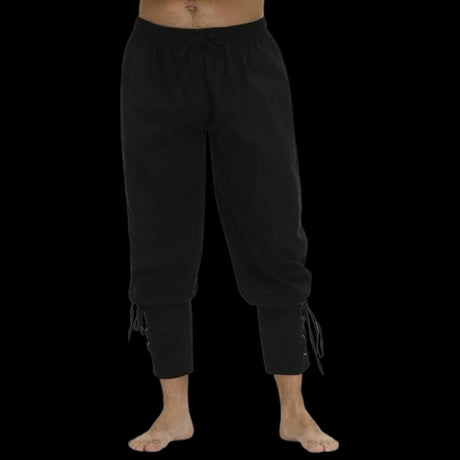
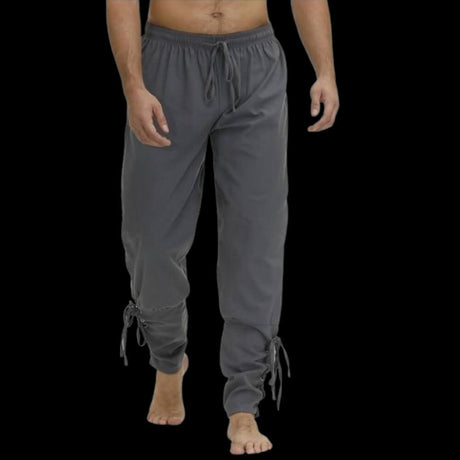
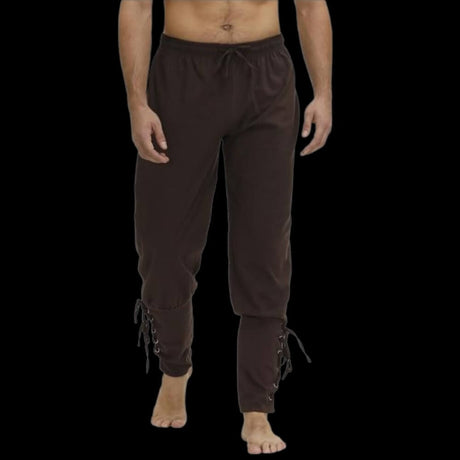
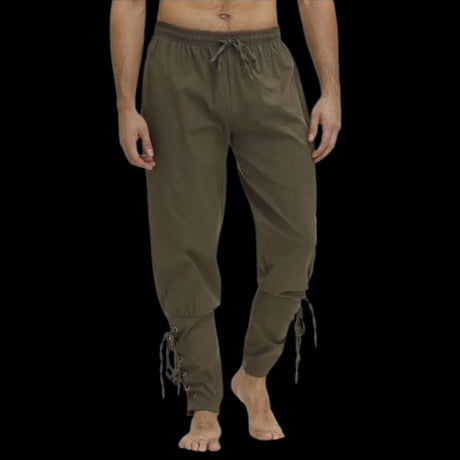
- Viking pants: Loose-fitting trousers or high-gaiter breeches designed for mobility.
- Leg wraps: Long strips of woven wool wrapped spirally from below the knee down to the ankle for warmth and support.
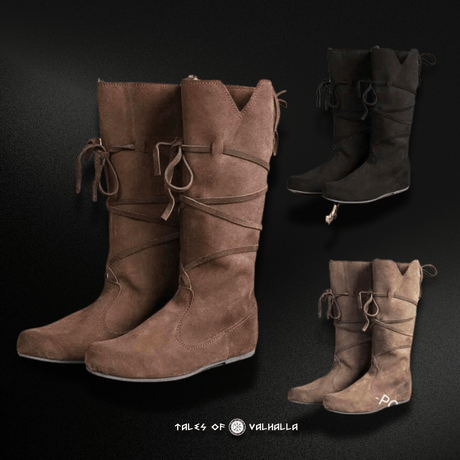
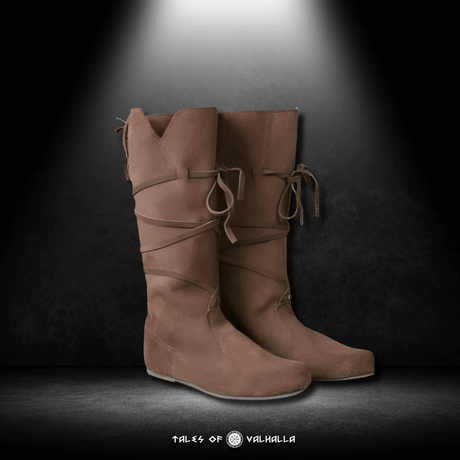
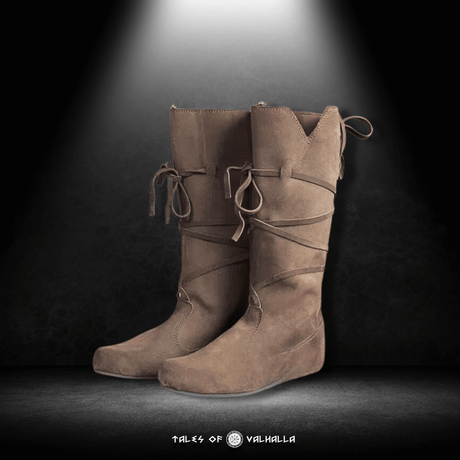
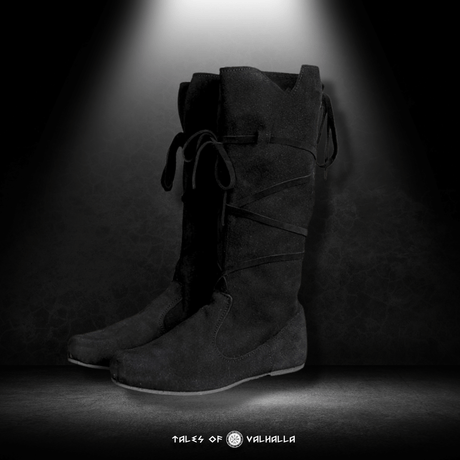
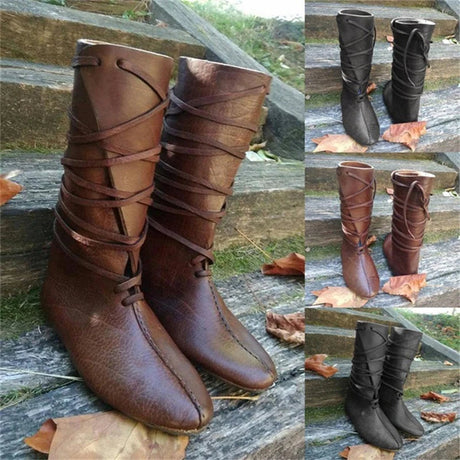
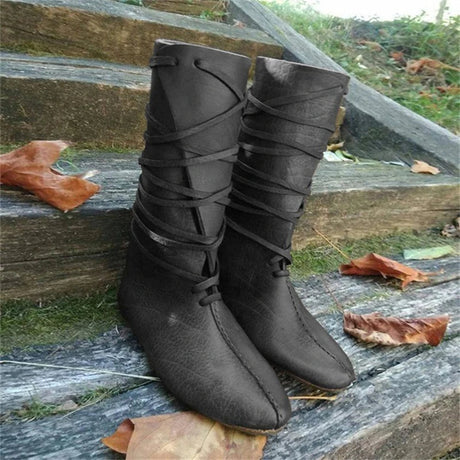
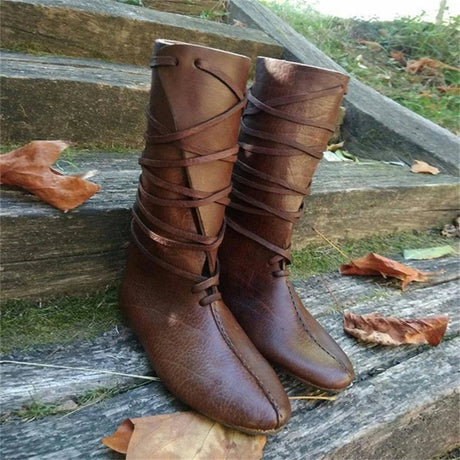
- Viking shoes and boots: Simple turn-shoes crafted from supple leather, stitched together to fit the foot snugly.
Women’s Attire
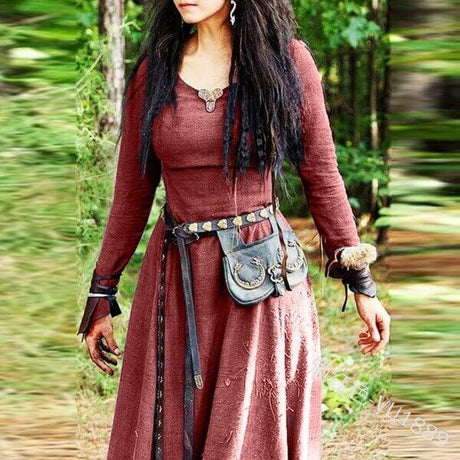
- Viking dresses: Long, foundational linen or wool inner gowns.
- Viking aprons: The iconic pinafore or apron dress worn over the inner gown, secured at the shoulders by distinctive tortoise brooches.
- Belts and accessories: Functional waist belts often paired with suspended utility bags, keys, or sewing tools.
- Women's shoes: Soft leather footwear comparable to men's designs.
Both genders also adapted to the bitter northern climate by wearing wool hats, hoods, heavy coats, tailored cloaks, and knitted mittens or socks as seasonal weather dictated.
Different Goals, Different Interpretations: Hollywood vs. Reenactors
When exploring Viking clothing, it helps to understand the diverse perspectives that shape how these outfits are created and worn today. We can view these interpretations across a wide spectrum.
Hollywood Costume Designers
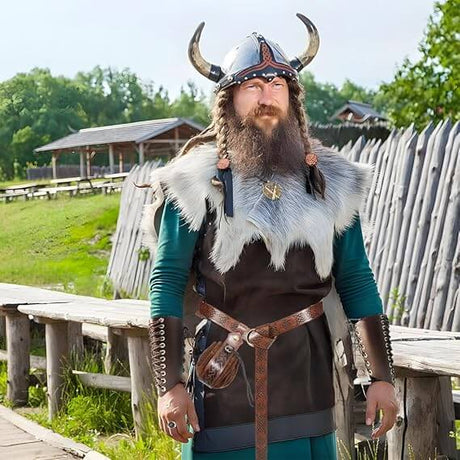
For filmmakers and streaming series creators, historical strict adherence takes a backseat to visual storytelling. Cinematic costumes are engineered to draw the audience in, heighten dramatic tension, and establish distinct character traits instantly. While an experienced historian might cringe at studded leather armor or modern cuts, a TV studio must prioritize visual emotion and production budgets over rigid academic accuracy.
Historic Reenactors
At the opposite end of the spectrum stand dedicated Viking Age reenactors. These historians spend countless hours researching museum artifacts, spinning yarn, natural-dyeing wool, and hand-stitching garments using period-specific techniques. For them, historical authenticity is paramount, and wearing speculative or fantasy elements is strictly avoided.
Casual Enthusiasts and Cosplayers
In the middle ground reside casual fans, live-action roleplayers (LARPers), and families enjoying local festivals. They want to experience the fun of wearing Viking clothing without the strict gatekeeping of hardcore historical societies. Whether a tunic contains a modern cotton blend or hidden pockets for a modern smartphone matters far less to them than enjoying the shared cultural celebration.
| Group / Perspective | Primary Goal | Material Standards | View on Speculation |
| Hollywood Studios | Cinematic drama and character identity | Cost-effective fabrics and visual flair | Highly speculative and stylized |
| Historic Reenactors | Absolute historical accuracy | Hand-woven wool, linen, and silk | Strict adherence to physical artifacts |
| Casual Enthusiasts | Festival fun and accessibility | Cotton blends and comfortable fits | Welcoming of creative modifications |
This spectrum proves that enthusiasm for Norse culture takes many valid forms, bridging the gap between dramatic storytelling and academic rigor.
The Social Significance of Appearance and Grooming
Contrary to the cinematic trope of the "dirty barbarian," archaeological sites throughout Scandinavia yield an abundance of fine-toothed bone combs, tweezers, ear-picks, and razors. Personal grooming and presentation mattered deeply in a society governed by a strict honor culture.
Ancient texts like the Rigsthula from the Poetic Edda explicitly use Viking clothing and grooming to distinguish between social classes. The poem describes the free working class (karls) with trimmed beards, neatly fitted clothing, and weaving tools, while the ruling elite (jarls) are depicted wearing finely tailored gowns with decorative clasps and vibrant blue dyes.
In the Viking Age, cloth was currency. Every step of clothing production—shearing sheep, carding wool, spinning yarn, weaving on vertical looms, and embroidering hems—was done entirely by hand. Storing up homespun cloth for a young man starting his own trading voyage was comparable to funding a modern college education.
Colors, Dyes, and the Debate Over Black Clothing
Historical sources and recovered textile fragments reveal that Vikings deeply loved bright, rich colors. Natural dyes derived from plants, roots, lichens, and insects produced striking shades of red, yellow, green, and blue.
A frequent debate within reenactment circles centers on whether Vikings wore black Viking clothing. While some strict reenactment groups argue that true black dye was chemically unavailable or culturally avoided, numerous Icelandic sagas explicitly mention black garments.
For instance, in Egil’s Saga, the hero uses a black cloak to make a dramatic entrance, while Gisli Sursson’s Saga notes that the protagonist wore a well-fitted black cloak simply because he liked it.
+-------------------------------------------------------------+
|                  THE SPECTRUM OF VIKING DYED FABRICS        |
|                                                             |
|   [ Earth Tones ] ---> [ Plant Dyes ] ---> [ Luxury Colors ]|
|   * Undyed Wool       * Yellows & Madder     * Deep Blues   |
|   * Greys & Browns    * Moss Greens          * Sagas' Black |
|                                                             |
|   Result: Practical workwear meeting high-status fashion    |
+-------------------------------------------------------------+
Fabrics and Materials: Wool, Linen, Silk, and Cotton
The material composition of Viking clothing was dictated by climate, trade, and economic status.

Fabrics and Materials: Wool, Linen, Silk, and Cotton
- Wool: The absolute bedrock of northern textiles. Durable, insulating even when wet, and exceptionally versatile, wool was woven into light summer tunics or thick winter cloaks.
- Linen: Woven from flax plants, linen provided breathable, comfortable undergarments and lightweight summer wear that cooled the body.
- Silk: Imported from the Byzantine Empire and the Middle East via extensive trade networks, silk served as an ultimate status symbol. Excavations in Sweden have recovered over one hundred silk fragments, highlighting elite global trade connections.
- Cotton: While cotton did not grow in cold northern climates, exotic trade goods occasionally reached Scandinavia from southern regions, though physical archaeological finds of cotton garments remain absent.
Did Vikings Use Leather Armor?
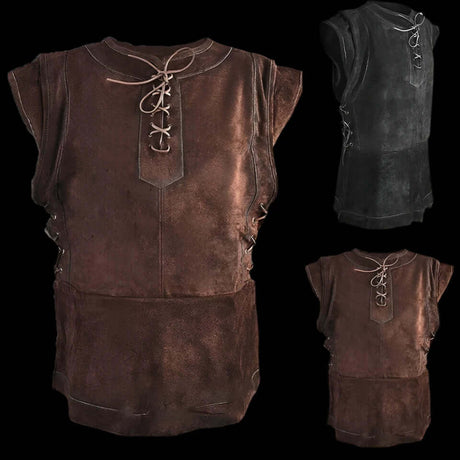
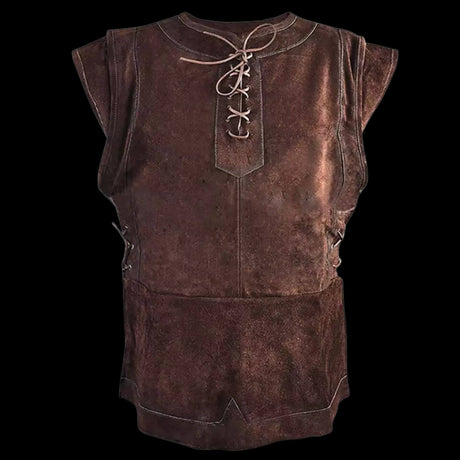
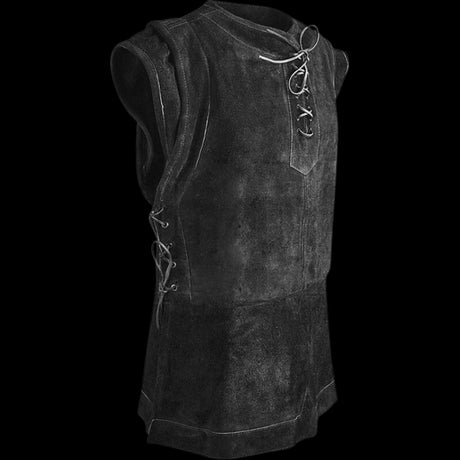
One of the most passionate debates surrounding Viking clothing and combat gear involves leather armor. Because physical archaeological excavations have yielded zero surviving leather chest pieces or bracers from Viking contexts, many strict reenactors claim Vikings never used leather for protection.
However, literary sagas frequently describe warriors utilizing thick animal skins—such as reindeer hide treated with pitch or boiled leather (cuir bouilli)—to deflect blows and absorb shock. Given that cattle, goats, and reindeer were abundant, and chainmail (byrnies) was exceptionally costly, using treated animal hides as an affordable defensive layer remains entirely plausible, even if tangible archaeological proof is rare.
Embracing Fur Wear in Northern Climates
Another modern debate concerns whether Vikings wore animal furs. Some online communities argue that authentic reenactors should completely abandon fur due to modern animal rights narratives.
However, historical and archaeological evidence strongly contradicts this claim. Scandinavia’s harsh winters and the onset of the Little Ice Age meant warmth was essential. Furthermore, the Viking fur trade was a cornerstone of the northern economy, with Arab merchants trading extensively for high-value sable, marten, and bear pelts. Wearing luxury furs demonstrated immense personal wealth and ensured survival against freezing temperatures.
Conclusion: Balancing Accuracy and Community
The world of Viking clothing invites endless fascination, bridging the gap between rigorous archaeological science and creative festival expression. Whether you are stitching an authentic 10th-century wool tunic by hand or assembling a comfortable fantasy costume for a weekend Renaissance fair, the shared passion for Norse history unites us all.
Archaeologists will continue unearthing buried fragments, and scholars will continue decoding ancient texts, but the true spirit of the Viking Age lives on through every modern enthusiast who honors their remarkable legacy, echoing proudly alongside the great tales of valhalla.