Picture sitting in a cozy living room in Chicago on a freezing winter evening. Outside, snow falls silently against the windowpane, blurring the city lights. On your screen, a massive cinematic battle unfolds, featuring soaring gods, golden towers, and thunderous hammers cracking through the sky.
You are watching a modern blockbuster film, but the roots of the story reach back over a thousand years into the snowy fjords of Scandinavia.
This is the captivating realm of Asgard mythology.
When most people in the United States think about ancient northern tales, they picture larger than life heroes and magical realms suspended high above the clouds. Yet, Asgard mythology is far more than just a collection of entertaining fairy tales. It is a profound philosophical framework that helped ancient people make sense of chaos, honor, and survival.
Today, we will take a comprehensive and immersive journey into the celestial fortress of the Norse pantheon. We will examine historical perspectives, analyze cultural shifts, weigh alternative viewpoints, and uncover why these ancient stories still resonate so deeply in modern American culture.
Setting the Stage: The Structure of the Cosmos
To truly understand Asgard mythology, we must first look at how the ancient Norse universe was mapped out. Unlike linear modern worldviews, the ancient Northmen envisioned a cosmos built around a massive cosmic tree known as Yggdrasil.
Suspended within the branches and roots of this sacred tree lay nine distinct worlds. At the very center sat Asgard, the glowing fortress city of the Aesir gods.

Asgard was not just a place of eternal luxury. It was a heavily fortified citadel designed to protect the ruling deities from external threats, including giants and primal forces of chaos. Connected to Midgard, the realm of mortal humans, by Bifrost—the shimmering rainbow bridge—Asgard stood as a symbol of divine order.
Dr. Jonathan Vance, a leading scholar of medieval Germanic religions, frequently emphasizes this cosmic layout. He notes that the physical architecture of Asgard mythology mirrors human anxieties about security, community borders, and the constant struggle to maintain civilization against a wild, untamed wilderness.
The Key Figures of the Celestial Court
No exploration of Asgard mythology is complete without examining the complex characters who ruled over the golden halls. These deities were famously flawed, mortal in the sense that they could die, and driven by passionate emotions ranging from fierce loyalty to deep cunning.

Odin: The Seeker of Wisdom
Odin stood as the Allfather, the master of poetry, war, and magic. Unlike typical supreme gods who demand passive obedience, Odin actively sacrificed his own eye for wisdom and hanged himself from Yggdrasil for nine days to master the runes.
Thor: The Protector of Realms
Thor was the mighty god of thunder, wielding his legendary hammer Mjolnir. He served as the primary defender of both Asgard and Midgard against encroaching giants. In popular imagination, Thor is often reduced to a muscle bound fighter, but in traditional Asgard mythology, he also represented agriculture, legal oaths, and the sanctity of community boundaries.
Loki: The Catalyst of Change
Loki occupied an uneasy position within the celestial court. He was neither fully hero nor outright villain, but rather an agent of disruption who pushed the gods into crises and subsequently helped them escape their own blunders.
Let us review the estimated distribution of focus on major deities within surviving medieval literary sources to understand how the ancient storytellers prioritized their pantheon.
| Deity | Primary Domain | Estimated Literary Presence in Poetic Edda | Cultural Significance |
| Odin | Wisdom, War, Poetry | 35 percent | Strategy, leadership, and fate |
| Thor | Thunder, Protection, Fertility | 30 percent | Strength, everyday defense, and common folk faith |
| Freyja | Love, Beauty, Seidr Magic | 15 percent | Transition of souls and magical arts |
| Loki | Cunning, Deception, Chaos | 12 percent | Narrative conflict and plot catalyst |
| Other Gods | Justice, Healing, Light | 8 percent | Specialized societal roles |
This data illustrates that while Odin commanded intellectual and martial authority, Thor held an equally massive place in the hearts of the common people who sought physical protection in a harsh world.
Counterarguments: Did Christianity Erase or Transform Asgard Mythology?
To maintain a balanced and rigorous analysis, we must address the complex historical transition that occurred as Christianity spread across Scandinavia.
A traditional school of thought argues that Christian missionaries brutally wiped out Asgard mythology, replacing ancient pagan traditions with a completely new religious paradigm.
However, modern historical research offers a more nuanced perspective. Many medieval manuscripts containing these myths, such as those written by the Icelandic scholar Snorri Sturluson, were actually recorded centuries after Christianization took root.
Weighing the Perspectives
Let us consider a hypothetical scenario. What if the preservation of Asgard mythology was only possible because Christian scribes wrote down the old oral traditions for literary preservation?
Historians suggest that by the time these myths were committed to parchment, they had already transformed from active religious worship into cultural folklore and heroic poetry. The old gods were no longer prayed to for victory in battle, but they lived on as artistic archetypes, metaphors, and foundational stories.
This historical layering reminds us that cultural traditions rarely vanish overnight. Instead, they evolve, adapt, and find new ways to survive in changing times.
Real-Life Examples: Asgard Mythology in Modern America
You might wonder why stories about ancient gods living in a celestial fortress matter to an audience living in the United States today. The reality is that Asgard mythology is woven deeply into the fabric of modern American entertainment and language.
The Cinematic Renaissance
Millions of Americans first encountered these ancient legends through blockbuster Hollywood franchises. These films transformed deep textual lore into global pop culture phenomena. While Hollywood takes creative liberties with the source material, this modern revival has sparked a massive surge in public interest regarding original medieval Scandinavian literature.
Modern Identity and Literature
Beyond the silver screen, independent American authors frequently retell these myths from fresh perspectives, exploring themes of family duty, existential dread, and resilience. Furthermore, modern outdoor enthusiasts and martial artists often draw personal inspiration from figures like Thor and Odin, using them as symbolic reminders of personal strength and endurance.
The Future of Mythological Studies
As we look toward the future, our approach to studying Asgard mythology continues to expand through technological and academic advancements.
Archaeologists utilize advanced digital mapping and non invasive ground penetrating radar to uncover new Viking age ritual sites, shedding light on how these myths were practiced in daily life rather than just read in books.
Future generations of scholars will undoubtedly continue to cross reference linguistic data, folklore studies, and historical artifacts, ensuring that our understanding of these ancient worlds remains rich, accurate, and deeply connected to human history.
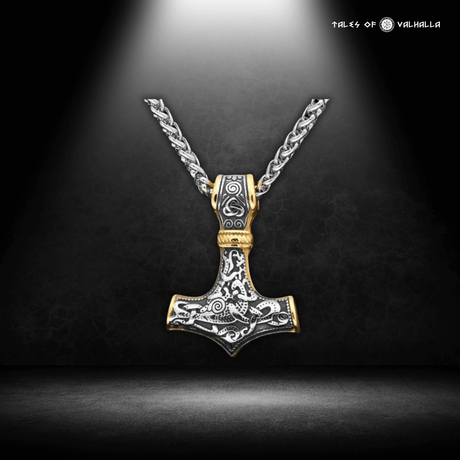
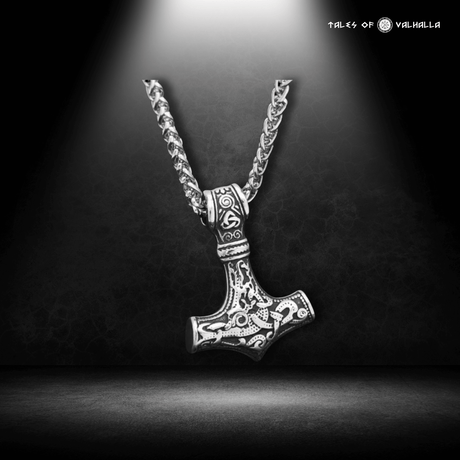
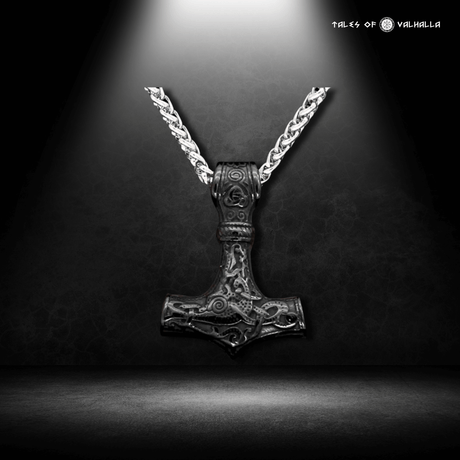
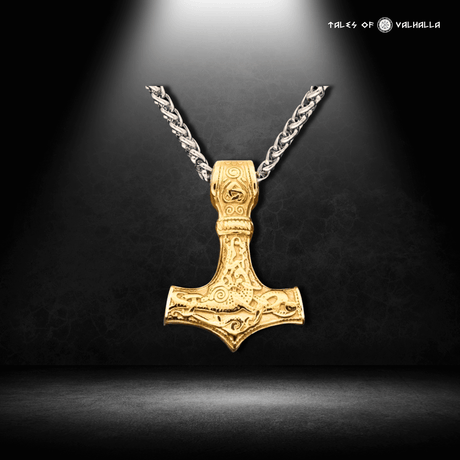
- May you like: Thor's Hammer Mjolnir Necklace
The Timeless Legacy of the Golden Halls
Asgard mythology is far more than an ancient relic of a bygone era. It is a vibrant mirror reflecting humanity's deepest questions about fate, courage, order, and mortality.
Whether studied through scholarly research, analyzed through historical texts, or enjoyed through modern entertainment, these celestial tales remind us that stories have the power to cross centuries and continents. The golden towers of the northern gods may exist only in imagination, but the lessons they impart on resilience and character remain entirely real, echoing proudly alongside the great tales of valhalla.