Imagine walking through a quiet museum exhibition in the heart of Chicago. The room is dimly lit to protect the ancient artifacts on display. You approach a small glass case containing a silver brooch. As you lean in closer, a chaotic and mesmerizing design catches your eye. You see a strange creature locked in a frantic struggle. Its paws tightly grip its own neck, the borders of the brooch, and the bodies of other creatures around it.
You have just come face to face with the Grasping Beast. This specific design is widely considered the most famous Viking Motif in all of history.
When people in the United States think about the ancient Norsemen, they usually picture giant warriors with heavy axes. They imagine massive wooden ships crossing freezing oceans. However, this artistic Viking Motif tells a completely different story. It reveals a society of master craftsmen who obsessed over intricate details. Today, we will explore the fascinating journey of this iconic Viking Motif. We will look at its origins, its hidden meanings, and its surprising place in modern American culture.
What Exactly is the Grasping Beast Viking Motif?
To understand this artistic phenomenon, we must first look closely at the design itself. The Grasping Beast is not a peaceful picture. It is an explosion of energy carved into wood, metal, or bone.

Viking Motif
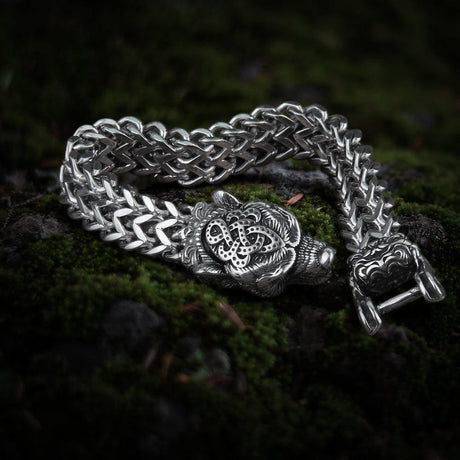
The creature typically has bulging eyes and a blunt snout. It looks remarkably similar to a wild cat or a mythical bear. The most important feature is its paws. The beast is always holding onto something. Sometimes it grips its own twisting body. Other times it holds onto the geometric frame surrounding it. The entire Viking Motif feels alive and restless.
You can compare this Viking Motif to a wild animal pacing inside a cage. It represents raw power contained within a strict boundary. The artists did not want to draw a realistic animal. They wanted to capture the feeling of untamed wilderness. By weaving the limbs of the beast into endless knots, they created an optical illusion that forces your eyes to constantly move across the artwork.
A Departure from the Past
Before the invention of the Grasping Beast, Norse art was much more rigid. Older designs featured simple ribbon shapes and basic animal profiles. The introduction of this new Viking Motif changed everything. Suddenly, the art had depth. The creatures leaped out toward the viewer. This radical shift in style completely transformed how the Norse people decorated their world.
The Historical Birth of a Legendary Viking Motif
Where did this incredible design come from? To find the answer, we must travel back to the year 820 AD. This was the early dawn of the true Viking Age. The Norse people were just beginning to build their massive ships and explore the globe.
Unearthing the Oseberg Ship
One of the greatest archaeological discoveries of all time happened in Norway in the year 1904. A local farmer dug into a massive mound of earth on his property. Deep inside the thick blue clay, he found a completely intact wooden burial ship. This vessel is known today as the Oseberg ship.
The wet clay perfectly preserved the wooden carvings on the ship for over a thousand years. When researchers finally cleaned the mud away, they found the earliest known examples of the Grasping Beast Viking Motif. The entire wooden prow of the massive ship was covered in these chaotic, gripping creatures.
The discovery of the Oseberg ship completely shattered modern assumptions. It proved that these ancient raiders possessed immense artistic talent. The craftsmen who carved this specific Viking Motif into the Oseberg ship spent thousands of hours perfecting their work. They wanted to ensure their fallen leaders traveled to the afterlife surrounded by immense beauty.
Analyzing the Artifacts: The Spread of the Motif
As the Norse people traveled, they took their favorite art with them. The Grasping Beast Viking Motif did not stay isolated in Scandinavia. It spread rapidly across the known world. We can look at archaeological data to understand exactly how popular this design became.
Below is a table illustrating the estimated regional distribution of artifacts featuring the Grasping Beast Viking Motif during the ninth century. These numbers reflect findings from major archaeological databases.
This data paints a very clear picture. While the Viking Motif originated in the Scandinavian heartland, it traveled far across the ocean. The craftsmen adapted their techniques based on the materials they had available in new lands.
Why Did They Carve It? Unlocking the Hidden Meaning
Art is never just decoration. It always reflects the psychology of the people who make it. So, what did the Grasping Beast Viking Motif mean to the average person living in the ninth century?
Life during this era was incredibly dangerous. Disease, freezing winters, and sudden violence were constant threats. The world felt chaotic and unpredictable. Many experts believe that this specific Viking Motif was a psychological tool used to cope with that fear.
Dr Elias Thorne is a renowned expert in medieval Norse culture. He offers a brilliant insight into this concept. He suggests that the Grasping Beast represents the chaotic forces of nature. When the artist binds the beast within a tight geometric pattern, they are symbolically controlling that chaos.
By wearing a silver brooch featuring this Viking Motif, a person might have felt protected. They were carrying a visual representation of order triumphing over wild destruction. It was a talisman against the darkness of the unknown world.
A Reflection of a Changing Society
We can also view this Viking Motif as a reflection of the Norse society itself. The Norse people were actively pushing their boundaries. They were grabbing onto new territories and gripping new trade routes. The aggressive and expansive energy of the Grasping Beast perfectly matches the aggressive and expansive energy of their culture during this exact time period.
Counterarguments: Did the Norse Actually Invent This Viking Motif?
To gain a comprehensive understanding of this subject, we must address alternative perspectives. History is rarely simple. Did a lone genius in Norway suddenly invent the Grasping Beast out of nowhere? Some art historians firmly say no.
A prominent counterargument suggests that the Norse people actually copied this Viking Motif from their southern neighbors. During their early raids, the Norse encountered the wealthy Carolingian Empire in modern day France. The art of this empire frequently featured lions gripping vines and branches.
Additionally, the Norse traveled to Ireland and Scotland. There they saw incredible Celtic knots twisting across stone crosses. Critics argue that the Grasping Beast is simply a stolen combination of Carolingian lions and Celtic knots.
- See more: The Evolution of Viking Art
Weighing the Perspectives
While it is absolutely true that the Norse absorbed outside influences, calling the art stolen is highly inaccurate. Let us consider a hypothetical scenario. What if the Norse had never left their icy shores? They would not have seen the Celtic crosses or the Carolingian lions. Their art would have certainly remained stagnant and simple.
However, cross cultural exchange is how all great art evolves. The brilliance of the Norse craftsmen was their unique adaptation. They took the foreign idea of a gripping lion and completely transformed it. They injected it with their own wild mythology and frantic energy. They created a distinct Viking Motif that looked totally alien to the monks in Ireland or the lords in France. They turned an imported spark into a roaring Norse fire.
Real Life Examples: The Viking Motif in the Modern United States
You might wonder why a thousand year old carving matters to an audience in the United States today. The reality is that this ancient Viking Motif is experiencing a massive revival in modern American culture.
Over the past ten years, home DNA testing has exploded in popularity. Millions of Americans have suddenly discovered they possess Scandinavian ancestry. This genetic revelation has sparked a deep desire to connect with their forgotten heritage. Since the ancient Norse did not leave behind many written books, Americans turn to the visual language of the Viking Motif to understand their ancestors.
The Rise of Nordic Tattoos
If you walk into any premium tattoo parlor in the United States today, you will find artists studying this exact Viking Motif. People choose to permanently ink the Grasping Beast onto their skin. For many Americans, this tattoo serves as a personal symbol of resilience. The beast fighting against its constraints resonates heavily with modern people facing their own modern struggles.
Hollywood and Pop Culture Influence
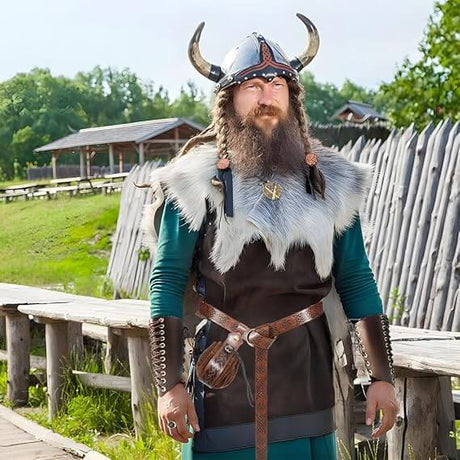
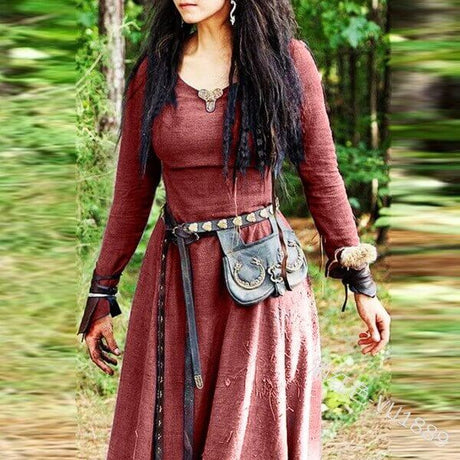
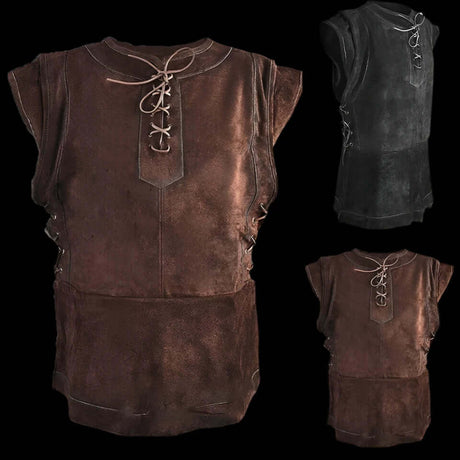
The entertainment industry has also pushed this Viking Motif into the mainstream spotlight. Blockbuster movies and massive streaming television shows feature incredible costume designs. The leather armor and silver jewelry worn by the actors are heavily decorated with the Grasping Beast.
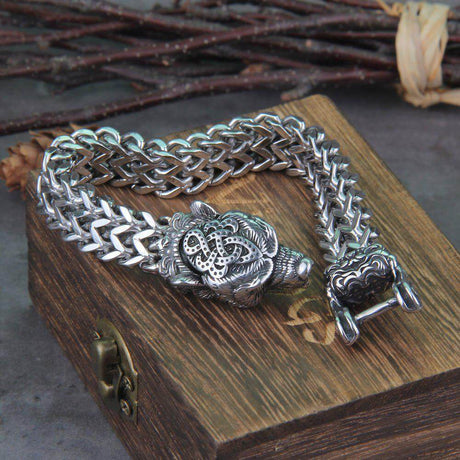
When viewers see these intricate designs on screen, they immediately search for them online. This has created a booming market for independent American jewelry makers. Artisans in places like Brooklyn and Austin are currently casting silver rings and bracelets using the exact same Viking Motif techniques developed in the ninth century. They are keeping the ancient craft alive and highly relevant.
The Future of the Grasping Beast Viking Motif
As we look toward the future, our understanding of this iconic Viking Motif will only continue to grow. Modern technology is completely changing how we study ancient art.

Viking Motif
In the past, researchers had to rely on simple hand drawn sketches of artifacts. Today, archaeologists are using high resolution three dimensional scanners to capture every tiny scratch and tool mark on the surviving wooden carvings. This digital preservation ensures that even if the physical wood eventually crumbles into dust, the Grasping Beast Viking Motif will survive forever in the digital realm.
Furthermore, artificial intelligence is now being used to analyze thousands of different carvings at once. These computer programs can spot tiny regional differences in the Viking Motif that human eyes completely miss. We are currently on the verge of mapping exactly which specific artist carved which specific ship based entirely on the subtle curves of their gripping beasts.
A Continuous Journey of Discovery
The study of this magnificent Viking Motif is not a closed book. Every single time a farmer in Europe plows a new field or a metal detectorist scans a new beach, there is a chance to find another lost masterpiece. Each new discovery adds another piece to the massive puzzle of history.
We must also continue to challenge our own assumptions. For decades, historians assumed that only men carved this intricate Viking Motif. However, recent discoveries of tools found in female burial mounds strongly suggest that women may have also been master carvers. The narrative of the past is constantly shifting as new evidence comes to light.
- May you like: Thor Engraved Axe
The Enduring Power of Ancient Art
The Grasping Beast is far more than just a clever arrangement of twisting lines. It is a powerful voice echoing from a distant and turbulent past. Through this single Viking Motif, an entire ancient civilization speaks to us across the centuries.
They tell us that they were not mindless savages. They show us that they possessed a deep appreciation for complex beauty. They demonstrate how they viewed their dangerous world and how they fought to maintain order within the chaos. The physical objects they left behind are small, but the artistic ideas they represent are absolutely colossal.
By actively studying and appreciating this incredible Viking Motif, we honor the anonymous master craftsmen who created it. We ensure that their unique vision of the world is never forgotten. The twisting animals carved into silver and bone will continue to inspire new generations of artists, historians, and dreamers for centuries to come. Their creative spirit will forever remain an essential part of the great tales of valhalla.