Have you ever looked up at a stormy night sky and felt a sudden chill, as if an unseen force was moving through the darkness? Thousands of years ago, the ancient people of Scandinavia experienced that exact same feeling. When rolling thunder shook the fjords, they did not see simple weather patterns. They heard the heavy hammer of thunder echoing across the heavens. For these ancient communities, the universe was a place of vibrant mystery, shaped by powerful entities who influenced every aspect of human existence.
Understanding the pantheon of Norse Gods provides a fascinating window into how historical societies made sense of life, death, nature, and fate. Today, interest in these ancient legends is growing rapidly across the United States and around the globe. Pop culture, fantasy literature, and modern spirituality have brought these legends back into the spotlight. In this comprehensive guide, we will journey through the icy beginnings of Scandinavian creation, explore the distinct personalities of the primary deities, and examine how their legacy continues to inspire millions in the modern world.
The Cosmic Origins of Norse Gods and the Nine Realms
To understand the pantheon, one must first look at how the cosmos began. Long before human history was recorded, ancient Nordic belief held that the universe originated from a massive abyss known as Ginnungagap. On one side lay Niflheim, a realm of freezing mist and ice. On the other side stood Muspelheim, a realm of intense heat and blazing fire. As the warm winds of Muspelheim melted the icy frost of Niflheim, life emerged from the moisture droplets.

The very first entity created was Ymir, a primeval giant. From Ymir came other living beings, including the early ancestral figures who would eventually give rise to the first divine beings. Ultimately, the early gods defeated Ymir and utilized his vast form to construct the physical cosmos. His flesh formed the soil, his blood created the vast oceans, his bones became mountains, and his skull formed the dome of the sky.
This dramatic creation story established a fundamental theme in Scandinavian myth: order is constantly carved out from chaotic forces. The physical world was known as Midgard, where humans resided. Surrounding Midgard were eight other distinct realms, all supported by Yggdrasil, a colossal world tree whose roots extended deep into ancient realms.
                  [ ASGARD ]  (Home of the Aesir)
                      |
   [ ALFHEIM ] --- [ YGGDRASIL ] --- [ VANAHEIM ]
   (Light Elves)      |              (Home of the Vanir)
                      |
   [ JOTUNHEIM ] -- [ MIDGARD ] ---- [ NIDAVELLIR / SVERTALFHEIM ]
   (Giants)       (Human Realm)      (Dwarves / Dark Elves)
                      |
   [ NIFLHEIM ] ----- + ------------ [ MUSPELHEIM ]
   (Ice / Mist)       |              (Fire Realm)
                      |
                 [ HELHEIM ]  (Underworld)
The divine inhabitants of these realms were primarily divided into two main factions: the Aesir and the Vanir. The Aesir resided in Asgard and focused heavily on leadership, war, order, and honor. The Vanir were closely linked to nature, fertility, wisdom, and the sea. Although these two groups initially fought a bitter conflict known as the Aesir-Vanir War, they eventually reached a peaceful reconciliation, exchanging hostages and combining their power to maintain cosmic balance.
Statistical Overview of the Pantheon and Modern Interest
To grasp the full scope of Scandinavian mythology and its modern influence, examining concrete metrics offers valuable context. The historical preservation of these stories, alongside the dramatic modern resurgence of traditional belief systems, paints a compelling picture.
| Metric / Topic Area | Statistical Data / Historical Value | Historical Context & Modern Impact |
| Estimated Historical Pantheon Size | Up to 66 distinct deities | Includes primary deities, minor figures, and regional powers. |
| Core Universes / Cosmic Realms | 9 interconnected realms | Structured around Yggdrasil, the central world tree. |
| Growth of Ásatrú (Icelandic Neopaganism) | Over 244 percent growth since 2007 | Demonstrates the fastest growing spiritual movement in the region. |
| Primary Manuscript Sources | 2 major collections (Poetic & Prose Eddas) | Composed mainly in 13th-century Iceland by scholars like Snorri Sturluson. |
| Cultural Reach in U.S. Media | Multi-billion dollar entertainment impact | Widespread integration in blockbuster movies, graphic novels, and gaming. |
Dr. Carolyne Larrington, a prominent scholar of Old Norse literature at Oxford University, notes that these myths remain deeply relatable because the deities are inherently flawed. Unlike many historical traditions where sacred entities are portrayed as perfect and faultless, the Norse Gods experience anger, grief, jealousy, and triumph. This humanized quality makes their stories timeless and universally engaging.
The Major Aesir Deities: Odin, Thor, Frigg, and Beyond
The realm of Asgard was home to the ruling family of divine beings. Each member possessed distinct responsibilities and personal ambitions that shaped the course of mythic history.
Odin: The Allfather of Strategy and Wisdom
At the summit of the hierarchy sat Odin, often called the Allfather. He was the sovereign ruler of Asgard and the seeker of cosmic wisdom. Odin was not merely a warrior chief; he was an intense seeker of truth who would sacrifice anything to gain deep knowledge.

Odin: The Allfather of Strategy and Wisdom
Legend records that Odin sacrificed one of his eyes at the well of Mimir simply to gain a single drink of wisdom. In another powerful story, he suspended himself from the world tree Yggdrasil for nine days and nights, pierced by his own spear, in order to learn the secret runes of power and magic. Accompanied by his two faithful ravens, Huginn (Thought) and Muninn (Memory), Odin constantly gathered news from every corner of the world. He was a complex figure who governed war, poetry, magic, and death.
Thor: The Defender of Humanity
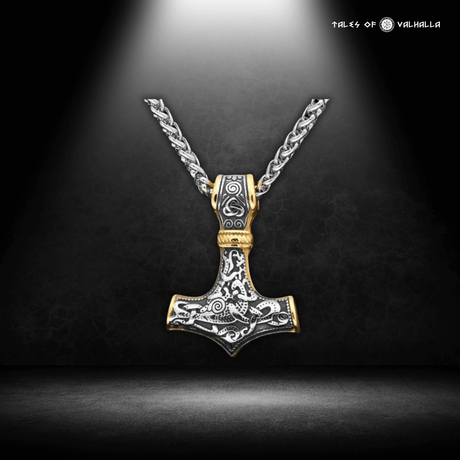
If Odin was the strategic ruler, Thor was the beloved protector of ordinary people. As the god of thunder, lightning, and physical strength, Thor defended both Asgard and Midgard from destructive giants. Armed with his legendary hammer, Mjolnir, Thor represented courage, dependability, and raw power.
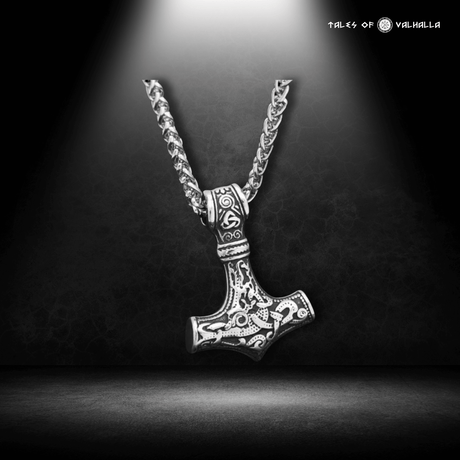
Ancient farmers and warriors carried hammer pendants as protective amulets. When dark storm clouds gathered over the northern valleys, people believed the heavy rumble was Thor riding across the sky in his chariot, striking down chaotic forces with Mjolnir. Thor was simple, direct, and fiercely faithful to his duties, making him one of the most widely venerated figures among ancient Nordic communities.
Frigg: Queen of Destiny and Protection
Frigg served as the Queen of Asgard and the wife of Odin. She was a figure of profound grace, foresight, and protective motherly care. Associated with marriage, hearth, and motherhood, Frigg possessed the gift of prophecy, able to see the destiny of all beings, though she rarely revealed what she knew.
Her devoted nature is best illustrated in her desperate attempts to save her beloved son, Balder. After foreseeing his tragic death in a prophetic dream, Frigg traveled across the realms, extracting binding promises from every animal, plant, stone, and metal never to harm Balder. Her extraordinary efforts highlighted the deep emphasis northern culture placed on family protection and fate.
Balder, Vidar, and Vale
Balder was celebrated as the gentlest and most radiant of the divine family. His beauty and kindness brought joy to all of Asgard. Tragically, despite his mother Frigg's heroic efforts to shield him, Balder was struck down through the deception of Loki, who discovered that a humble mistletoe plant had been overlooked in the solemn oaths.
Vidar and Vale represent the fierce theme of justice and survival in northern lore. Vidar, known as the silent one, possessed immense strength second only to Thor. He was destined to avenge Odin during the cosmic battle of Ragnarok. Vale grew to full adulthood in a single day to avenge Balder, proving that in this mythic world, actions always carry binding consequences.
The Vanir Deities and Natural Forces: Njord, Freyr, and Freya
While the Aesir maintained societal order and war strategy, the Vanir deities governed the abundance of the natural world, the rhythm of the seasons, and the prosperity of human life.
Njord: Sovereign of Wind and Waves
Njord was the leader of the Vanir family before moving to Asgard as part of a peace alliance. As the lord of the sea, winds, and coastal waters, Njord held enormous importance for seafaring people. Sailors prayed to Njord for calm waters, favorable winds, and bountiful fishing catches.
Njord resided in Noatun, a hall located along the ocean shore. His connection to wealth and seafaring made him a favorite figure among coastal traders and fishermen who relied on the unpredictable ocean for their survival and prosperity.

Njord: Sovereign of Wind and Waves
Freya and Freya: Love, War, and Abundance
Njord had twin children who became central figures in northern traditions: Freya and Freyr.
Freya was one of the most complex and revered figures in the entire pantheon. As the goddess of love, beauty, passion, and fertility, she was celebrated for her magnetic presence. Yet Freya was also a formidable force on the battlefield. She rode a chariot pulled by two giant cats and claimed half of all slain warriors to dwell in her sacred field, Folkvangr, while the remaining half went to Odin.
Her twin brother, Freyr, ruled over sunshine, gentle rain, agricultural harvests, and peace. As a symbol of prosperity and male virility, Freyr ensured that crops flourished in the fields and herds grew strong. Ancient rulers often claimed lineage from Freyr to validate their reign and ensure prosperity for their people.
Tricksters, Giants, and Supernatural Beings
The northern mythic universe was not limited to benevolent rulers. It was filled with unpredictable forces, cunning tricksters, and magical creatures that added tension and drama to every story.
Loki: The Complex Catalyst of Chaos
No discussion of Scandinavian legend is complete without examining Loki. The son of giants, Loki lived among the divine family in Asgard. He was intelligent, witty, and masterfully clever, yet his unpredictable nature constantly caused trouble.
Loki was a shapeshifter who could transform into a bird, a fish, or a horse. In many early tales, Loki used his cleverness to help Thor and Odin escape difficult situations. However, over time, his mischievous pranks darkened into malice. His role in orchestrating the death of Balder cemented his path as a tragic antagonist. Loki represents the unpredictable nature of chance, demonstrating how chaos can undermine even the most stable societies.
                    [ LOKI'S NOTABLE OFFSPRING ]
                                 |
        +------------------------+------------------------+
        |                        |                        |
  [ JORMUNGANDR ]           [ FENRIR ]             [ HEL ]
  Midgard Serpent           Giant Wolf             Ruler of the
  (Surrounds World)         (Bound by Fate)        Underworld
Hel and the Realms Below
Loki was the father of three terrible beings destined to play major roles in the final cosmic battle: Jormungandr the world serpent, Fenrir the massive wolf, and Hel, the mistress of the underworld.
Hel was granted authority over Helheim, the realm where individuals went if they died of old age or illness rather than in battle. Described as having a visage split between life and decay, Hel managed her cold domain with quiet authority. Unlike modern concepts of fiery punishment, Helheim was primarily a quiet, mist-shrouded place where souls rested in the cold earth.
The Alva and Elven Folklore
Beyond the major divine families were the Alva, or elves. Divided into Light Elves and Dark Elves, these supernatural beings inhabited realms like Alfheim and Svartalfheim. They possessed potent magic and could offer blessings or cause mischief depending on how humans treated them.
In modern places like Iceland, reverence for hidden beings persists in popular culture. Traditional folklore regarding hidden people (Huldufolk) reflects a deep respect for the natural landscape, reminding people to live in harmony with the surrounding environment.
Pagan Traditions Today: The Resurgence of Ásatrú
A common question among history enthusiasts in the United States is whether anyone still practices these ancient traditions today. The short answer is yes. While Christianity became the dominant faith across Scandinavia around 1000 AD, ancient traditions never completely vanished from local folklore.
In 1973, a group in Iceland formally revived the ancient belief system under the name Ásatrú, which translates to faith in the gods. Today, Ásatrú is officially recognized as a religion in several nations and represents one of the fastest-growing spiritual movements in Scandinavia.

A Complete Guide to Norse Gods & Goddesses
Modern practitioners do not view the ancient stories as rigid literal history. Instead, they interpret the traditions as metaphorical guides for living an honorable life. Key principles include:
- Courage in the face of life's challenges
- Deep respect for nature and environmental stewardship
- Hospitality and community solidarity
- Personal responsibility and honor
Counterarguments: Are Norse Gods Mystical Myth or Historical Allegory?
When analyzing historical mythologies, scholars often debate how these stories should be interpreted. Examining alternative perspectives provides a richer understanding of their true significance.
The Euhemeristic View: Historical Figures Turned Legend
One prominent historical theory, advanced by 13th-century Icelandic scholar Snorri Sturluson, is euhemerism. This view suggests that Odin, Thor, and other figures were originally real human kings and military leaders from ancient times. Over centuries of oral storytelling, their real achievements were exaggerated until later generations worshipped them as divine entities.
The Archetypal View: Psychological Symbols
Psychologists and mythologists, including Carl Jung and Joseph Campbell, argued that these figures represent universal human archetypes. In this view, Thor represents the protective instinct, Odin represents the quest for self-knowledge, and Loki represents the shadow side of human intelligence. From this perspective, the stories are enduring because they mirror internal human struggles rather than external historical facts.
The Ecological View: Personification of Nature
Another compelling argument suggests that northern myths were early scientific models. In a harsh northern climate, understanding weather, seasons, and natural hazards was essential for survival. By personifying lightning as Thor, winter as frost giants, and ocean currents as Njord, ancient communities created a memorable framework to teach survival skills and respect for nature.
+-----------------------------------------------------------------------+
|                       PERSPECTIVES ON MYTHOLOGY                       |
+-----------------------------------------------------------------------+
| 1. HISTORICAL (Euhemerism)  | Real leaders mythologized over time      |
| 2. PSYCHOLOGICAL            | Archetypes of the human mind and shadow   |
| 3. ECOLOGICAL               | Personification of natural weather forces |
+-----------------------------------------------------------------------+
Experiencing Legend Firsthand: Cultural Journeys and Modern Lodging
For travelers and history buffs eager to connect with this heritage, visiting Scandinavia offers an unforgettable experience. Across the region, ancient burial mounds, rune stones, and immersive museums bring history to life.
In places like Iceland, visitors can explore dramatic landscapes shaped by volcanoes and glaciers, environments that easily explain why ancient settlers envisioned realms of fire and ice. Iconic sites like the Icelandic Saga Museum in Reykjavik showcase early history, while modern monuments like Arctic Henge in Raufarhofn offer breathtaking architectural nods to ancient cosmology.
To truly immerse oneself in the atmosphere of northern legend, modern eco-lodges offer incredible ways to experience the night sky. For instance, unique accommodations like the Panorama Glass Lodge in southern Iceland allow guests to sleep under the Northern Lights inside custom glass cabins. Each cabin is named after iconic figures like Odin, Thor, Freya, and Alva, connecting modern luxury with ancient storytelling. Watching the dancing green auroras through a glass roof brings the wonder of ancient skies straight to life.
Conclusion: The Enduring Tales of Valhalla
The fascinating pantheon of Scandinavian deities offers far more than simple fairy tales. These stories reflect a deep exploration of human resilience, the balance of nature, and the courage required to face an uncertain world. From the strategic wisdom of Odin and the steadfast courage of Thor to the beauty of Freya and the chaotic brilliance of Loki, these figures continue to capture our imagination because they mirror the complexities of our own lives.
Whether you are exploring historical manuscripts, admiring ancient runestones, or gazing at the Northern Lights from a cozy glass cabin, these timeless legends remind us that great stories never truly fade. They live on in our culture, our language, and our shared curiosity about the universe. As we look up at the stars and contemplate the mysterious forces that shape our world, we continue to find inspiration in the unforgettable tales of valhalla.