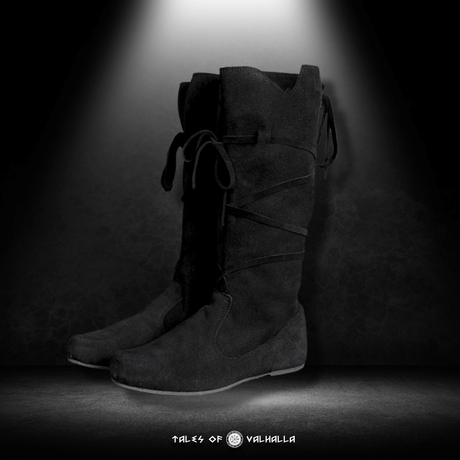
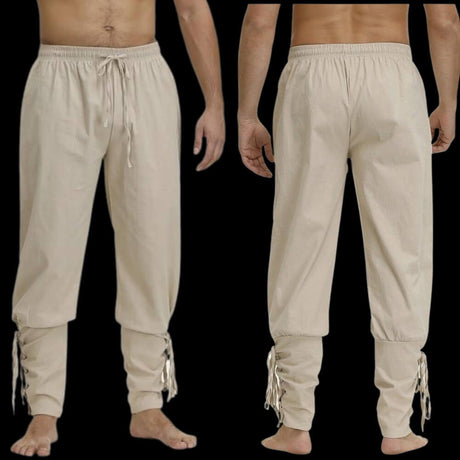
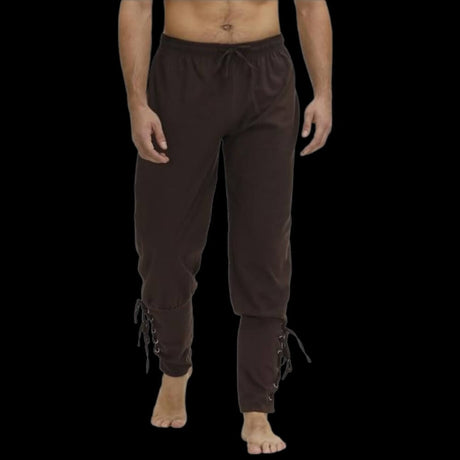
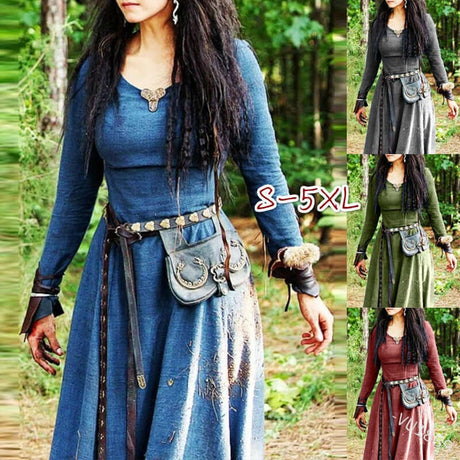
Imagine standing on a windswept fjord in Scandinavia during the late ninth century. Salt spray stings your face while rhythmic wood oars slice cold ocean water. Around you, tall warriors stand in longships, awaiting commands from a man whose word holds absolute power. He wears fine woolen robes trimmed in silver, a heavy iron sword at his waist, and gold arm rings flashing in the morning sun. This leader is not merely a warlord. He is a ruler who bridges tribal traditions, brutal conquests, and sophisticated statecraft.
When modern audiences think of Scandinavian history, popular media often paints a simplified picture of wild raiders. However, the true story of early medieval Scandinavia centers on dynamic, complex rulers. The powerful Viking Kings transformed scattered sea raiders into organized kingdoms that redefined the boundaries of Europe.
In this comprehensive guide, we unpack the fascinating history, tactical genius, socio-political systems, and enduring cultural impact of these iconic rulers.

King Cnut the Great demonstrating human limits.
What Defined a Viking King? Myth vs. Historical Reality
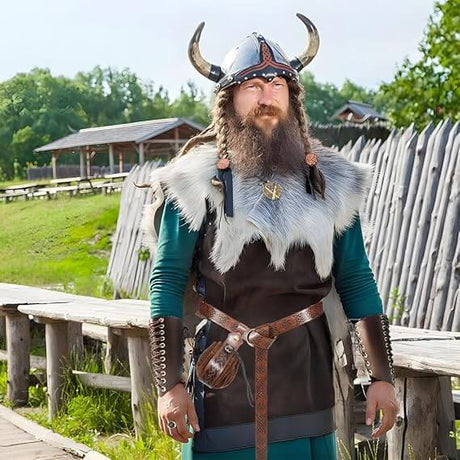
To understand these rulers, we must first dismantle popular pop-culture myths. In movies and television shows, a Scandinavian monarch is often portrayed as an absolute tyrant wearing horned helmets, ruling by fear alone. Historical evidence reveals a far more nuanced reality.

Top Facts About Viking Kings
Kingship in early medieval Scandinavia was not purely hereditary. Early leaders did not automatically inherit a crown by divine right. Instead, they relied on a system called elective kingship. Local assemblies of free landowners, known as the Thing, held significant leverage. Free farmers and warriors met at these gatherings to discuss laws, settle legal disputes, and approve or reject potential leaders.
A successful leader needed to demonstrate three core qualities:
- Generosity: A ruler had to distribute loot, silver, and land generously to maintain loyal followers.
- Military Success: Defeat in battle eroded authority instantly, often leading to rapid overthrow or assassination.
- Divine Favor: Rulers claimed descent from Norse deities, particularly Odin or Freyr, to legitimize their sacred lineage.
Dr. Neil Price, a renowned archaeologist and professor of archaeology at Uppsala University, notes that early Scandinavian leadership was inherently transactional. Rulers operated akin to warlords running a coalition. If a leader stopped providing wealth or victory, his followers abandoned him for a rival chieftain.
          +--------------------------------------------------+
          |         THE THREE PILLARS OF NORSE RULE          |
          +--------------------------------------------------+
          |                                                  |
          |   [ Military Success ] <---> [ Wealth Sharing ]  |
          |             \                      /             |
          |              \                    /              |
          |               v                  v               |
          |             [ Approval by the Thing ]            |
          +--------------------------------------------------+
As trade routes expanded across Western Europe and eastward into Miklagard (Constantinople), these leaders shifted from localized chieftainships to consolidated territorial monarchies.
Legendary Monarchs Who Shaped History
The historical record features remarkable figures whose actions forever altered European politics, religion, and territorial borders.
Harald Fairhair: Unifier of Norway
Harald Fairhair stands as one of the pivotal founding figures in Scandinavian history. Saga tradition tells us that Harald vowed never to cut or comb his hair until he conquered all regional chieftains and united Norway under a single crown. Following his decisive victory at the Battle of Hafrsfjord around 872 AD, he fulfilled his pledge and earned his famous epithet.
Harald instituted central taxation, seized ancestral lands from rebellious chieftains, and forced many recalcitrant nobles to flee westward across the Atlantic. This mass exodus directly spurred the permanent settlement of Iceland.
Harald Bluetooth: The Great Transformer
Reigning over Denmark and Norway during the mid-tenth century, Harald Bluetooth Gormsson changed the cultural trajectory of Scandinavia. He realized that remaining pagan isolated his kingdom from the growing economic and political power of Holy Roman Empire neighbors.
Around 965 AD, Harald officially converted Denmark to Christianity. To cement his legacy, he raised the famous Jelling Stones, stone monuments declaring that he won all of Denmark and Norway and made the Danes Christian. He also revolutionized military infrastructure by constructing massive circular ring fortresses known as trelleborgs. Modern technology users honor his unifying legacy every day, as the wireless Bluetooth technology takes its name and rune logo directly from his initials.
Cnut the Great: Emperor of the North Sea
Perhaps no ruler achieved greater geopolitical dominance than Cnut the Great. By 1028 AD, Cnut ruled an empire encompassing England, Denmark, and Norway, along with portions of Sweden.
Cnut was an extraordinary administrator. Rather than ruling conquered English territories through force alone, he integrated Anglo-Saxon law with Danish customs, built churches, and fostered international trade. A famous legend depicts Cnut placing his throne at the seashore and commanding the tide to stop, proving to his flatterers that even the power of earth's greatest monarchs is nothing compared to the divine power of God.
Key Historical Statistics and Timeline
Understanding the expansion of early medieval Scandinavian rule requires examining the empirical footprint left behind across Western Europe and beyond.
| Ruler / Dynasty | Key Reign Period | Primary Territory | Strategic Achievement |
| Ragnar Lothbrok (Semi-legendary) | Early 9th Century | Denmark / Sweden | Pioneered riverine raiding along the Seine and Thames |
| Harald Fairhair | c. 872 – 930 AD | Norway | Unified Norway; triggered Icelandic colonization |
| Erik Bloodaxe | c. 932 – 954 AD | Norway / Northumbria | Last independent ruler of Northumbria at York |
| Harald Bluetooth | c. 958 – 986 AD | Denmark / Norway | Introduced Christianity; built Trelleborg ring fortresses |
| Sweyn Forkbeard | 986 – 1014 AD | Denmark / England | Conquered England in 1013 AD after years of campaign |
| Cnut the Great | 1016 – 1035 AD | North Sea Empire | Harmonized Anglo-Danish law; supreme economic expansion |
| Harald Hardrada | 1046 – 1066 AD | Norway | Veteran of Byzantine Varangian Guard; died at Stamford Bridge |
Archaeological discoveries in places like York, Dublin, and Roskilde highlight how rapidly these rulers built trade networks. During the peak of the North Sea Empire, silver coin minting grew exponentially across Scandinavian urban centers.
+-----------------------------------------------------------------------+
|                 TIMELINE OF SCANDINAVIAN MONARCHY                      |
+-----------------------------------------------------------------------+
|  872 AD    | Battle of Hafrsfjord (Harald Fairhair unifies Norway)   |
|  965 AD    | Harald Bluetooth converts Denmark to Christianity         |
| 1013 AD    | Sweyn Forkbeard conquers England                          |
| 1016 AD    | Cnut the Great establishes the North Sea Empire           |
| 1066 AD    | Battle of Stamford Bridge (End of the traditional era)   |
+-----------------------------------------------------------------------+
Military Tactics, Governance, and Economic Strategy
How did monarchs from relatively low-population regions project power across vast oceanic distances? The answer lies in their innovative blend of naval technology, military tactics, and savvy economic leverage.
Naval Dominance and Longship Engineering
The ultimate weapon of these rulers was the skeid or busse, specialized longships engineered with shallow drafts and flexible clinker-built hulls. These ocean-worthy vessels navigated choppy open waters while drawing less than three feet of water.

Naval Dominance and Longship Engineering
This engineering allowed rulers to sail inland up rivers like the Seine, Rhine, and Volga, striking inland towns by surprise before local defenses organized.
               /|
              / |           === LONGSHIP ADVANTAGE ===
             /  |           1. Flexible wood hull absorbs ocean waves
            /   |           2. Extremely shallow draft (<3 ft)
           /____|           3. Reversible bow/stern design for fast escape
         [________]         4. Equal reliance on sail power and oarsmen
       ~~~~~~~~~~~~~~~
The Danegeld: Extortion as Statecraft
Rulers realized that extortion often proved more profitable than direct destruction. They pioneered the systematic collection of the Danegeld, a tax paid by Anglo-Saxon and Frankish rulers to prevent raids.
Thousands of pounds of silver flowed directly from English coffers into Scandinavian treasure hoards. Rulers used this immense wealth to buy political loyalty back home, build fortresses, and hire mercenary armies.
Shield Walls and Professional Housecarls
In land conflicts, rulers relied on the shield wall, an overlapping barrier of wood shields and spears that demanded intense discipline.
By the eleventh century, monarchs like Cnut established elite bodies of professional full-time bodyguard troops called housecarls. These soldiers trained rigorously, wielded devastating two-handed Dane axes, and stood as one of medieval Europe's premier military forces.
Religious Transformation: From Odin to the Cross
One of the most profound developments under these monarchs was the gradual transition from traditional Old Norse paganism to Roman Catholicism. This shift was not merely a spiritual awakening; it served as a calculated political strategy.
In early periods, rulers derived authority by claiming direct bloodlines to Norse gods. Sacrifices at religious hubs like Gamla Uppsala reinforced the ruler's role as high priest and protector.
However, as rulers expanded international trade, maintaining a pagan kingdom created severe diplomatic hurdles. Christian kingdoms across Europe held trade embargos against non-Christian rulers. By embracing Christianity, rulers gained access to:
- Literate Clergy: Monks and bishops brought administrative literacy, record-keeping, and legal drafting necessary to govern larger states.
- Divine Right: Christian theology presented kingship as an institution ordained by God, replacing fragile peer-elected leadership with absolute hereditary monarchies.
- European Alliances: Royal marriages with European dynasties became possible only after official conversion.
This transition created internal friction. Leaders like King Olaf Haraldsson (later Saint Olaf) faced violent resistance from pagan chieftains who viewed the new faith as an unwanted foreign import that undermined traditional personal liberties. Olaf fell at the Battle of Stiklestad in 1030 AD, yet his martyrdom ultimately sealed the Christianization of Norway.
Addressing Alternative Perspectives: Were They Truly Absolute Kings?
Historical scholars often debate whether early Scandinavian leaders should be classified as true "kings" in the modern sense.
Some historians argue that applying the term king to ninth-century leaders is anachronistic. Early figures like Ragnar Lothbrok or Ivar the Boneless acted more like regional warlords, sea-kings (sækonungar), or clan leaders rather than heads of consolidated states. Their rule was fleeting, bound to individual charisma and immediate plunder rather than structured institutions.
Conversely, scholars pointing to late tenth and eleventh-century rulers show clear evidence of true statehood. By the time of Cnut the Great or Harald Hardrada, these monarchs minted standardized currency, collected systematic taxes, maintained standing professional armies, and enforced nationwide legal codes.
The truth exists along a spectrum. Kingship evolved continuously across three centuries, moving from temporary raiding commanders to sophisticated medieval monarchs who held equal footing with European emperors.
The Legacy of Norse Monarchs in Modern Culture
The historical impact of these leaders extends far beyond yellowed manuscripts and archaeological sites. Their decisions reshaped the genetic, linguistic, and political map of Europe.
English law, culture, and vocabulary carry deep Scandinavian influences due to the Danelaw, a region of eastern England governed by Norse laws for generations. Words like law, sky, give, and take entered the English language through these interactions.
Furthermore, when the Scandinavian leader Rollo signed the Treaty of Saint-Clair-sur-Epte in 911 AD, he received land in northern France in exchange for protecting Paris. This territory became Normandy, and Rollo's great-great-great-grandson, William the Conqueror, invaded England in 1066 AD, forever altering world history.
Today, fascinating discoveries continue to shed light on how these rulers lived and governed. Advanced satellite imagery, ground-penetrating radar, and DNA analysis uncover buried longships, royal hall complexes, and trade silver hoards every year.
Conclusion: Eternal Tales of Valhalla
The story of early Scandinavian rulers is not a simple fable of chaotic plunder. It is an epic chronicle of adaptability, tactical ingenuity, and administrative ambition. These monarchs bridged two worlds, transforming local sea-faring tribes into powerful kingdoms that left an indelible mark on global history.
From the unified fjords of Harald Fairhair to the vast empire of Cnut the Great, these monarchs demonstrated how strategic vision and relentless energy can change the course of civilizations. Their legendary exploits, grand hall feasts, and dramatic battles ensure that their stories remain woven forever into enduring tales of valhalla.