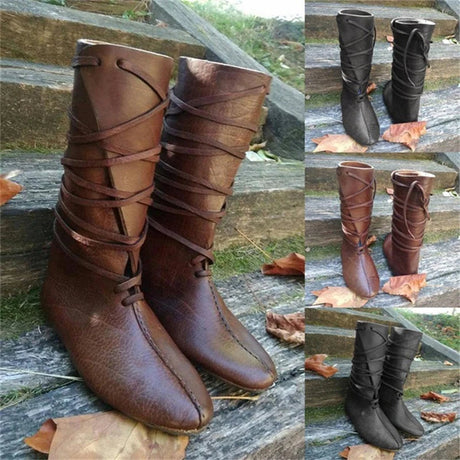
Imagine standing in a windswept Scandinavian clearing in the year 850 AD. The air smells of damp pine needles, woodsmoke, and the salty spray of a nearby fjord. All around you, the steady rhythm of Norse life echo-chopping wood for winter longhouses, shaping oak planks for ocean-going longships, and clearing thick wilderness for crops. At the center of every single one of these daily tasks sits one indispensable object: the axe.
Long before it became an iconic symbol of terrifying ocean raids across western Europe, the axe was quite simply the heartbeat of daily survival. For the ancient Norse people, this humble iron blade was the very first tool picked up in the morning and often the last weapon held at night.
In this comprehensive guide, we will explore the fascinating story of Viking axes. We will uncover how master blacksmiths forged them, how warriors wielded them on blood-soaked battlefields, and why these iron marvels remain powerful symbols of strength in modern American culture today.
A Tool of Everyday Survival: The True Heart of the Norse World
When modern media portrays the Viking Age, spanning roughly from 793 to 1066 AD, it almost always focuses on violent battles and burning monasteries. However, real life for the vast majority of Norse citizens revolved around agriculture, trade, woodworking, and home building. In this rustic world, swords were rare luxuries, but axes were universal necessities.

Viking Axes
From the moment a young boy learned to chop firewood to the day an elder carved a timber beam for a new hall, axes were constant companions. Norse carpenters relied on specialized hand axes to split wood along its natural grain. This technique created far stronger planks for longships than sawing ever could.
Small carving axes featured short wooden handles and thin, hair-thin edges designed for delicate craftwork, including crafting furniture, wooden bowls, and eating utensils. Meanwhile, heavy felling axes possessed thick poll heads designed to wedge through massive virgin timber. Without these versatile tools, the vast maritime expansion of the Norse people would have crashed to a complete halt before ever reaching open water.
                  [ NORSE WOODWORKING TECHNIQUE ]
                                 |
     Axe-Splitting Along Grain  --->  Saws Cutting Across Grain
                                 |
     Flexible, Watertight Oak  --->  Brittle, Water-Absorbing Wood
                                 |
        SUPERIOR LONGSHIPS           INFERIOR RIVER CRAFT
Battlefield Mastery: The Evolution of Viking Axes in Combat
While the axe began its journey at the farmstead woodpile, its transfer to the battlefield changed medieval warfare forever. Iron was accessible and affordable compared to copper-heavy bronze or complex folded steel swords. As a result, almost every free Norse farmer owned an axe, meaning they brought a tool they had used every day of their lives directly into shield-wall combat.
On the battlefield, Norse warriors wielded their axes with terrifying, surgical precision. Weapon designers developed distinct combat variations engineered for specific martial functions.
The Bearded Axe (Skeggøx)
The bearded axe featured a distinct extended lower blade edge, known as the "beard" or skegg. This design provided a wide cutting surface while keeping the overall weight light and fast. More importantly, the hook created by the beard allowed warriors to reach over an enemy’s shield, catch the rim, and yank it down, exposing the opponent to a fatal spear thrust.

The Bearded Axe
The Dane Axe
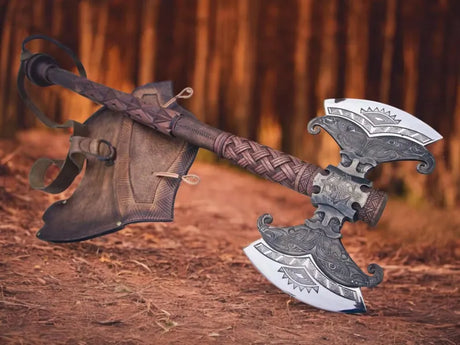
Developing later in the Viking Age, the Dane axe was a terrifying, two-handed weapon featuring a massive thin blade mounted on a wooden shaft stretching up to six feet long. Wielded by elite warriors known as huscarls, the sheer kinetic force of a Dane axe could split wooden shields, shatter mail armor, and fell armored cavalry horses in a single sweeping blow.

The Dane Axe
+-----------------------------------------------------------------------------------+
|                            THE ANATOMY OF COMBAT AXES                             |
+-----------------------------------------------------------------------------------+
| AXE TYPE      | HANDLE LENGTH | PRIMARY TACTICAL ADVANTAGE                        |
+---------------+---------------+---------------------------------------------------+
| Hand Axe      | 1.5 - 2 Feet  | Close-quarters fighting, lightweight backup blade |
| Bearded Axe   | 2 - 3.5 Feet  | Hooking shields, disarming weapons, quick slashes |
| Dane Axe      | 4 - 6 Feet    | Devastating crushing power, anti-armor, long reach|
+-----------------------------------------------------------------------------------+
Archaeological Evidence and Metallurgical Data
To truly understand how effective these weapons were, we must turn to modern archaeological research. Metallurgical analysis of excavated artifacts across Scandinavia shows a profound understanding of iron selection and heat treatment.
| Archaeological Discovery | Material Composition | Modern Scientific Finding |
| Mammen Axe (Denmark, 970 AD) | Soft iron body with high-carbon steel edge | Proven high-status ornamental weapon featuring intricate silver wire inlay. |
| Langeid Axe (Norway, 1030 AD) | Refined iron with forge-welded steel bit | Showed complex heat-treating techniques yielding a razor-sharp 55 HRC edge. |
| Grave Artifact Studies | 65% Iron body / 35% High-Carbon Steel | Proves blacksmiths reserved expensive high-carbon steel exclusively for cutting edges. |
Distinguished medieval archaeologist Dr. Elizabeth Roesdahl notes that the clever combination of a soft iron body with a high-carbon steel cutting edge gave Norse weapons a unique advantage. The soft iron absorbed heavy impacts without shattering, while the hard steel edge held a razor-sharp blade through prolonged combat.
Swords vs. Axes: The Ultimate Status Debates
A common misconception in popular media is that every Viking warrior carried a sword. In reality, swords were extraordinarily expensive status symbols. Forging a pattern-welded sword required massive amounts of imported high-grade iron ore and hundreds of hours of master labor.
Ownership of a sword signaled immense wealth, noble lineage, or high political ranking. An average farmer simply could not afford one. In contrast, an axe required far less raw iron and significantly fewer hours at the forge.
However, even high-ranking chieftains who carried magnificent swords frequently kept combat axes by their side. Swords were optimized for slicing unprotected flesh, but when facing heavy wooden shields, thick leather, or iron helmets, the raw crushing power of a heavy combat axe was far superior.
                          [ RESOURCE INVESTMENT ]
                                     |
         +---------------------------+---------------------------+
         |                                                       |
    VIKING SWORD                                            VIKING AXES
    * 800+ Hours Forge Time                                * 40-60 Hours Forge Time
    * High Iron Requirement                                * Moderate Iron Requirement
    * Extreme Financial Cost                                * Highly Cost-Effective
    * High Elite Status Symbol                             * Universal Battlefield Tool
Symbolism, Mythology, and Spiritual Meaning
Beyond practical woodworking and battlefield conquest, axes held deep spiritual meaning in northern culture. The axe represented authority, divine protection, and the unyielding strength needed to survive in a harsh northern climate.
In Norse mythology, divine figures were closely connected with powerful weapons. While the thunder god Thor famously wielded his crushing hammer Mjölnir, legendary heroes like Sigurd and divine champions were frequently depicted carrying battle-axes.
Furthermore, axes played a central role in burial customs. Archaeologists have excavated hundreds of pagan graves throughout Norway, Sweden, and Denmark containing axes placed beside the deceased. This practice served a dual purpose: providing the departed soul with a essential tool for building in the next world, and ensuring they arrived in the halls of the afterlife fully armed for cosmic battle.
- See more: Viking Food
The Art of the Forge: How Blacksmiths Crafted Legend
Forging a high-performance axe head was a masterclass in ancient engineering. Blacksmiths had to balance two conflicting physical properties: hardness (to hold an edge) and flexibility (to prevent breaking under shock).

Celtic Carving Axe
Step-by-Step Forging Process
- Selecting the Base Material: The blacksmith started with a bar of soft bloomery iron to form the main socket and body.
- Shaping the Eye: The iron bar was bent back on itself around a shaped mandrel to create the hole (eye) for the handle.
- Inserting the Steel Bit: The smith slotted a piece of hard, high-carbon steel into the front edge of the iron head.
- Forge-Welding: The metal was heated to a brilliant white heat (over 2,000°F) and hammered together, permanently fusing the iron and steel into a single piece.
- Shaping the Beard: The smith carefully drew out the lower edge of the blade to create the thin, sweeping "bearded" profile.
- Heat Treatment: The completed head was heated red-hot and quenched in water or oil to harden the steel edge, followed by mild tempering to relieve internal stress.
- Polishing and Fitting: Finally, the edge was ground sharp and fitted securely to a dense wooden haft made of tough ash or oak wood.
Modern Revival: Viking Axes in Pop Culture, Bushcraft, and Sports
Today, interest in ancient Scandinavian culture is enjoying a massive cultural renaissance across the United States. From blockbuster movies and television series to popular video games, the iconic silhouette of the Scandinavian axe remains a timeless symbol of strength, rugged independence, and wild adventure.
Beyond screen entertainment, these historical designs have found practical new life in outdoor recreation. Bushcraft enthusiasts, wilderness survivalists, and backcountry campers favor bearded axe designs for their exceptional versatility. The ability to choke up on the handle right behind the blade allows campers to perform delicate wood carving, skin game, and prep kindling with a single compact tool.
Additionally, the sport of urban axe throwing has exploded across American cities, bringing communities together for friendly competition using modern variants of classic throwers.
Exploring Alternative Perspectives: Throwing Axes Myth vs. Reality
A common trope in modern action films shows warriors throwing their primary hand axes across long distances at opponents. While throwing axes like the Frankish francisca existed in earlier centuries, most military historians agree that throwing your primary weapon away in a shield-wall battle was a recipe for disaster.
Losing your primary defensive weapon left a warrior completely vulnerable to incoming spear thrusts and arrow barrages. While lightweight throwing axes were occasionally used as shocking openers right before impact, hand axes were almost always retained firmly in hand for close-quarters fighting. Recognizing this distinction helps us appreciate the genuine tactical intelligence of historic northern warriors.
Conclusion: An Enduring Legacy
From their early roots in rustic farmsteads to their terrifying power in European battlefields, these legendary iron blades played a pivotal role in shaping world history. They were much more than mere weapons; they were ingenious woodworking tools, vital survival gear, beautiful works of art, and spiritual symbols of deep honor.
As we admire replica craftsmanship, study museum artifacts, or use these versatile tools around a outdoor campsite today, we connect directly with a rich history of human ingenuity, rugged resilience, and timeless courage. These incredible blades remain forever etched into history, continuing to inspire our modern imagination through timeless tales of valhalla.