Imagine standing on a high mountain ridge during a severe summer storm. Thunder cracks across the sky so loudly that it rattles your teeth, while lightning flashes illuminate the horizon. For the ancient Norse people, this was not merely a meteorological phenomenon. This was the sound of Thor’s heavy iron chariot wheels rolling across the clouds. It was the visual spark of Thor’s legendary hammer striking down another jötunn attempting to breach the realm of the gods.

In the vast realm of Scandinavian myth, Thor’s role was singular yet monumental. While his father Odin sought cosmic wisdom and magic, Thor provided raw, undeniable muscle. Thor’s physical power formed the primary barrier between civil order in Asgard and the chaotic forces of Utgard. Without Thor’s constant vigilance, the giants would have easily overrun the golden halls of the Aesir.
To understand the core of Norse myth, one must explore Thor’s legendary encounters with these primordial adversaries. These epic clashes reveal why Thor’s strength was held in such high reverence across Viking culture.
The Role of Thor’s Arsenal in Cosmic Defense
Thor did not rely solely on brute force to fight his oversized opponents. Thor’s divine equipment magnified his natural physical traits to legendary levels. Modern pop culture often portrays Thor’s hammer as a simple weapon, but historical texts emphasize a trio of magical artifacts that made Thor’s defense possible.
First and foremost stands Mjöllnir, the short-handled war hammer forged by the dwarven brothers Eitri and Brokkr. Mjöllnir never missed its target and always returned to Thor’s right hand like a boomerang. However, wielding Mjöllnir required incredible power. To grip the scorching metal handle, Thor’s hands relied on Járngreipr, a pair of thick iron gauntlet gloves.
Thor battling the Jotnar in classic art.
Furthermore, Thor’s strength doubled whenever he strapped on Megingjörð, a magical belt of power. When wearing Megingjörð, Thor’s physical capacity reached limits that intimidated even the grandest jötnar.
The Duel with Hrungnir: The Clay Giant and the Whetstone
One of Thor’s most dramatic individual battles occurred against Hrungnir, who was widely considered the strongest giant in Jötunheimr. The confrontation began when Odin foolishly challenged Hrungnir to a horse race. After losing, Hrungnir became heavily intoxicated inside Asgard’s grand feast hall, boasting that he would destroy Asgard, kill the gods, and carry off the goddesses Freyja and Sif.
The gods quickly summoned Thor to deal with the mountain sized threat. Recognizing Thor’s terrifying power, the giants constructed a massive decoy named Mokkurkalfi out of clay, giving it a mare's heart.
When Thor arrived at the duel site, Hrungnir stood ready with a massive whetstone as his weapon and a giant stone shield beneath his feet. Thor acted swiftly. Thor’s thrown hammer smashed through Hrungnir’s thrown whetstone in mid-air, shattering the stone into pieces that rained down onto Midgard. Mjöllnir continued forward, striking Hrungnir’s forehead and crushing his skull.
Although Thor won decisively, a large shard of the whetstone lodged deep within Thor’s head, serving as a permanent scar from one of Thor’s toughest duels.
- See more: Ginnungagap and the Norse Creation Myth
The Illusionist Castle: Thor’s Journey to Utgard-Loki
Not all of Thor’s battles were settled through straightforward combat. During a journey to Utgard alongside Loki and his human servant Thialfi, Thor encountered the giant king Utgard-Loki. The king challenged Thor’s party to a series of seemingly simple contests to prove their worth.
-
The Drinking Horn: Thor was challenged to empty a large drinking horn in three swallows. Thor’s greatest efforts barely lowered the liquid level.
-
Lifting the Cat: Utgard-Loki challenged Thor to lift a large grey cat off the floor. Thor could only manage to raise one of the cat's paws into the air.
-
Wrestling the Old Woman: Thor was tasked with wrestling an elderly nurse named Elli. Despite Thor’s immense effort, the old woman forced Thor onto one knee.
Thor felt deeply humiliated by these failures. However, as they departed the fortress, Utgard-Loki revealed that Thor’s group had been subjected to powerful magic and illusions.

The Illusionist Castle: Thor’s Journey to Utgard-Loki
The drinking horn was connected directly to the global ocean, and Thor’s massive gulps had lowered sea levels across the world, creating the tides. The grey cat was actually Jörmungandr, the Midgard Serpent that encircled the entire earth. Thor’s attempt to lift it had stretched the creature to the sky, terrifying the giants. Finally, the old woman was Old Age itself, a force that no mortal or deity could ever defeat.
Utgard-Loki quickly vanished, admitting that Thor’s terrifying power had almost shattered the fabric of reality itself.
Quantifying Thor’s Battles in Prose Edda Sources
To gain a clearer analytical view of how early medieval literature categorizes Thor’s encounters, we can look at the comparative frequency and outcomes of Thor’s primary fights within textual sources like the Prose Edda and Poetic Edda.
| Opponent / Giant | Battle Setting | Primary Weapon Used | Outcome / Impact |
| Hrungnir | Griottunagardar | Mjöllnir & Megingjörð | Absolute victory; skull crushed |
| Geirröðr | Geirröðr’s Hall | Molten Iron Bar | Giant slain with his own weapon |
| Thrym | Thrym’s Wedding Hall | Mjöllnir (disguised) | Destruction of entire wedding party |
| Utgard-Loki | Utgard Citadel | Divine Muscle & Will | Illusion exposed; sea tides created |
| Jörmungandr | Open Sea / Fishing Boat | Mjöllnir & Ox Head Bait | Draw; line cut by fear-struck giant Hymir |
The Recovered Weapon: Thor’s Bride Disguise
Another classic story highlights Thor’s tactical adaptability when brute force was temporarily unavailable. The giant Thrym secretly stole Mjöllnir while Thor slept, demanding the beautiful goddess Freyja as a bride in exchange for Thor’s weapon.
Freyja refused to go, leaving Asgard defenceless without Thor’s primary armament. The clever god Heimdall proposed a risky strategy: Thor would dress as the bride in a full wedding dress and veil, while Loki disguised himself as the maidservant.
Thor reluctantly agreed to the plan. At the wedding feast in Jötunheimr, Thor’s massive appetite raised Thrym's suspicions when the disguised bride devoured an entire ox, eight salmon, and three meads. Loki cleverly explained that Freyja had been so excited for the wedding that she had not eaten for eight days.
Satisfied with the answer, Thrym brought out Mjöllnir to consecrate the marriage ceremony, placing the hammer in the bride's lap. The moment Thor’s fingers gripped the familiar iron handle, Thor tore off the veil and unleashed chaos, slaying Thrym and his entire court in moments.
Mythological Nuances: Strategic Hero or Reckless Force?
While ancient Scandinavian populations viewed Thor as their ultimate protector, modern literary scholars often debate Thor’s broader impact on the cosmic order.
Some critics argue that Thor’s reliance on violence escalated the tension between gods and giants, making Ragnarok an inevitable doom rather than an avoidable conflict. By constantly killing the giants, Thor prevented any diplomatic resolution between the factions.
Conversely, mainstream mythologists emphasize that in the harsh Nordic environment, nature was perceived as inherently hostile. The giants represented glaciers, sea storms, and landslides. Thor’s thunderous hammer strikes represented humanity's eternal struggle to carve out a safe, structured world against wild, unyielding natural elements. From this perspective, Thor’s aggressive defense was the only thing keeping civilized society alive.
The Ultimate Legacy of the Thunder God
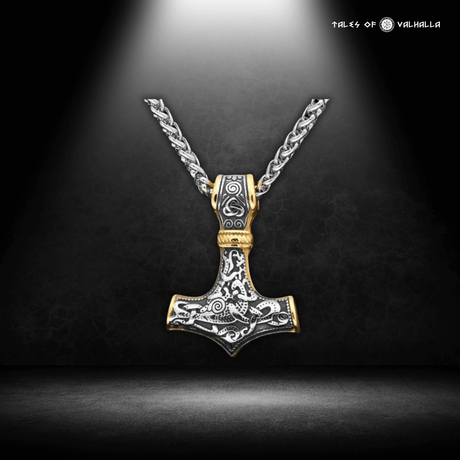
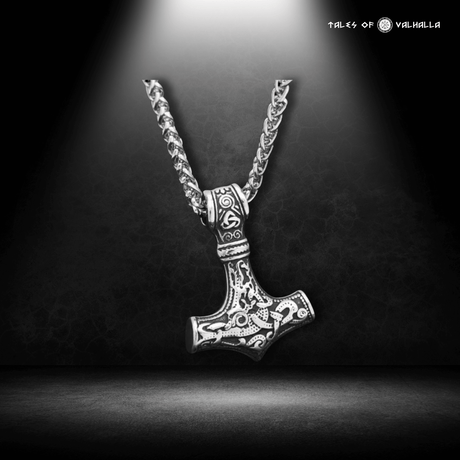
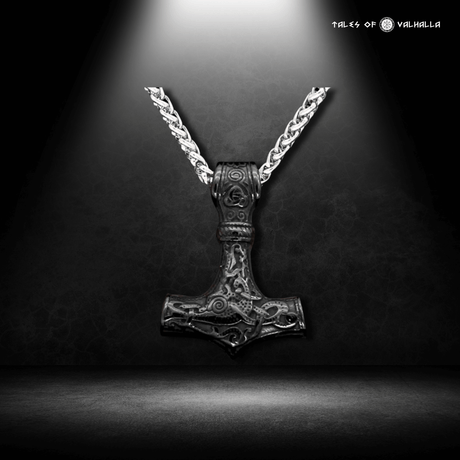
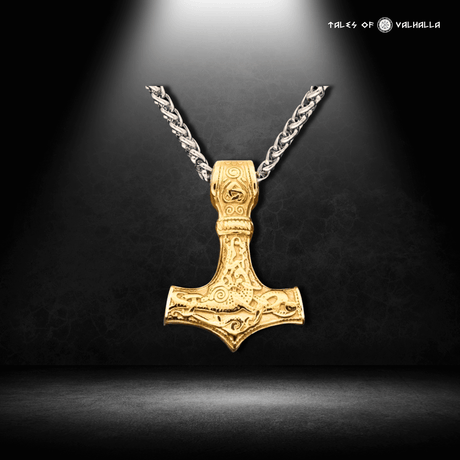
Thor’s stories were not merely entertainment around winter fires. They provided comfort to ancient farmers, sailors, and warriors who faced unpredictable environments every day. Wearing Thor’s hammer amulets became a widespread practice across Northern Europe, serving as a symbol of protection, strength, and resilience.
Thor’s battles show that true protection requires courage, adaptability, and unwavering commitment to one's community. These ancient narratives continue to echo across history, standing firm alongside the greatest tales of valhalla.