Imagine standing on the precipice of Midgard, looking up at a shimmering path of fire and light that stretches high into the heavens. This vibrant arterial road connects the fragile mortal world to Asgard, the golden realm of the Aesir gods. In Scandinavian mythology, this magical causeway is known as Bifröst. However, a bridge of such ultimate strategic importance cannot remain undefended. Standing at its base, stationed at Himinbjörg where the burning rainbow touches the sky, stands the vigilant watchman of the gods: Heimdallr.
Together, Bifröst and Heimdallr represent one of the most iconic duos in world mythology. They embody the delicate boundary between the human realm and the divine, serving as both a pathway for the gods and a fortress wall against the chaotic forces of Jotunheim.
Understanding the relationship between Bifröst and Heimdallr requires us to venture deep into old Scandinavian lore, literary Eddas, and modern scholarly interpretations. Let us explore the origins, mechanics, and ultimate fate of the rainbow bridge and its formidable guardian.
The Nature of Bifröst: Fire, Light, and Sacred Geometry
While modern cinema often portrays Bifröst as a solid prism of translucent glass, ancient Norse texts describe a far more volatile and sacred structure. The name Bifröst roughly translates from Old Norse to "the shimmering path" or "the fleeting road." In other manuscripts, it is referred to as Bilröst, meaning "the momentarily glancing rainbow."

The Nature of Bifröst
The Three Colors and the Red Flame
According to the Prose Edda, written by Snorri Sturluson in the thirteenth century, Bifröst was built with three distinct colors crafted by the gods through magic. Crucially, the red band of the rainbow was not merely pigment. It was intense, roaring fire.
This burning red edge served a practical security purpose. The frost giants and mountain giants of Jotunheim possessed immense physical strength, but they could not cross the burning flames of Bifröst without being incinerated. Thus, the fiery rainbow acted as an automated defense grid for Asgard long before any enemy could even reach Heimdallr.
The Daily Procession of the Aesir
Every single day, the Aesir gods rode across Bifröst on their horses to hold council at the Urdarbrunnr, the Well of Fate, located under the roots of the world tree Yggdrasil.
However, one prominent god was strictly forbidden from stepping onto the rainbow bridge: Thor. The God of Thunder was so heavy and possessed such intense raw electrical energy that his footsteps would shatter the delicate bridge and set the surrounding waters ablaze. Instead, Thor was forced to wade through two raging rivers, Körmt and Örmt, whenever he traveled to the daily council.
| Attribute | Bifröst Specifications |
| Old Norse Meaning | Shimmering Path or Fleeting Road |
| Primary Structural Material | Light, air, three magic colors, and divine flame |
| Connected Realms | Midgard (Earth) to Asgard (Realm of the Gods) |
| Key Physical Property | The red arc burns with active fire to repel giants |
| Excluded Deity | Thor (forced to wade through rivers to prevent breaking it) |
Heimdallr: The White God with Golden Teeth
Guarding the entrance to this miraculous bridge is Heimdallr, one of the most enigmatic deities in the entire Scandinavian pantheon. Ancient texts refer to him as the "White God" (Hvítass), reflecting his luminosity, purity, and sacred association with light.

Heimdallr
Mysterious Origins and Extraordinary Senses
The origin story of Heimdallr is unlike that of any other Aesir god. According to the poem Hyndluljóð, Heimdallr was born from nine mothers, who were sisters representing the ocean waves. These nine wave maiden mothers nourished the newborn child with the power of the earth, sea water, and sacrificial blood, granting him supernatural gifts.
To perform his role as guardian of Bifröst and Heimdallr's sacred watch, he possessed physical senses that surpassed human comprehension:
-
Microscopic Sight: Heimdallr could see for a hundred leagues (over three hundred miles) in total darkness as easily as in bright daylight.
-
Hyper-Sensitive Hearing: His hearing was so sharp that he could hear grass growing out of the earth and wool growing on the backs of sheep.
-
Sleepless Vigilance: He required less sleep than a bird, remaining wide awake at his post for centuries without tiring.
- See more: Valhalla vs. Fólkvangr
The Sacred Artifacts of Heimdallr
To fulfill his sworn duty at the base of Bifröst, Heimdallr wields specific weapons and artifacts that are legendary in their own right.
1. Gjallarhorn (The Yelling Horn)
Heimdallr’s primary weapon is not a sword, but a musical instrument. Gjallarhorn is a massive blowing horn whose blast can be heard throughout all Nine Realms of the Norse universe. Most of the time, the horn rests near the Well of Mímir or hangs from the branches of Yggdrasil. However, when the enemies of order gather for the final battle, Heimdallr will sound the horn to warn gods and mortals alike.
2. Hofuð (The Head)
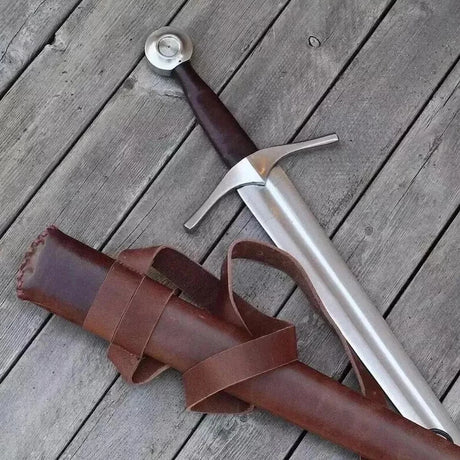
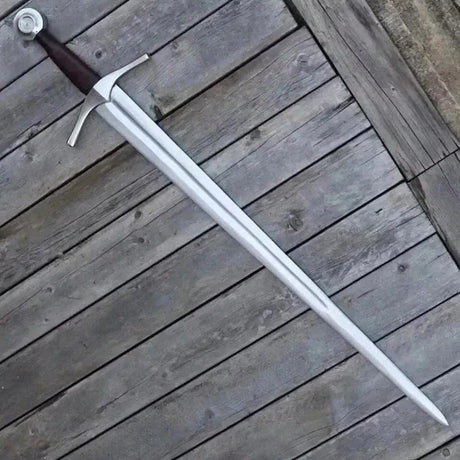
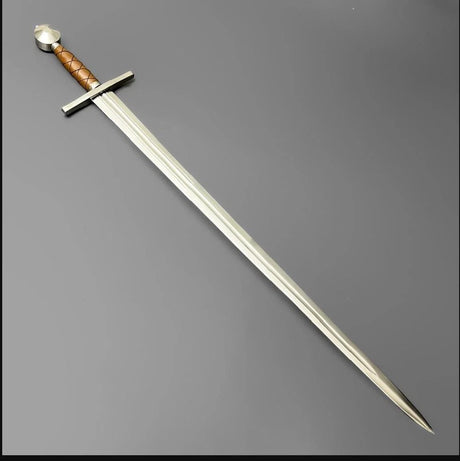
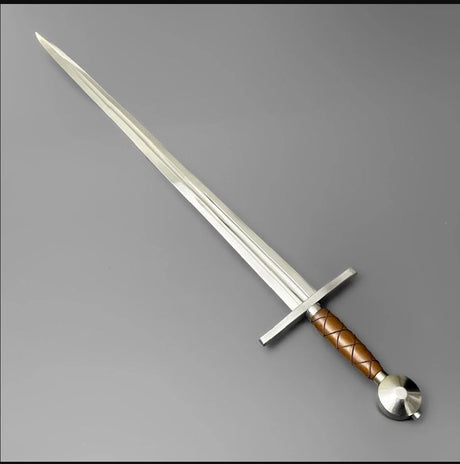
Heimdallr carries a formidable sword called Hofuð, which simply means "Head." In cryptic skaldic poetry, a head is sometimes referred to as "Heimdallr's sword," creating a fascinating linguistic riddle that scholars continue to analyze today.
3. Gulltoppr (Gold-Mane)
When traveling away from his post at Himinbjörg, Heimdallr rides Gulltoppr, a majestic horse with a glowing golden mane that shines across the sky.
| Item / Artifact | Function and Symbolic Value |
| Gjallarhorn | Cosmic alarm horn heard across all Nine Realms |
| Hofuð | Heimdallr's sharp sword, closely tied to poetic metaphors |
| Gulltoppr | Golden-maned stallion used for divine travel |
| Himinbjörg | Heavenly castle situated where Bifröst connects to Asgard |
The Role of Bifröst and Heimdallr in the Creation of Human Classes
Beyond guarding the rainbow path, Heimdallr played a foundational role in shaping human society. Under the name Ríg or Rígr, Heimdallr traveled across Midgard disguised as a wanderer, visiting three different households over the course of his journey.
As detailed in the Eddic poem Rígsþula, Heimdallr's visits resulted in the birth of three sons who became the forefathers of the three main social classes in early Germanic and Scandinavian culture:
-
Thrall (The Serf/Laborer): Born to a humble couple living in a simple hut, representing hard physical labor and agrarian work.
-
Churl (The Freeman/Farmer): Born to a prosperous farming couple, representing craftspeople, landholders, and free warriors.
-
Jarl (The Noble/Ruler): Born to a wealthy aristocratic couple, representing leaders, strategists, and masters of runic magic.
Through this myth, the connection between Bifröst and Heimdallr extends far beyond military defense. Heimdallr acts as the divine ancestor who brought social structure, law, and runic knowledge to humankind.
Academic Research and Linguistic Analysis
When analyzing historical primary sources, academic scholars frequently note how scribes categorized these ancient concepts. Below is a comparative breakdown of how key manuscripts record details about Bifröst and Heimdallr.
| Source Document | Date Range | Primary Focus on Bifröst | Primary Focus on Heimdallr |
| Codex Regius (Poetic Edda) | ~1270 CE | Described as best of bridges in Grímnismál | Focus on his genealogy and horn in Völuspá |
| Prose Edda (Snorri Sturluson) | ~1220 CE | Detailed breakdown of colors and fire mechanics | Comprehensive account of his senses and weapons |
| Gesta Danorum (Saxo Grammaticus) | ~1200 CE | Euphemistic references to heavenly pathways | Euhemerized human warrior depictions |
Linguistic research shows that the word Bifröst shares etymological roots with Old High German words for twinkling or shaking. This supports the idea that the ancient Norse people originally saw the Aurora Borealis (Northern Lights) or the shimmering Milky Way as inspiration for the bridge, rather than just a daytime rainbow.
"The rainbow bridge represents the ultimate threshold archetype in Germanic myth. Heimdallr does not merely guard a gate; he stands at the cosmic intersection where time, light, and mortality meet."
— Dr. Carolyne Larrington, Professor of Medieval European Literature at Oxford University
The Apocalyptic End: Bifröst and Heimdallr at Ragnarök
No discussion of Bifröst and Heimdallr is complete without examining their ultimate fate during Ragnarök, the twilight of the gods.
When the winter of Fimbulwinter ends and the bonds holding evil forces snap, the sons of Muspelheim, led by the fire giant Surtr, ride toward Asgard. As these fiery hordes ride across Bifröst, the immense weight of their supernatural fury overpowers the magic of the bridge.
The glowing rainbow shatters into pieces, falling into the ocean below. The primary defensive barrier of the gods is forever destroyed.
Seeing the collapse of the causeway, Heimdallr stands atop Himinbjörg and raises Gjallarhorn to his lips. He blows a blast so loud and resonant that it shakes the roots of Yggdrasil. The gods assemble for their final stand on the plain of Vigrid.
In the ensuing battle, Heimdallr meets his eternal rival: Loki, the trickster god. The two have hated each other since ancient times, frequently clashing over stolen treasures like the necklace Brísingamen. On the blood-soaked field of Vigrid, Heimdallr and Loki engage in a duel to the death. Each strikes a fatal blow against the other, falling dead side-by-side as the world burns around them.
Historical Context and Cultural Significance
For the people of the Viking Age, the mythology of Bifröst and Heimdallr carried deep practical meaning:
-
Vigilance as a Virtue: In a society where coastal raids and sudden attacks were common, Heimdallr represented the ideal watchman: watchful, loyal, and unyielding.
-
Sacred Boundaries: The burning fire of Bifröst reminded mortals that sacred spaces required protection from chaotic, destructive forces.
-
Acceptance of Destiny: Even though Heimdallr knew he was destined to fall fighting Loki, he performed his duty with unwavering loyalty until the very end.
Conclusion
The enduring myth of Bifröst and Heimdallr remains one of the most powerful legacies of Scandinavian folklore. From the shimmering, burning arc of the rainbow bridge to the sleepless, golden-toothed guardian watching over Asgard, this narrative captures the majesty and tragedy of Norse cosmology.
Heimdallr's horn will one day sound, and the bridge may eventually break, but their legacy lives on in every retelling of the ancient tales of valhalla.