Imagine walking through a dense, foggy forest in the Pacific Northwest or looking out across the vast plains of the Midwest. Suddenly, a massive, ink-black bird perches on a high pine branch above you. It tilts its head, fixing you with an intelligent, calculating gaze. You might feel a brief shiver of curiosity. For the ancient peoples of Scandinavia, that bird was never just a random creature searching for food. It was an active participant in the governance of the cosmos.
While modern American culture often associates ravens with spooky gothic stories or Halloween decorations, the Viking world viewed them as symbols of supreme intelligence, psychological depth, and divine communication. At the absolute pinnacle of this avian reverence are two legendary birds whose daily flight maintained the stability of the entire Norse universe. Their names are Huginn and Muninn.
As the loyal, inseparable companions of Odin, the chief god of the Norse pantheon, these two ravens acted as his eyes and ears across the cosmos. Every single morning at the break of dawn, Odin would send Huginn and Muninn out from his high throne in Asgard. They would soar over all nine realms, watching the movements of kings, listening to the quiet whispers of lovers, and tracking the hidden battle plans of giants.
By breakfast time, the two birds would return to perch directly on the shoulders of the Allfather, whispering everything they had discovered directly into his ears. In this comprehensive guide, we will unpack the deep history, profound symbolism, and modern cultural impact of Huginn and Muninn, revealing why these ancient black birds still capture our collective imagination today.

The Eyes of the Allfather: Odin's Ravens Huginn and Muninn
Our Analytical Roadmap
To truly understand entities as complex as Huginn and Muninn, we must look deeper than basic fantasy tropes. We will act as historical detectives, sorting through medieval texts, archaeological findings, and modern psychological theories to map out the complete footprint of these legendary ravens.
Our journey begins by examining the primary historical texts where Huginn and Muninn are officially recorded. We will analyze the classic literary blueprints preserved in both the Poetic Edda and the Prose Edda. Following this textual exploration, we will dive into the fascinating linguistic origins of their names, uncovering how they serve as physical stand-ins for the human mind.
Next, we will look at the complex relationship between Odin and his birds, exploring why the supreme deity accepted an incredibly vulnerable emotional trade-off to maintain his global spy network. We will also step outside the Nordic world to examine striking parallels in global mythology, particularly within ancient Greek traditions.
Finally, we will address the darker role that Huginn and Muninn play on the battlefield, map out their massive explosion into modern television, books, and video games in the United States, and reflect on the timeless psychological truths these avian partners represent for our lives today.
The Literary Blueprint: Textual Evidence of the Sky Ravens
Our entire modern understanding of Huginn and Muninn comes directly from 13th-century Icelandic manuscripts. These historical documents saved fragments of a rich oral storytelling culture that existed across northern Europe long before the introduction of the written word.
The Testimony of the Prose Edda
In the Prose Edda, compiled by the brilliant Icelandic historian and politician Snorri Sturluson, we find the most direct description of how Huginn and Muninn operated on a daily basis. Snorri records these specific details in chapter 38 of the Gylfaginning (The Deluding of Gylfi).
In this famous text, a mysterious character known as the High One explains the vast intelligence network of the gods to an inquiring king. Snorri explicitly describes how the two ravens sit directly upon Odin's shoulders. The moment dawn breaks across the horizon, Huginn and Muninn take flight, soaring above every mountain, ocean, and forest across the nine realms.
They remain on the wing for the entire day, gathering raw intelligence, observing secret conversations, and noting major world events. Right as the gods gather for breakfast the next morning, the ravens fly back into the grand halls of Asgard. They land gently on Odin's shoulders and whisper the accumulated secrets of the worlds directly into his ear. Snorri notes that because of this daily ritual, the Allfather becomes remarkably well-informed, earning the sacred titles of Hrafnaguð (Raven God) and Hrafnáss (Raven Priest).
Cryptic Warnings in the Poetic Edda
While Snorri Sturluson provides a neat, orderly overview of this daily flight, the older anonymous verses of the Poetic Edda offer a much darker and more emotionally complicated perspective. In the beautiful poem Grímnismál (The Sayings of Grimnir), Odin is trapped between two intense fires by a cruel human king. As he endures the terrible heat, he utters a haunting stanza concerning Huginn and Muninn that has kept historians debating for centuries:
"Huginn and Muninn fly each day over the wide earth; I fear for Huginn lest he come not back, yet I watch more for Muninn."
This brief stanza reveals that the partnership between Odin and his ravens was not a casual, magical convenience. It was a stressful, dangerous endeavor. Every time Huginn and Muninn left the safety of Asgard, Odin experienced genuine fear that his companions might be killed, trapped, or lost in the wild spaces of the cosmos.
The lines show a deep vulnerability in the chief god, proving that his immense cosmic wisdom came at a high psychological cost.
Decoding the Names: Thought and Memory in Flight
To truly unlock the secrets of Huginn and Muninn, we have to look closely at the specific Old Norse roots of their names. The ancient Scandinavians did not choose these labels at random. The names are literal descriptions of cognitive functions.
The name Huginn originates directly from the Old Norse word hugr, which translates to "thought," "spirit," or "intellect." The name Muninn stems from the word munr, which means "memory," "mind," or "emotion." Therefore, when we watch Huginn and Muninn fly across the sky, we are not looking at two ordinary birds. We are witnessing literal manifestations of Thought and Memory soaring through the world.
                  [ Odin's Divine Consciousness ]
                     /                       \
                    /                         \
         [ Huginn (Thought) ]         [ Muninn (Memory) ]
                  |                            |
       * Projects out at Dawn       * Anchors Past Experiences
       * Seeks New Information       * Maintains Core Identity
                    \                         /
                     \                       /
                [ Daily Return to the Allfather ]
This linguistic connection completely redefines why Odin expressed such intense worry in the Grímnismál. When Odin admits that he fears Huginn might not return, but worries even more about losing Muninn, he is speaking metaphorically about his own mental stability.
As an aging god who sacrificed an eye to a magical well and hung himself from a frozen tree to learn the secrets of the runes, Odin is constantly terrified of losing his mind. He fears that his active thoughts might drift away into madness, but he terrifies himself even more with the idea that his core memory might vanish, leaving him empty, forgetful, and unable to rule the cosmos.
Through Huginn and Muninn, the Norse people created a stunningly accurate psychological portrait of the human mind split into active projection and stable reflection.
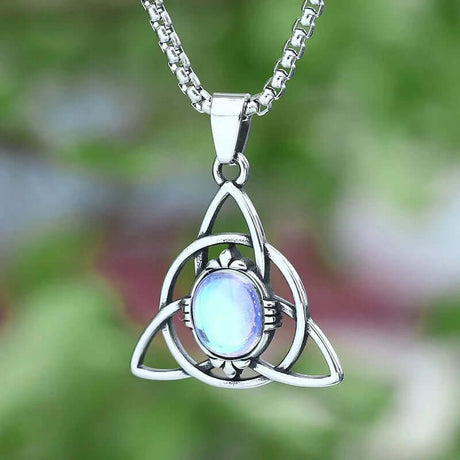
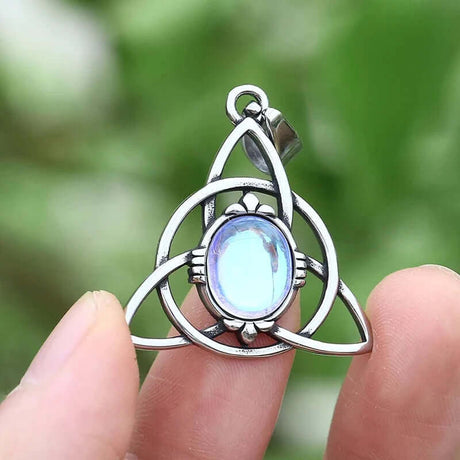
- May you like: Celtic Knot Ring
Historical Quantifications: The Archeological Footprint of the Ravens
The deep cultural respect for Huginn and Muninn was not confined to abstract poetry. It manifested heavily in the physical objects, military banners, and sacred jewelry crafted by ancient artists during the Migration Period and the Viking Age.

Historical Quantifications: The Archeological Footprint of the Ravens
For a warrior or leader living in early Scandinavia, displaying the image of Huginn and Muninn was a clear statement of elite status, wisdom, and divine favor. Archaeologists across northern Europe have discovered numerous bronze helmet plates, silver amulets, and gold bracteates showing a one-eyed figure accompanied by two prominent birds.
The following table organizes these crucial archaeological findings and historical metrics, demonstrating how widespread the image of Huginn and Muninn truly was across the ancient world.
| Object / Discovery Site | Approximate Historical Date | Regional Origin | Presence of Huginn and Muninn | Cultural Significance |
| The Torslunda Plates | 6th to 7th Century AD | Öland, Sweden | Two distinct birds flanking a prominent, weapon-bearing figure | Shows that the raven partnership existed long before the Viking Age began |
| Sutton Hoo Helmet | Early 7th Century AD | Suffolk, England | Embedded avian motifs on the eyebrows and nose-guards | Demonstrates the spread of raven protection into Anglo-Saxon royal armor |
| The Kirk Michael Cross | 10th Century AD | Isle of Man | Explicit carvings of ravens perched on a figure holding a spear | Highlights how the imagery survived into the transitional Christian era |
| Viking Coin Hords | Various Discovery Dates | York and Dublin | Raven figures stamped directly onto silver currency pieces | Proves that the raven was a primary symbol of economic and political authority |
The Bridge to the Dead: Ravens on the Battlefield
While Huginn and Muninn are celebrated as symbols of supreme wisdom, we cannot ignore the deeply dark, macabre environment where these birds naturally thrived. In the ancient world, ravens were the ultimate birds of carrion, arriving in massive flocks to consume the remains of the fallen on fields of conflict.
Because of this natural behavior, Huginn and Muninn maintained a direct, chilling connection to the transition of souls from the mortal realm to the afterlife. When the ravens soared over a violent clash between rival armies, they did not just watch for informational tidings. They acted as advance scouts for the Valkyries, the divine maiden spirits who chose which brave warriors would die in battle.
[ Mortal Conflict Erupts ] ---> [ Huginn & Muninn Circle Above ] ---> [ Valkyries Alerted to the Scene ]
              ^                                                                      |
              |                              (The Cycle)                             v
  [ Wisdom Sent to Asgard ] <--- [ Ravens Feast on the Fallen ] <--- [ Brave Souls Escorted to Heaven ]
The presence of Huginn and Muninn circling high above a shield-wall was viewed by warriors as a double-edged sword. On one hand, it struck absolute terror into their hearts, signaling that a massive harvest of death was about to begin. On the other hand, it provided intense comfort, proving that the Allfather was actively watching their courage and stood ready to welcome the bravest souls into his golden hall.
Through Huginn and Muninn, the act of scavenging was elevated from a grim reality of nature into a holy, necessary ritual of cosmic recycling.
Comparative Mythology: Avian Spies Across Cultures
The concept of a powerful deity using intelligent birds as a global spy network or a personal surveillance system is a fascinating theme that appears in several distinct ancient traditions. When we compare Huginn and Muninn to other mythologies, we see how different societies used birds to solve the practical problem of divine omniscience.

Comparative Mythology: Avian Spies Across Cultures
The most striking parallel to Huginn and Muninn exists within ancient Greek mythology, centered around the sun god Apollo. According to classic texts, Apollo maintained a deep, unwavering trust in a pristine white raven, assigning the bird the critical task of watching over his mortal lover, a nymph named Coronis.
When Coronis chose to betray the god by marrying a mortal warrior, the raven immediately flew back to Apollo to report the infidelity. Mad with blinding rage, Apollo cursed the messenger bird for failing to peck out the rival's eyes on the spot, scorching the raven's beautiful feathers with his solar heat and turning the entire species permanently black.
| Cultural Tradition | Divine Master | Avian Messengers | Primary Function / Scope | Ultimate Outcome |
| Norse Mythology | Odin (The Allfather) | Huginn and Muninn | Traveling through nine realms daily to gather deep wisdom and military tidings | The ravens remain honored, permanent fixtures on the god's shoulders |
| Greek Mythology | Apollo (Sun God) | The Sacred Raven | Watching over specific mortal lovers and tracking regional betrayals | The bird is cursed, losing its white feathers and turning permanently black |
| Noahic Tradition | Noah (Patriarch) | The Raven and the Dove | Testing the landscape to see if floodwaters have dried up across the earth | The raven flies back and forth, while the dove brings back an olive branch |
Academic Counterarguments: External Observers or Internal Souls?
Just as with many other complex symbols in old world religions, contemporary academic historians hold widely contrasting viewpoints regarding what Huginn and Muninn actually represented to an ordinary person living in the Viking Age.
A prominent school of thought among historical anthropologists argues that Huginn and Muninn should not be interpreted as separate, external animal companions at all. Instead, these scholars assert that the ravens are physical manifestations of the fylgja (a protective ancestral spirit) or the hugr (the detachable human soul).
In ancient shamanic practices across Scandinavia, a powerful sorcerer or god could enter a deep, trance-like sleep, sending their internal spirit out into the world in the shape of a swift animal to gather information while their physical body remained completely motionless.
In this scholarly view, when Snorri Sturluson describes Huginn and Muninn flying across the wide earth, he is using poetic language to describe Odin entering a prophetic, shamanic trance. The ravens are not independent birds that Odin purchased or raised; they are literal pieces of his own divine soul flying out from his physical body.
However, other mythologists push back against this purely psychological explanation. They point out that in many skaldic poems, Huginn and Muninn are treated as completely independent characters with their own distinct personalities, desires, and anxieties.
They argue that reducing the ravens to mere mental metaphors strips away the vivid, living animism of the Norse worldview, where animals were viewed as fully independent neighbors possessing their own unique forms of wisdom.
- See more: Skoll and Hati
Pop Culture Resurgence: From Ancient Eddas to Modern Screens
The timeless partnership of Huginn and Muninn has broken free from the confines of ancient manuscripts, experiencing a massive explosion across modern literature, television, and gaming in the United States and around the world. They have become shorthand symbols for mystery, hidden knowledge, and tactical foresight.
In the world of prestige television, the two ravens serve as crucial narrative anchors. In Neil Gaiman’s celebrated novel and television adaptation American Gods, Huginn and Muninn constantly accompany the mysterious character of Mr. Wednesday, who is revealed to be Odin surviving in modern America. The birds hover around him, watching his interactions with the protagonist, Shadow Moon, and acting as a constant bridge between ancient history and the modern world.
Similarly, in the hit historical drama series Vikings, the sudden appearance of Huginn and Muninn serves as a powerful visual signal to the legendary leader Ragnar Lothbrok, validating his claim of divine favor and guiding his military decisions during critical campaigns.
       [ Ancient Oral Traditions ] ---> [ Snorri's 13th-Century Eddas ]
                                                    |
                                                    v
                                    [ Modern Media Implementations ]
                                                    |
        +-----------------------+-------------------+-----------------------+
        |                       |                   |                       |
[ Television & Film ]    [ Modern Gaming ]    [ Literary Series ]    [ Military Drones ]
 * American Gods          * Valheim            * Mortal Instruments   * Ace Combat 7
 * History's Vikings      * World of Warcraft  * Chronicles of Amber  (AI Flight Prototypes)
The world of interactive entertainment has embraced Huginn and Muninn with equal enthusiasm:
- In the massive survival game Valheim, Huginn acts as a friendly, essential guide for players, dropping down from the sky to provide vital survival tips, while developers plan to introduce Muninn in upcoming expansions to manage memory and quest logs.
- In World of Warcraft, Muninn appears as a majestic, giant raven messenger serving the titan keeper Odyn, delivering high-stakes quests directly to players.
- In the complex sci-fi MMORPG EVE Online, the Minmatar Republic honors the Norse heritage by naming their high-tech reconnaissance cruiser the Huginn and their heavy assault vessel the Muninn.
- In the intense air combat game Ace Combat 7: Skies Unknown, the names Huginn and Muninn are given to two cutting-edge, artificial intelligence drone prototypes that attempt to fight an automated war using real-time combat data tracking.
- In the dark fantasy animated series RWBY, the core characters Qrow and Raven Branwen draw their entire conceptual design, shapeshifting abilities, and complex sibling dynamic from these specific Norse ravens.
Hypothetical Scenarios: The Cost of a Silent Shoulder
To truly understand how vital Huginn and Muninn were to the safety of Asgard, we should consider a brief hypothetical scenario. Imagine what would happen if the Allfather woke up one morning, walked out onto his high balcony, and found his shoulders completely empty because both ravens had chosen to abandon their posts.
Without Huginn and Muninn, Odin would instantly lose his absolute information monopoly over the nine realms. He would be forced to sit blindly on his throne, completely unaware of the massive underground armies being raised by the frost giants in Jotunheim or the brewing rebellions among human kings in Midgard.
The trickster god Loki could weave intricate webs of lies without any fear of discovery, and the entire divine order would rapidly descend into complete vulnerability.
This visualization highlights the profound truth at the core of the myth: even the most powerful, magic-wielding deity in the universe cannot govern successfully through raw physical force alone.
Power requires data. Majesty requires memory. By relying entirely on the daily flight of Huginn and Muninn, Odin showed the ancient world that true leadership is built on a foundation of continuous learning, deep listening, and constant intellectual curiosity.
Conclusion: The Unbroken Flight of Thought and Memory
When we look past the ancient runes, the poetic stanzas, and the digital video game adaptations, we discover that Huginn and Muninn represent an enduring, universal truth about the human experience. They show us that our ancestors did not view the mind as a passive, quiet box locked away inside our skulls. They understood that our thoughts and memories are active, dynamic forces that fly out into the world every day, shaping how we interact with reality.
The black ravens teach us that wisdom is an ongoing journey rather than a permanent destination. They remind us that to stay wise, we must remain willing to send our thoughts out into unfamiliar territories, gather new perspectives, and keep our memories alive, even when the truth we discover brings a sense of vulnerability.
Though the grand temples of Asgard have faded into history, the black birds still circle high in our modern skies, inviting us to look up, think deeply, and remember who we are.
If you are ready to look beyond the surface of mainstream pop culture and connect with the raw, deep roots of northern European lore, your journey is just beginning. Take the time to study the ancient poems, pay close attention to the natural world around you, and immerse yourself in the true, immortal tales of valhalla.