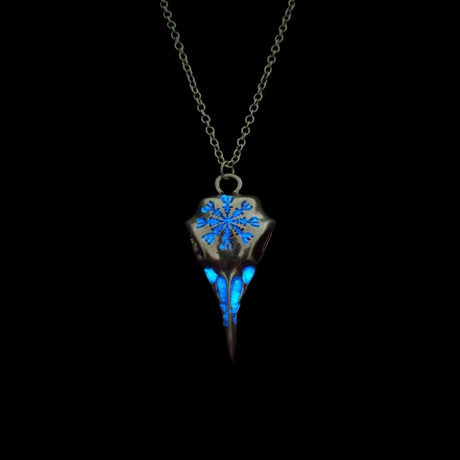
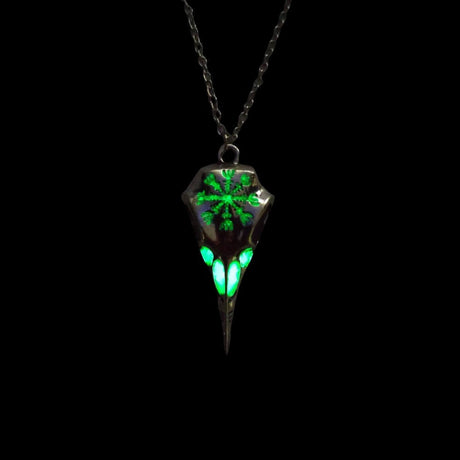
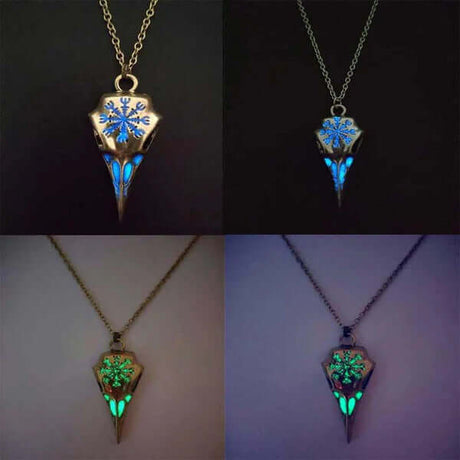
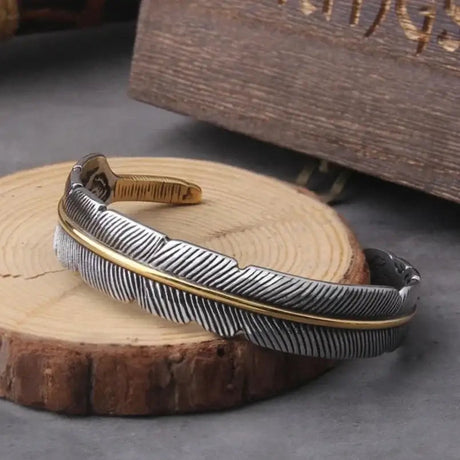
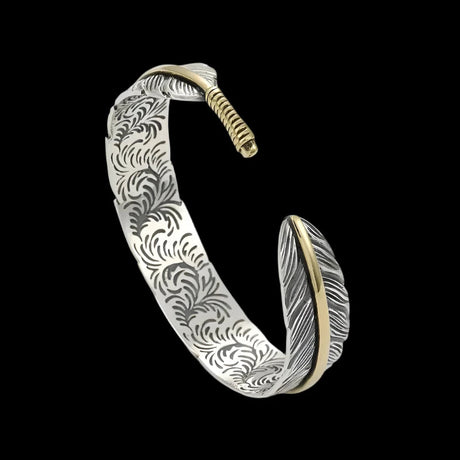
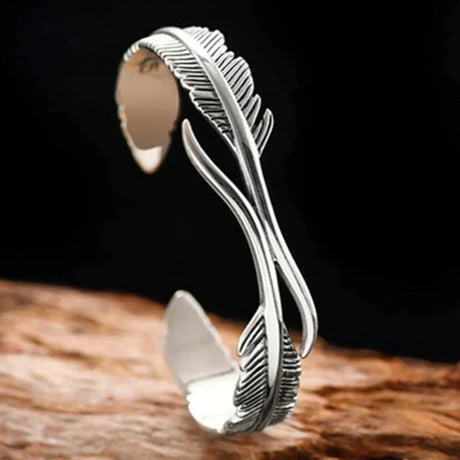
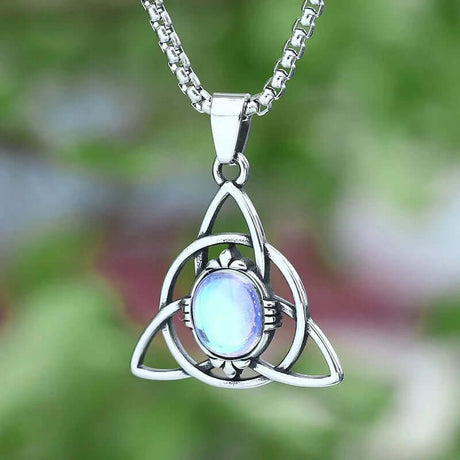
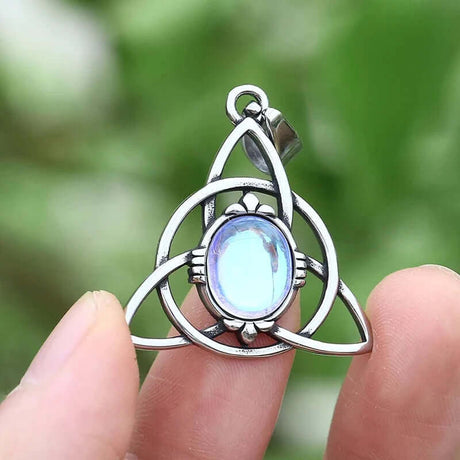
Imagine walking through a bustling marketplace in the heart of ancient Scandinavia. Around you, artisans are working with raw metals, hammering glowing copper, and polishing smooth pieces of amber. Suddenly, a master merchant reveals an object of such incredible design that the entire crowd goes silent. It is a golden necklace, so delicately woven that it seems to capture the very essence of morning sunlight. When the onlookers search for a word to describe this breathtaking creation, they do not just call it pretty or expensive. They whisper a single holy name: Hnoss.
In our modern pop culture landscapes, we tend to view Norse mythology through a very narrow, aggressive lens. We regularly watch films about muscular heroes swinging giant hammers, or read stories about fierce warriors dreaming of a violent death on the battlefield. This popular focus on raw physical combat can easily make us think that the ancient Vikings only cared about blood, iron, and military conquest.
However, this surface level view completely ignores the deeply artistic side of the old Scandinavian world. The people of the North were profoundly sensitive to visual elegance, fine craftsmanship, and the mesmerizing power of physical luxury. They believed that true beauty was not an earthly accident, but a literal manifestation of the divine. This is where the story of Hnoss becomes essential to our understanding of their world.
Hnoss is the enigmatic Norse goddess of beauty, desire, and precious treasures. As the precious daughter of Freyja, she represents the pure incarnation of visual perfection within the Scandinavian pantheon. Her very presence in the ancient texts challenges our stereotypes about Viking culture, opening a window into how these early people defined worth, aesthetic pleasure, and the emotional weight of desire. Let us step away from the chaotic battlefields and explore the golden halls of Asgard to discover the hidden depths of this radiant goddess.
The Strategic Path of Our Deep-Dive Analysis
To truly appreciate the historical, linguistic, and cultural value of Hnoss, we must look beyond basic summaries. We will conduct an extensive exploration across multiple academic and mythological dimensions to reveal why her legacy matters.
Our investigation begins with a clear overview of her divine lineage, focusing on her relationship with her famous mother, Freyja, and her mysterious father, Odr. From there, we will dive into the profound linguistic roots of her name, exploring how her identity shaped the poetic vocabulary of medieval Iceland. We will then examine her equally beautiful sister, Gersemi, analyzing how these two figures function as a unique mythic duplicate.
Following this, we will review the historical data and primary source materials where Hnoss makes her rare appearances. We will also look at the material culture of the Viking age, studying how real world Nordic jewelry and treasures connect to this divine ideal.
Finally, we will navigate the modern psychological and symbolic interpretations of her myth, exploring how her image shifts from an ancient personification of wealth to a contemporary symbol of personal worth. Through this holistic approach, we will see how Hnoss continues to capture the human imagination.
Lineage of Light: The Divine Family Tree of Hnoss
To understand Hnoss, you must first understand the family into which she was born. She is a prominent member of the Vanir clan of deities, a group of gods who traditionally hold authority over fertility, nature, wealth, and the wild forces of the natural world.
Her mother is none other than Freyja, the legendary goddess of love, fertility, magic, and war. Freyja is arguably the most influential female figure in all of Norse lore, renowned for her absolute autonomy and her ownership of the famous necklace Brisingamen.
Her father is Odr, a shadowy and tragic figure who frequently goes missing for long stretches of time, traveling on distant paths across the nine realms.

Lineage of Light: The Divine Family Tree of Hnoss
The romance between her parents is defined by intense passion and profound grief. Whenever Odr leaves on his long, mysterious journeys, Freyja falls into deep despair. She wanders through the world weeping for her lost husband. According to the old legends, her tears are not ordinary drops of water. When her tears hit the soil, they turn into solid gold. When they fall into the ocean, they instantly harden into precious red amber.
Hnoss was born directly out of this intense emotional environment. She is the literal child of love, magic, and golden tears. Growing up in the halls of Sessrumnir, she inherited her mother's intoxicating beauty and her father's elusive, mysterious nature. By analyzing this specific lineage, we can see that Hnoss is not just a passive decorator in Asgard. She is the physical result of divine longing and cosmic wealth.
The Architecture of Beauty: Deciphering the Linguistic Roots
In the study of ancient mythologies, names are rarely chosen by accident. For the early Germanic and Scandinavian peoples, a name was a literal definition of an entity's core function and spiritual essence. When we look closely at the etymology of Hnoss, we find a treasure trove of linguistic meaning.
In Old Norse, the word hnoss translates directly to a treasure, a precious object, or a rare jewel. It was used to describe things of exceptional value that required careful protection and immense skill to create. Over time, the name became so deeply intertwined with the concept of luxury that it transformed into a standard poetic device.
Ancient Icelandic skalds, the professional poets of the Viking world, relied heavily on a complex system of metaphors called kennings. Instead of using a simple word like "wealth" or "jewelry," a skilled poet would create an artistic riddle. Because of the cultural impact of Hnoss, poets would regularly describe any exceptionally beautiful object as "the daughter of Freyja" or "the child of the golden tear."
This linguistic pattern shows that Hnoss achieved a unique status in the ancient mind. She ceased to be just a character in a story and became the ultimate standard of measurement for everything beautiful on earth. If a Viking craftsman forged a magnificent sword hilt or wove a stunning silver ring, its highest compliment was to compare it directly to Hnoss.
The Divine Duplication: Hnoss and Gersemi
As we dig deeper into the surviving historical texts, we encounter a fascinating narrative feature that often puzzles modern readers. Hnoss is rarely mentioned without her sister, Gersemi.
According to the Prose Edda, Freyja gave birth to two daughters who were so identical in their absolute beauty that their names were used interchangeably to describe precious things. The word gersemi also translates directly to a treasure or a costly possession in old Scandinavian dialects.
This structural duplication has led to intense debate among historical scholars. Why would a mythological tradition need two separate goddesses who represent the exact same concept? To answer this, we can look at how different cultures utilize doubling to emphasize importance.
The following table breaks down the key characteristics of these two sister deities based on their presentation in the Heimskringla and the Prose Edda.
| Goddess Name | Literal Linguistic Translation | Primary Symbolic Domain | Textual Source Prevalence |
| Hnoss | Treasure / Rare Jewel | Intrinsic Beauty, Created Objects | Higher frequency in skaldic kennings |
| Gersemi | Costly Possession / Luxury Value | Economic Worth, Prestige Assets | Featured prominently in dynastic histories |
This comparative breakdown suggests a subtle but important difference in how the ancient Norse mind categorized value. Hnoss appears to represent the internal, emotional experience of witnessing something beautiful, the aesthetic joy that catches in your throat when you see a perfect creation.
Gersemi, on the other hand, leans slightly more toward the external, societal value of a treasure, representing the prestige, status, and power that comes with owning fine things. Together, the two sisters form a complete, holistic definition of wealth, covering both its spiritual beauty and its material worth.
Primary Sources: Tracking a Hidden Goddess Through Time
Finding concrete references to Hnoss requires us to act like literary archaeologists. She does not feature in long, dramatic narratives where she fights monsters or makes deals with giants. Instead, her presence is preserved in the structural foundations of medieval Icelandic literature.
Our primary source of information comes from the Prose Edda, written in the 13th century by the politician and historian Snorri Sturluson. In the section known as Gylfaginning, where the mysterious high kings explain the nature of the gods to a traveler, Snorri explicitly states:
"Freyja is the most glorious of the goddesses... She is married to a man named Odr. Their daughter is Hnoss. She is so beautiful that from her name whatever is beautiful and precious is called a hnoss."
Snorri repeats this claim in the Ynglinga Saga, where he attempts to explain the Norse gods as historical kings and queens who lived in the distant past. In this text, he records that after the death of the early kings, Freyja remained as a powerful sacrificial priestess in Sweden, and her daughters Hnoss and Gersemi carried on her legacy of unparalleled beauty, spreading their names across the land as permanent terms for luxury items.
The absolute scarcity of long stories about Hnoss has caused some modern historians to argue that she might be a relatively late addition to the mythology, perhaps invented by Snorri himself to organize the complex poetic metaphors used by older skalds.
However, cross-referencing her name with much older skaldic poetry reveals that the concept of Freyja’s treasure child was deeply embedded in the oral traditions long before Christianity arrived in the North. Her brief appearances are not a sign of insignificance. They show that her meaning was so universally understood by the ancient audience that she required no lengthy explanations.
- See more: Sigyn
Material Culture: The Viking Age Love Affair with Treasure
To truly understand why a goddess like Hnoss mattered to a person living in the Viking age, we have to look at the physical objects they left behind. When archeologists excavate early Nordic burial sites across Scandinavia and parts of Great Britain, they do not just find rustic iron tools. They uncover some of the most complex, sophisticated jewelry ever created by pre-industrial humans.
The Vikings were obsessed with self-decoration and the display of wearable wealth. Silver and gold were not used as abstract paper money, but as active, physical symbols of a person's luck, honor, and social standing.
Craftsmen used intricate techniques like filigree, adding tiny beads of gold to metal surfaces, and gripping beast motifs to create hyper-detailed designs that required hours of focused concentration under primitive lighting.
When a Norse woman fastened her heavy bronze tortoise brooches to her cloak, or a powerful chieftain slipped a thick silver arm ring over his wrist, they were participating in a deeply religious act. They were bringing the divine elegance of Hnoss down into the rough reality of daily life.
Treasures were viewed as living entities that possessed their own history, their own spirit, and their own portion of divine luck. By naming their treasures after Hnoss, the ancient Norse people were actively inviting the protective, life-affirming energy of the Vanir gods into their homes and communities.
The Psychological Mirror: Counterarguments and Alternative Perspectives
As modern scholars continue to analyze these ancient texts, the character of Hnoss has become a fascinating subject for psychological and symbolic interpretation. This ongoing discussion has divided analysts into two primary camps, each offering a distinct perspective on what this hidden goddess represents to the human psyche.
The Traditional Critique: The Surface of Materialism
The more conservative, historical view argues that Hnoss is a simple personification of material luxury and aristocratic vanity. Critics from this school of thought point out that she has no distinct moral teachings or heroic deeds attributed to her. She exists solely to be admired, a passive symbol of wealth that reflects the upper class Viking desire for prestige assets and fine jewelry.
From this perspective, celebrating Hnoss can be seen as an endorsement of shallow, surface-level materialism, focusing entirely on external appearance and financial worth rather than internal character or spiritual depth.
The Modern Symbolic View: The Sanctuary of Personal Worth
In contrast to this materialistic critique, many contemporary psychological analysts view Hnoss as a vital symbol of internal value, self-worth, and the preservation of innocence. They emphasize that she is the child of Freyja’s genuine grief and love, born from tears rather than greed.
In this light, Hnoss represents the raw, uncorrupted core of human beauty, the part of our soul that remains naturally perfect and valuable, regardless of the hardships we experience in the outer world.
She is the ultimate reminder that beauty is a healing, therapeutic force that can bring light into our deepest moments of darkness.
Synthesizing the Dual Meanings
When we weigh these two perspectives against each other, we realize that Hnoss functions as a profound cultural paradox. She is simultaneously an external commodity and an internal ideal.
By holding both of these meanings at the same time, her myth challenges us to examine how we define value in our own lives, asking us to look past the literal price tag of our possessions to discover the true, artistic spirit that makes them meaningful.
Archaeological Preservation: Bringing the Golden Age to Life
The incredible artistry that defined the world of Hnoss is preserved today in world-class museums across the globe. We do not have to guess what these ancient treasures looked like; we can look at them face to face through the incredible survival of archaeological hoard finds.
One of the most spectacular real-world examples of this divine aesthetic is the Hiddensee Treasure, a magnificent collection of 10th-century Viking gold jewelry discovered on a German island in the Baltic Sea. This legendary hoard features sixteen distinct pendant pieces, meticulously crafted with intricate filigree work that showcases a stunning blend of pagan and Christian artistic styles.

The legendary 10th-century Hiddensee gold treasure capturing the divine aesthetic of Hnoss
When you examine the fine gold wires and the precise granulation on these ancient ornaments, you are looking directly at the physical manifestation of the skaldic kennings.
Pieces like these were the literal definitions of a hnoss in the Viking world, proving that the ancient master metalworkers possessed a level of skill and patience that fully justified their belief in a dedicated goddess of beauty.
In our contemporary digital era, Hnoss is experiencing a quiet revival among modern fantasy authors, jewelry designers, and digital artists. As people search for deeper, more nuanced symbols within the old Scandinavian traditions, they are moving past the standard warrior archetypes to rediscover the delicate, life-affirming figures of the Vanir court.
- May you like: Fenrir's Golden Howl Necklace
The Eternal Radiance of Asgard
Hnoss stands as an enduring, beautiful monument to the absolute limits of human creativity and divine visual perfection. She is the quiet, shining core of the old Norse universe, a timeless reminder that the most valuable treasures we possess are the ones built from genuine love, artistic passion, and internal honor.
Her subtle story expands our understanding of the old Scandinavian world, proving that the ancient Norse people possessed a rich, deeply sophisticated appreciation for emotional elegance and material artistry. She remains an inspiring guide for anyone who is currently searching for deeper meaning in their creations, encouraging us to lift our eyes to the light and bring our own unique forms of beauty out into the open world.
The next time you hold a beautifully crafted piece of jewelry, marvel at a stunning sunset, or feel a surge of pure inspiration while creating something new, think of the radiant goddess who sits in the golden halls of Asgard. Remember her immaculate lineage, her poetic legacy, and her timeless value. Her enduring spirit proves that no matter how rough or violent our world becomes, the pursuit of genuine beauty will always find a way to shine across the timeless tales of valhalla.