Picture a vast, golden field of wheat swaying gently under an late summer breeze. For a modern farmer in America's heartland, this sight represents a successful season of hard work, modern machinery, and reliable weather patterns. For the ancient peoples of Scandinavia, however, looking out over a ripe, shimmering field meant looking directly at the flowing hair of a living goddess. While pop culture routinely highlights the thunderous battle cries of Thor or the profound sacrifices of Odin, the quiet, life-giving deities often remain obscured in the background. Yet, the goddess Sif served as an essential pillar within the fragile ecosystem of Norse cosmology. She did not spend her days launching lightning bolts or slaying frost giants, but her radiant presence sustained the agricultural heartbeat of the mortal world.
To many modern mythology lovers, the old Scandinavian tales can sometimes look like a non-stop action movie. We focus heavily on weapon upgrades and violent conflicts. However, when we read the original poetic texts, we find that the Norse universe balances destruction with vital forces of growth and renewal. Sif embodies this crucial balance. Her identity stretches far beyond her role as Thor’s supportive wife. She is a powerhouse of agricultural fertility, a guardian of the home, and a living metaphor for the earth’s seasonal cycles.
This in-depth exploration moves past the surface-level descriptions to showcase the multifaceted legacy of Sif. We will journey through her divine origins, examine the psychological and physical violations behind her famous golden hair myth, analyze her agricultural statistics, and uncover why her story remains highly relevant to our understanding of the ancient North.
The Radiant Queen of Bilskirnir: Who is Sif?
To truly comprehend Sif, we must look at her position within the celestial kingdom of Asgard. She belongs to the Aesir pantheon, the ruling family of gods associated with order, governance, and warfare. Sif shares her life with Thor, the protector of humanity, and together they reside in Bilskirnir, a sprawling palace containing 540 rooms, making it the largest mansion in all of Asgard.
While Thor represents the dramatic atmospheric storms that pierce the sky, Sif represents the fertile earth that receives the life-giving rain. This divine partnership mirrors a classic concept found in many ancient traditions: the sacred marriage between the sky father and the earth mother. Despite her high status, the surviving historical manuscripts offer few direct details about her parentage, leaving her origins beautifully shrouded in the misty past of Germanic mythology.
                      [The Sky Father: Thor] + [The Earth Mother: SIF]
                                             │
                       ┌─────────────────────┴─────────────────────┐
             [Atmospheric Storms & Rain]                [Fertile Soil & Golden Wheat]
                       └─────────────────────┬─────────────────────┘
                                             │
                              [The Sustenance of Midgard]
Early Germanic communities viewed Sif as the ultimate symbol of fidelity, domestic stability, and agricultural bounty. The literal etymology of her name connects back to the Old Norse word for "affinity" or "relation by marriage." This linguistic root reminds us that in the Viking world, Sif was not just an individual; she represented the sacred bonds of family, the security of the household, and the peaceful cooperation required to keep an agricultural community alive during the brutal winter months.

Sif: The Golden-Haired Norse Goddess of Harvest, Fertility, and Earth
The Theft of Beauty: Loki’s Malice and the Shorn Head
The most famous narrative featuring Sif begins not with an act of creation, but with a sudden, malicious act of vandalism. One evening, the notorious trickster god Loki sneaked into Sif’s bedchamber while she was fast asleep. Driven by a volatile mix of boredom, jealousy, and sheer malice, Loki pulled out a razor and sheared off every single strand of Sif’s legendary hair, leaving her completely bald.
When Sif woke up and discovered the violation, she wept bitterly. Her hair was not merely a cosmetic asset; it was the physical manifestation of her divine power, representing the golden crops that fed humanity. When Thor discovered his wife’s humiliation, his rage shook the foundations of Asgard. He caught Loki and threatened to break every single bone in the trickster's body unless he found a way to completely restore Sif's lost glory.
The Journey to Black Elves' Realm
Terrified of Thor’s wrath, Loki descended into the subterranean realm of Svartalfheim, where the master dwarven smiths worked their underground forges. He approached the Sons of Ivaldi and begged them to create a hair replacement that could grow naturally on a goddess's head. The dwarves accepted the challenge, using their secret metallurgical magic to forge long, delicate strands from pure, solid gold.
[Loki's Vandalism] ───> [Shorn Bald Head] ───> [Dwarven Forges] ───> [Living Golden Hair]
When Loki returned to Asgard with the golden hair, Sif placed the metal wig upon her head. To the amazement of the gathered gods, the gold immediately took root in her skin and began to grow just like natural hair. It cascaded down her shoulders like a shining river of liquid light, flowing and shifting with the wind. This event did more than just restore her beauty; it elevated her status, cementing her identity as the literal golden goddess of the harvest.
The Quantitative Harvest: Tracking Sif’s Agricultural Impact
To fully appreciate the weight of this myth, we have to look past the fantasy elements and analyze the practical, agricultural realities of the Viking age. In an era long before grocery store chains or modern global trade networks, a poor grain harvest meant immediate starvation for an entire community. The cyclical regrowth of Sif’s hair provided the ancient Norse people with a poetic framework to track their seasonal calendars and food production metrics.
Let us look at how the physical states of Sif's hair map onto the traditional North European agricultural cycle, demonstrating the profound dependency that medieval societies placed on her divine favor.
| Seasonal State of Sif’s Hair | Agricultural Stage in Scandinavia | Practical Survival Meaning | Spiritual Interpretation |
| Shorn and Bald Head | Late Autumn and Early Winter | The fields are barren, cold, and dead | Sif grieving her violation in secret |
| Gold Roots Attaching | Early Spring Thaw and Planting | The seed takes root in the fertile soil | The dwarven magic beginning to heal the earth |
| Short Golden Sprout | Early Summer Growth Phase | Green shoots turn yellow under the sun | Sif’s new hair rising above her shoulders |
| Long Cascading tresses | Late Summer Harvest Season | Wheat fields are fully ripe and ready | Sif at the absolute peak of her cosmic power |
This structured breakdown shows that Sif acted as the cosmic clock for the ancient fields. Whenever a Viking farmer looked at a field of ripe grain ready for the sickle, they were looking at the literal hair of Sif. The harvesting process itself was viewed as a sacred ritual, gently trimming the goddess’s hair so that it could rest, regenerate, and grow back stronger during the next spring thaw.
The Forgotten Warrior Ancestry: Sif as a Valkyrie Symbol
Throughout a large portion of modern fantasy literature, Sif is often cast as a passive domestic figure who stays home while the male gods go out to fight. However, when we cross-reference the old poetic verses with traditional runic inscriptions, a much more complex, authoritative picture emerges.
In some specific skaldic poems, the name Sif is used as a poetic suffix to create kenning phrases for weapons, shields, and battle-maids. Her name frequently appears in connection with the Valkyries, the fierce supernatural women who rode over battlefields to choose which fallen warriors would enter the halls of Valhalla.

The Forgotten Warrior Ancestry: Sif as a Valkyrie Symbol
The Strength of the Shield-Mother
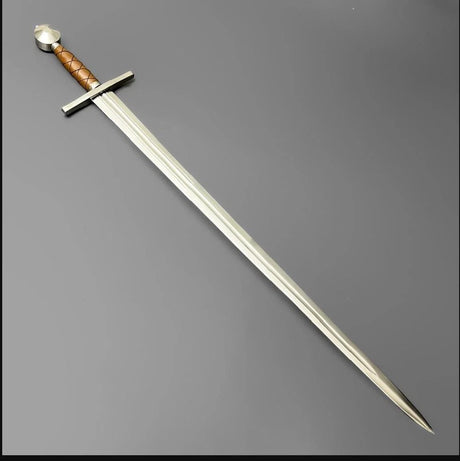
This linguistic connection suggests that Sif originally possessed a much more active, protective warrior persona before medieval writers began editing the old oral traditions. She was not a helpless victim; she was a shield-mother, a divine entity who protected the home front with a fierce, uncompromising strength.
While Thor fought monsters in the wilderness, Sif defended the integrity of the home, ensuring that the community remained safe, organized, and structurally sound. Her golden hair can be reinterpreted not just as soft wheat, but as a protective golden shield that insulated humanity from the freezing chaos of the outside world.
- See more: Angrboda
Counterarguments: Is Sif’s Mythic Narrative Relied Too Heavily on Men?
Some modern feminist critics and literary scholars argue that Sif is a fundamentally weak character because her primary myth revolves around her being victimized by one man (Loki) and rescued by another (Thor). They point out that she speaks no recorded dialogue in the Prose Edda and seems to exist primarily as a prize or a piece of property to be fought over by the male pantheon.
However, this critique overlooks the subtle, profound nature of earth-goddess power within polytheistic systems. Sif's power does not manifest through aggressive verbal arguments or loud physical violence. Her power lies in her absolute indispensability.
When Loki shaves her head, he does not just insult her; he threatens the entire food supply of the universe. The panic that grips Asgard proves that without Sif’s fertile energy, the other gods would starve to death. Her silence is not a sign of weakness; it is the quiet, immovable silence of the earth itself, which endures winter freezes and human exploitation but always holds the ultimate key to life and survival.
The Ecological Blueprint: Connecting the Past to Modern Sustainability
Why should an audience living in the United States care about an ancient Scandinavian goddess of grain? The answer lies in our evolving relationship with our environment. Today, we face massive ecological challenges, including soil depletion, industrial agricultural pollution, and unpredictable weather patterns across the American farming belts.
The story of Sif provides an ancient ecological blueprint that can inspire modern sustainability efforts. The myth of her hair being cut off by a trickster serves as a perfect metaphor for environmental degradation. When we exploit the earth, over-farm the soil, and strip away natural resources for quick profits, we are acting exactly like Loki, shaving away the earth's natural protection for our own selfish amusement.
A Lesson in Collective Responsibility
The response of the gods to Sif’s violation offers a valuable lesson in collective responsibility. Thor did not tell Sif to fix her own problem; he recognized that her injury affected the entire cosmos. He forced the perpetrator to invest resources into restoring what was lost, creating a magnificent new asset in the process.
- The Ancient Lesson: A violation of nature requires immediate, active restoration by the community.
- The Modern Application: Large corporations and individuals must take active responsibility for repairing the ecosystems they disrupt.
By looking at Sif through this ecological lens, we can transform her from a dead mythological figure into a living symbol for the modern environmental movement, encouraging a healthier, more respectful relationship with the land that feeds us.
The Cultural Legacy: From Ancient Runic Stones to Modern Screens
The enduring charm of Sif continues to leave a distinct mark on global culture. In historical archaeology, researchers have found small silver amulets in Sweden and Denmark depicting women with long, braided hair holding drinking horns. Many experts believe these artifacts represent Sif welcoming weary travelers and farmers to the great seasonal feasts.
In our contemporary American landscape, Sif has achieved a brand-new wave of popularity through comic books, cinematic universes, and fantasy gaming franchises. While these modern adaptations often transform her into a sword-wielding superhero, they still capture the core essence of her character: her unwavering loyalty, her resilience under pressure, and her position as an irreplaceable protector of her people.
Future Research: What Soil Science and Archaeology Tell Us
As our archaeological technologies continue to advance, we are gaining incredible new insights into how the ancient Norse practiced agriculture. For a long time, popular history books portrayed the Vikings exclusively as seafaring pirates who lived solely on stolen plunder.
However, recent excavations of medieval Scandinavian farmsteads show that they were highly sophisticated agriculturalists. They utilized advanced crop rotation techniques, managed complex animal husbandry systems, and possessed a deep understanding of soil chemistry. These discoveries reinforce the idea that deities like Sif were central to daily survival, serving as the spiritual counterparts to a highly developed, practical science of land management.
Conclusion: The Eternal Return of the Golden Light
The narrative of Sif is a beautiful, enduring reminder of the resilience of life. She proves that even when we suffer deep violations, lose our protection, or find ourselves cast into a long, dark winter of the soul, renewal is always possible. The gold will always take root, the hair will always grow back, and the barren field will eventually transform into a sea of shimmering yellow wheat.
She stands tall in the pantheon as a silent champion of growth, family, and ecological balance. Sif reminds us that true strength does not always require a thunderous hammer or a deceptive mind; sometimes, the greatest power lies in the quiet ability to nurture life, endure adversity, and ensure that the cycle of rebirth continues uninterrupted for generations to come.
As you look out across the vast agricultural fields of America or tend to the small garden in your own backyard, take a moment to appreciate the golden light dancing across the soil. By preserving these ancient accounts, we do more than just study history; we keep the vibrant spirit of the natural world alive, ensuring that her quiet wisdom remains woven into the timeless tales of valhalla.