We live in a world that cannot stop talking. From the relentless hum of social media notifications to the non stop chatter of 24 hour news cycles, modern life feels like an endless shouting match. It is exhausting. Many of us find ourselves looking backward, searching ancient history and timeless folklore for an escape or a deeper truth.
When you dive into Norse mythology, the loudest voices usually grab your attention first. You hear the deafening crack of Thor flying through the sky with his lightning hammer. You see the theatrical, chaotic schemes of Loki twisting through the halls of Asgard. You listen to the grand, booming declarations of Odin from his high throne.
But if you look away from the glittering banquets and step into the quiet, overgrown spaces of the ancient Scandinavian woods, you find someone completely different. You find Vidar.
Vidar is the silent Norse god of vengeance, space, and survival. He does not give grand speeches. He does not brag about his strength at the feast table. He sits in quiet isolation, focused entirely on a single, world shaping task.
Understanding Vidar gives us a fascinating look at how the Norse people viewed fate, justice, and the ultimate survival of the world. Let us slow down, step away from the noise, and explore the deep mythology of Asgard's quietest powerhouse.
The Strategic Path of Our Exploration
To truly understand this fascinating deity, we need to look far beyond basic internet summaries. We will build our understanding layer by layer.
First, we will examine the unique origins and family tree of Vidar. Next, we will explore his deep connection to silence and nature, discovering why his quiet lifestyle was actually a calculated asset rather than a weakness.
We will then break down his famous thick leather shoe, looking at both its folklore origins and its practical role in mythology. This leads directly to Ragnarok, the Norse apocalypse, where Vidar fulfills his dramatic destiny by defeating the monstrous wolf Fenrir.
Finally, we will analyze what Vidar represents to modern readers, examine academic perspectives on his role, and look at how his legacy shapes the stories we tell today.

Vidar: The Silent Avenger of Asgard
Birth and Lineage: A Dynamic Union of Asgard and Jotunheim
To understand the character of Vidar, you have to look at his parents. He is the son of Odin, the Allfather and ruler of the Aesir gods. His mother is Grid, a giantess, known in Norse terminology as a Jotunn.
This specific heritage is incredibly meaningful. In the Norse universe, the relationship between the gods and the giants is complicated. They are locked in a permanent, cosmic cold war, representing the eternal struggle between order and chaos.
Yet, some of the most critical figures in the myths come from unions between these two opposing forces. Vidar inherits the divine authority, wisdom, and leadership potential of Odin. From his mother Grid, he inherits the raw, primal, earth shaking strength of the giants.
This mixed heritage positions Vidar as a bridge between two worlds. He is a loyal protector of Asgard, but he lives on the margins of society. He prefers the quiet company of the natural world to the noisy halls of the gods.
His mother also plays a vital practical role in other myths. Grid is the one who supplies Thor with her own magical gridarvolr iron gloves and belt of strength when Thor has to fight the giant Geirrod without his famous hammer. This family line is defined by quiet preparation, strategic foresight, and providing the exact tool needed for ultimate survival.
Landvidi: The Vast, Quiet Sanctuary of the Silent God
Every major Norse deity has a signature hall or realm. Balder has the beautiful, peaceful Broadgleam. Heimdall guards the sky from the Cliffs of Heaven. Vidar lives in a unique place called Landvidi, which translates roughly to the Wide Land or the Vast Forest.
The ancient texts describes Landvidi as a peaceful sanctuary filled with high grass, thick brush, and overgrown trees. It is the absolute opposite of the structured, metallic majesty of Valhalla.
Vidar chooses to spend his days here, sitting alone on his horse or walking among the ancient trees. He practices complete silence.
This silence is not an accidental personality trait. It is a holy vow and a deliberate spiritual practice. In old Scandinavian culture, silence was deeply tied to mourning, focus, and ritual vengeance. By refusing to speak, Vidar concentrates his energy, tunes out distractions, and prepares his mind for the terrible events he knows are coming.
The Anatomy of a Myth: The Story Behind Vidar's Shoe
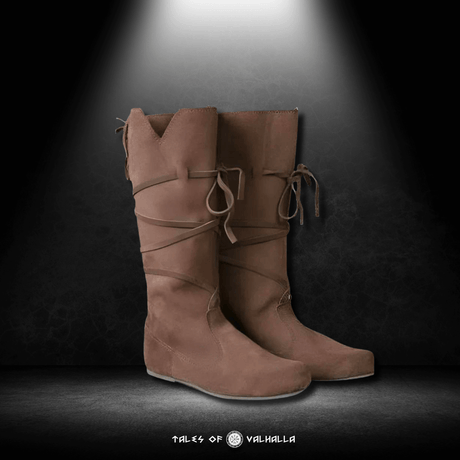
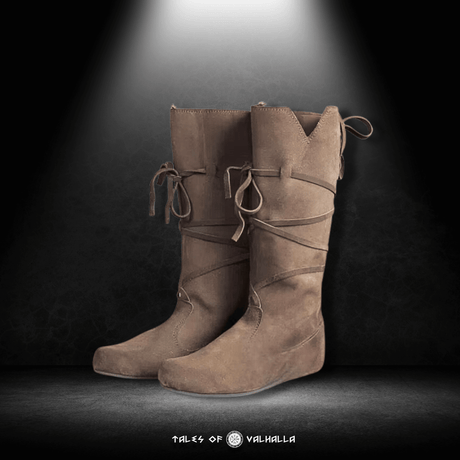
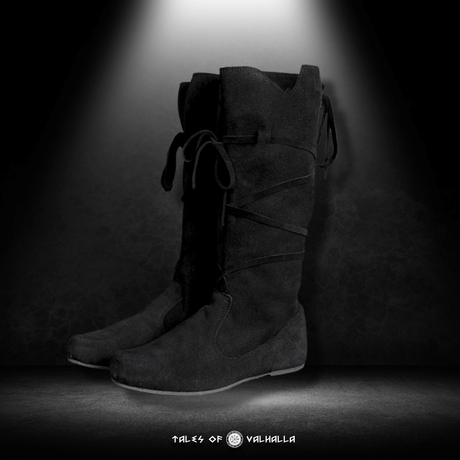
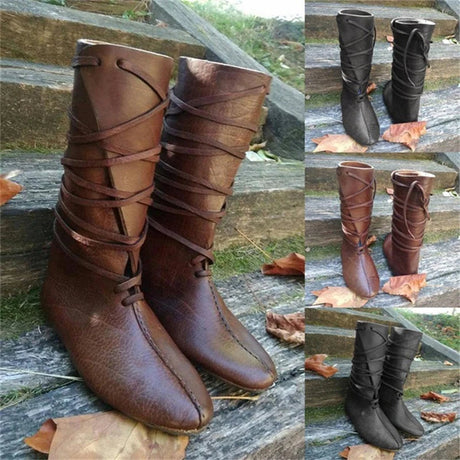
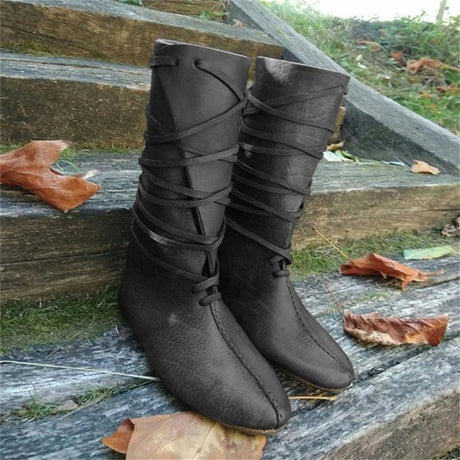
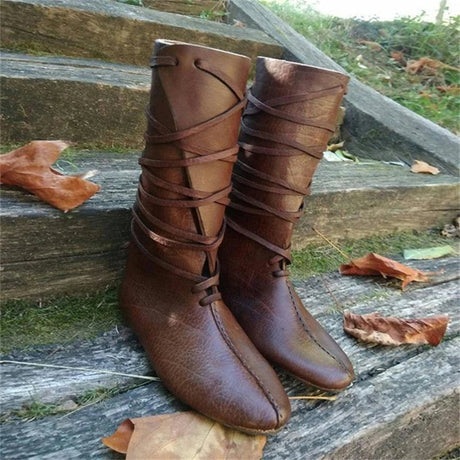
You cannot talk about Vidar without talking about his footwear. The mythology describes Vidar as owning a massive, incredibly strong leather shoe. This is not a decorative accessory. It is a custom piece of cosmic armor, slowly manufactured over centuries.
According to the Prose Edda, written by the medieval Icelandic scholar Snorri Sturluson, this shoe is constructed from the discarded scraps of leather cut away by human shoemakers. Whenever a human cobbler trims the toe or heel of a shoe in our world, Midgard, they throw the extra scraps on the ground. Vidar collects these tiny, spiritual remnants and weaves them together into a thick, indestructible boot.
This myth sends a beautiful message to the community. It encouraged ancient Norse craftspeople to be diligent and mindful of their daily work. It taught that even the smallest, most insignificant scraps of daily labor could help the gods save the universe.
On a deeper symbolic level, the shoe represents patience. It shows how small actions, repeated over hundreds of years, create an unbreakable foundation capable of withstanding the ultimate crisis.
| Metric and Feature | Core Details and Spiritual Significance |
| Primary Material | Leftover leather scraps from human cobblers across Midgard |
| Construction Time | Centuries of steady collection and careful weaving |
| Primary Purpose | To withstand the toxic, razor-sharp teeth of the wolf Fenrir |
| Symbolic Meaning | The collective effort of humanity supporting divine cosmic order |
Ragnarok: The Apocalypse and the Moment of Supreme Vengeance
All of Vidar's quiet patience, his long hours alone in the woods, and his indestructible leather shoe exist for one specific afternoon. That afternoon is Ragnarok, the twilight of the gods.
Ragnarok is the ultimate battlefield where the universe resets. The chains holding the monstrous wolf Fenrir break apart. Fenrir is a creature of pure terror. His lower jaw scrapes against the earth, his upper jaw touches the sky, and his eyes burn with cosmic fire.
As the battle rages, Odin charges forward to fight the giant beast. But the Allfather loses this fight. Fenrir opens his massive mouth and swallows Odin whole, killing the leader of the gods and plunging Asgard into pure grief.

Ragnarok: The Apocalypse and the Moment of Supreme Vengeance
This is the exact moment Vidar steps out from the shadows. He does not yell out a battle cry. He does not hesitate. He moves with swift, lethal precision.
Vidar steps directly toward the giant wolf. He lifts his leg and plants his legendary thick shoe squarely onto Fenrir's lower jaw. The weight of his giant heritage and centuries of focused energy pin the beast to the earth.
Next, Vidar grabs Fenrir’s upper jaw with his bare hands. With one massive, explosive motion, he tears the monster's mouth apart, splitting the wolf down the middle and killing him instantly.
With this single silent act, Vidar accomplishes what the king of the gods could not do. He avenges his father, breaks the momentum of the chaotic forces, and ensures that the universe does not end in total destruction.
- You may like: Viking Dragons Shield
The New Dawn: Leading the Surviving Generation
Many people assume that Ragnarok is the absolute end of everything. But in the true Norse worldview, time moves in cycles. Ragnarok is a painful cleansing process that washes away an old, corrupted world to make room for a fresh, peaceful start.
After the smoke clears, the sun returns, and a new earth rises beautiful and green from the ocean. Only a tiny handful of gods survive this apocalyptic battle. Thor's sons, Modi and Magni, inherit their father's hammer.
Vidar stands alongside his brother Vali as the core leaders of this new divine era. They return to the places where Asgard once stood and sit down together in the green grass to talk.
This transition of power is incredibly important. The old world was defined by endless blood feuds, loud boasting, and prideful conflicts that ultimately caused its downfall.
Vidar represents a completely new style of leadership. He is a ruler who values quiet contemplation, deep respect for nature, and steady action over loud, aggressive words. He does not rule with an iron fist from a golden throne. He guides the new world forward with calm, grounded wisdom.
- See more: Logi
Academic Perspectives: How Historians View the Silent God
When modern mythologists and historians study Vidar, they look closely at comparative mythology to find deeper meanings. Legendary French mythologist Georges Dumézil suggested that Vidar represents a cosmic concept of space.
Dumézil argued that by stepping on Fenrir's lower jaw while reaching for his upper jaw, Vidar essentially measures and reclaims the boundaries of the universe. He uses his physical body to limit the wild, out of control chaos of the monster, restoring geometric stability to a broken world.
Other scholars focus heavily on the ritual nature of his silence. In ancient Germanic and Scandinavian cultures, a relative of a murdered person would often vow to remain unwashed, unshaven, or completely silent until they successfully achieved justice or vengeance.
Vidar is the ultimate, divine example of this cultural tradition. His entire life is a focused ritual designed to balance the cosmic scales of justice.
Alternative Viewpoints: Is Vidar a True Hero or Just an Instrument of Fate?
Not every historian or reader views Vidar as a traditional hero. Some literary critics argue that Vidar lacks a complex personality. Because he never speaks and has no personal side adventures, critics argue he functions less like a living character and more like a specialized tool built for a single job. In this view, he is less an individual and more an instrument of fate.
However, you can easily counter this perspective by looking at his choices. Vidar deliberately chooses to live far away from the distractions of Asgard. He voluntarily steps away from luxury to live a simple, intentional life in the wilderness.
This shows an incredible amount of personal discipline. He is not a passive tool controlled by fate. He is a dedicated protector who sacrifices social status and worldly comfort to prepare for the ultimate crisis.
Modern Relevance: What the Silent Avenger Teaches the 21st Century
Why should an ordinary person living in the United States today care about a silent, boot wearing Norse god from ancient poems? The answer lies in the profound psychological value of his story.
Modern American culture often rewards the loudest people in the room. We are trained to value self promotion, immediate reactions, and constant noise. We often mistake aggressive talking for actual strength.
Vidar offers us a completely different path to power. He reminds us that true strength does not need to show off. He teaches us that:
- Patience is a superpower: Building meaningful things takes time, just like weaving a protective boot from tiny scraps of leather over centuries.
- Silence brings clarity: Stepping away from the daily noise helps you focus on your primary purpose and goals.
- Action matters more than words: When the ultimate crisis arrives, shouting will not save you. Only prepared, decisive action can turn the tide.
Many people find that adopting a little bit of Vidar's mindset can transform their daily life. Taking a quiet walk in nature without headphones, turning off your phone for an hour to focus on a difficult project, or choosing to listen instead of instantly arguing are all modern ways to channel the energy of Landvidi.
Embracing the Power of the Quiet Woods
As we reflect on the rich world of Norse mythology, it becomes clear that we need both types of energy in our lives. We need the bright, thunderous passion of Thor to fight our daily battles. We need the deep curiosity of Odin to seek out knowledge.
But most importantly, we need the steady, unshakable presence of Vidar to survive life's biggest storms and build a better future on the other side.
The next time your life feels completely overwhelmed by noise, stress, or chaotic distractions, take a deep breath. Imagine the wide, peaceful green spaces of Landvidi. Remember that true strength is quiet, patience wins the long game, and the most important stories are often found written in the silent tales of valhalla.