Imagine standing at the absolute edge of a massive, active volcanic crater. For a modern traveler visiting the beautiful islands of Hawaii or the geothermal fields of Iceland, the sight of bubbling, red hot lava is a magnificent scientific wonder. We pull out our smartphones to record the molten rock, entirely confident in our safety barriers and geographical knowledge. For the ancient peoples of Scandinavia, however, the sudden violent eruption of the earth was something far more intimidating.
They did not view fire as a simple chemical reaction. Instead, they saw it as the breathing presence of an ancient, primordial entity that existed long before the gods themselves. While modern media loves to spotlight popular comic book figures like Thor or charming tricksters like Loki, the deepest roots of Norse mythology hold characters of far greater cosmic scale.
Among these terrifying primordial forces, the giant Surt stands out as the ultimate architect of universal destruction. He does not spend his time playing minor political games in Asgard or picking petty fights with mortal men. Surt is a patient, unyielding sentinel who sits at the border of the world, waiting for the precise moment when history runs its course. He is the final exclamation point at the end of the cosmic calendar, destined to unleash a firestorm that will melt the universe down to a blank slate.
To many mythology fans across the United States today, old Scandinavian stories can sometimes look like a collection of fun superhero adventures. We expect the good guys to win and build a permanent kingdom. However, when you read the original historical texts like the Poetic Edda, you find a worldview that is deeply cyclical, honest about destruction, and aware that all empires eventually fall.
Surt is the absolute focus of this perspective. His identity is not built on random villainy or personal hatred toward the gods. He represents the natural, inevitable law of entropy, the consuming fire that must burn away the old, decayed structures of the world so that something pure and fresh can grow in its place.
This deep exploration moves far past the surface level summaries to reveal the massive, fiery legacy of Surt. We will journey through his ancient home in the southern realms, analyze his devastating role in the events of Ragnarok, examine the statistics of his final battle, and uncover why his story remains highly relevant to our modern understanding of nature and cosmic survival.
The Master of Muspelheim: Who is Surt?
To understand Surt, we must travel back to a time before the earth, the sky, or even the gods existed. In the beginning, the Norse universe consisted of a massive, empty void known as Ginnungagap. To the north lay Niflheim, a world of freezing ice, mist, and venomous rivers. To the south lay Muspelheim, a blazing realm of intense heat, glowing embers, and flowing rivers of liquid fire.
Surt was the absolute ruler and guardian of this southern realm of fire. He is not a standard frost giant who can be easily tricked by Odin or smashed by Thor's hammer. He belongs to an older, more primordial class of entities known as the fire giants. While the gods eventually brought order to the cosmos by fashioning the earth out of the physical remains of the primeval giant Ymir, Surt remained entirely separate from their new kingdom, sitting silently at the fiery edge of Muspelheim with a blazing sword in his hand.
                      [The Primordial Void: Ginnungagap]
                                      │
               ┌──────────────────────┴──────────────────────┐
    [Niflheim: Cold & Mist]                       [Muspelheim: Heat & Fire]
                                                             │
                                                  [The Guardian: SURT]
The literal etymology of his name connects back to old words meaning "the black one" or "swart." This linguistic root is a direct reference to the charred, blackened appearance of volcanic rock and the soot left behind by a devastating forest fire.
For the ancient Norse, his name evoked images of a landscape completely stripped of life, covered in dark volcanic ash. He represents the raw, uncontained energy of the deep earth, a force that cannot be bargained with, chained, or pacified by the laws of Asgard.

The Master of Muspelheim: Who is Surt?
The Blazing Blade: The Weapon of Ultimate Devastation
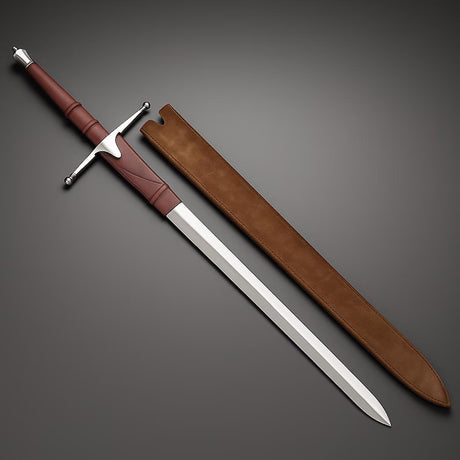
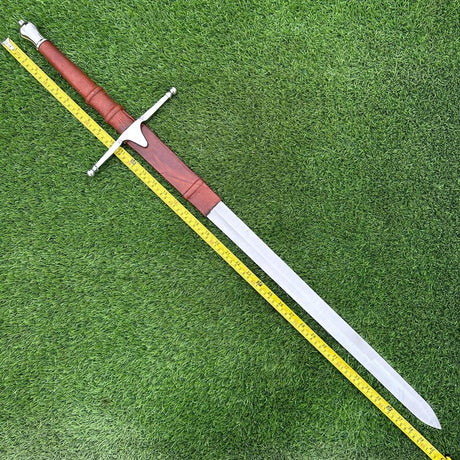
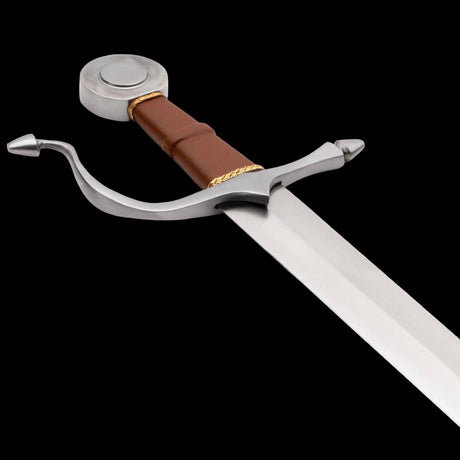
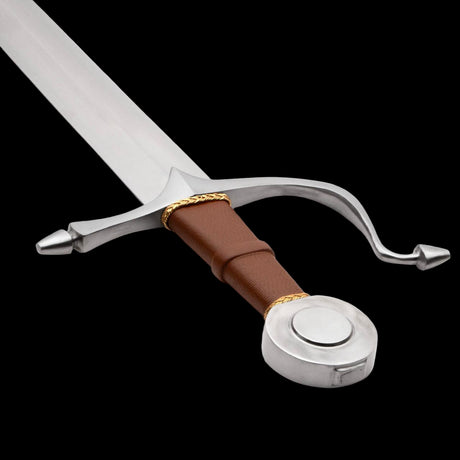
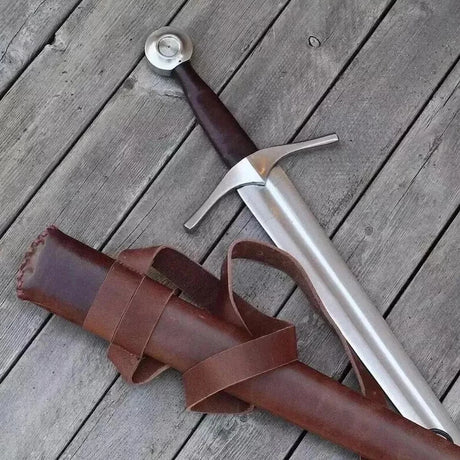
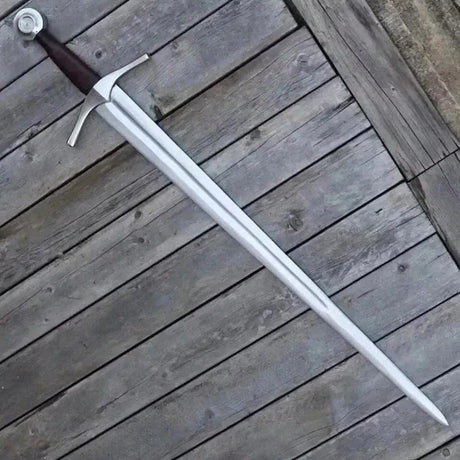
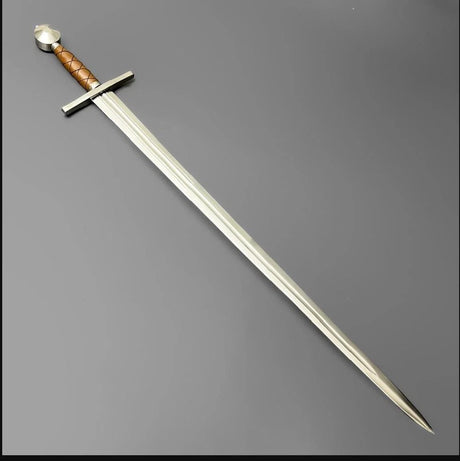
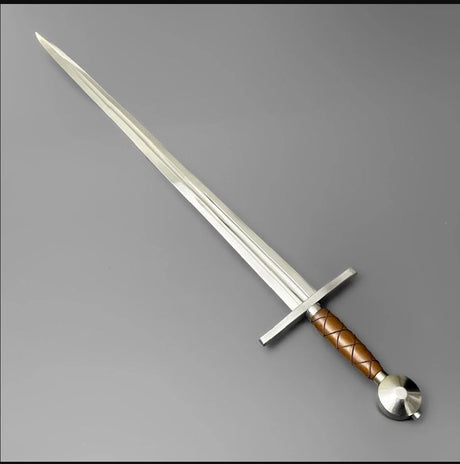
The most iconic attribute of Surt is his massive, supernatural weapon. The historic manuscripts describe it as a brilliant, flaming sword that shines brighter than the sun itself. This weapon is not merely a sharp piece of metal; it is a physical extension of the cosmic heat of Muspelheim, capable of cutting through the magical defenses of the gods and setting the World Tree on fire.
The ancient poems emphasize that as Surt marches northward during the apocalypse, the light reflecting off his blade illuminates the entire sky, casting a terrifying, fiery glow over the approaching armies of destruction. This vivid imagery served as a cosmic warning to the ancient peoples of Scandinavia, reminding them that the light in the sky could easily turn from a life-giving sun into a destructive firestorm if the natural balance of the world was disrupted.
[Primordial Heat] ───> [The Blazing Blade] ───> [The Doom of Frey] ───> [The Burning of Yggdrasil]
The presence of this flaming sword creates a fascinating poetic contrast within the mythology. While the gods used physical tools, hammers, and spears to build their kingdom and maintain political control, Surt relies on a weapon made of pure energy and light.
His blade represents a force that bypasses conventional armor, melting away the physical weapons of his opponents before they can even strike a blow. It is the ultimate tool of cosmic reset, designed to dissolve the material world back into its elemental components.
The March of Doom: Surt and the Architecture of Ragnarok
The true significance of Surt is revealed during the chaotic events of Ragnarok, the twilight of the Norse gods. When the cosmic bonds break and the monsters of the underworld are finally unleashed, Surt leaves his ancient post at the edge of Muspelheim to lead the fire giants into battle against the ruling deities of Asgard.
As his massive army marches across the landscape, they attempt to cross Bifrost, the sacred rainbow bridge that connects the mortal realm of Midgard to the celestial kingdom of the gods. The pure weight and intense heat of Surt and his flaming riders prove to be too much for the magical structure to bear. The rainbow bridge shatters into a million pieces, symbolizing the complete breakdown of cosmic order and the absolute separation between the old world and the new.
The Fatal Confrontation on the Plains of Vigrid
The opposing armies eventually meet on the massive, sweeping plains of Vigrid, a battlefield that stretches a hundred leagues in every direction. It is here that Surt engages in his final, historic duel with the god Frey. Frey is the gentle deity of sunshine, fertility, and peace, making him the perfect ideological opposite to the consuming fire of the giant.
Tragically, Frey enters this final battle at a massive disadvantage. Years earlier, he had foolishly given away his own magical, self-swinging sword to win the hand of the giantess Gerdr. Left with only a simple stag antler as a weapon, Frey fights with incredible bravery, but he is ultimately no match for the overwhelming power of Surt's flaming blade. The death of Frey marks the turning point of the battle, signaling to all the gathered forces that the old world of fertility and growth is officially coming to a violent end.
The Quantitative Apocalypse: Tracking the Scale of Ragnarok
To truly comprehend the massive scale of this mythological event, we have to look past the dramatic language and look at the structured breakdown of the conflict. The ancient Norse storytellers used specific measurements and groupings to explain how the entire universe would be dismantled during this final confrontation.
Let us look at how Surt and his fiery forces fit into the major strategic alignments of Ragnarok, demonstrating how the old order of the cosmos is systematically overwhelmed by the forces of entropy and elemental destruction.
| Destructive Alignment | Leading Commander | Primary Objective | Ultimate Cosmic Casualty | Final Environmental State |
| The Wolf Pack | Fenrir | Consume the sky and the sun | Odin (The All-Father) | Absolute darkness over the land |
| The Ocean Monsters | Jormungandr | Flood the mortal realm | Thor (The Protector) | Oceans rising to drown the earth |
| The Underworld Fleet | Loki | Coordinate the rebel forces | Heimdall (The Watchman) | Breakdown of social and moral laws |
| The Fire Giants | Surt | Incinerate the structural worlds | Frey (The Lord of Sun) | The cosmos melted into a blank slate |
When you analyze this structural data, an important theological truth becomes clear. Surt is not just another soldier in Loki’s rebel alliance. He is the closing act of the entire drama. While the other monsters focus on personal vendettas, killing specific gods like Odin and Thor, Surt targets the entire environment itself.
He acts as the ultimate cosmic cleaning crew. Once the individual duels are finished and the old leaders have fallen, Surt unleashes his firestorm across the nine realms, ensuring that no remnants of the old, corrupted system can survive to contaminate the future.
Contrasting Viewpoints: Is Surt an Evil Demon or a Natural Necessity?
Throughout many traditional Western interpretations of mythology, Surt has often been cast as a purely evil, demonic figure, frequently compared to the devils and fire-fiends of monotheistic traditions. Early Christian scholars who recorded the Norse myths in the middle ages naturally looked at his fiery appearance and his role in destroying the world, and they concluded that he was a terrifying monster who represented absolute wickedness.
However, a modern shift in how we analyze these ancient stories allows us to view him through a much more balanced, ecological lens. If you step away from the traditional good versus evil framework, you realize that Surt is a fundamentally neutral, natural force. He is no more evil than a real forest fire, a volcanic eruption, or the natural death of an aging star.

Is Surt an Evil Demon or a Natural Necessity?
The Role of Fire in Renewal
In the dense forests of northern Europe, ancient communities understood that fire played a vital role in the health of an ecosystem. A forest fire can look incredibly destructive on the surface, killing ancient trees and driving away wildlife.
But behind the scenes, that very fire clears away dead undergrowth, returns vital nutrients to the soil, and allows buried seeds to finally receive the sunlight they need to sprout.
- Surt clears away the old, stagnant political structures of Asgard.
- His fire purifies a universe that has become weighed down by curses, broken oaths, and corruption.
- The destruction of Yggdrasil allows a new, green world to rise out of the ocean.
From this perspective, Surt’s actions are a vital part of the cosmic circle of life. He is the necessary force of destruction that makes creation possible. Without his flaming blade to melt down the old world, the universe would become a permanent, stagnant museum of aging gods, unable to grow, change, or bring forth new generations of life.
The Modern Resonance: Volcanic Realities and Cultural Echoes
In our contemporary landscape in the United States, we are living through a massive revival of interest in ancient mythology and earth-centered traditions. From major fantasy cinema franchises to hit video games and modern literature, the characters of the North are capturing the public imagination in a huge way. Within this movement, Surt has become an iconic symbol for raw power and environmental authority.
A fascinating real-life example of his enduring cultural legacy can be found in the field of modern geology. In the year 1963, a massive underwater volcanic eruption occurred off the southern coast of Iceland, creating a brand-new island where there had previously been only open ocean. The scientists and local communities immediately looked to their ancient heritage and named this new piece of earth Surtsey, which translates literally to Surt’s Island.
[1963 Volcanic Eruption] ───> [New Landmass Formed] ───> [Named Surtsey (Surt's Island)]
This geographic naming choice shows that the spirit of the old myths remains deeply woven into how we perceive the physical earth. Surtsey serves as a living, breathing laboratory for modern science, allowing researchers to watch exactly how life develops on a completely sterile piece of volcanic rock. It is a perfect, real-world confirmation of the ancient myth: out of Surt’s destructive fire, a fresh, green world inevitably rises.
- See more: Vali
Critical Debates: The Puzzle of the Golden Sword
One of the most persistent academic debates among historical scholars involves a specific description of Surt’s weapon found in the Prose Edda. In some sections of the text, Snorri Sturluson states that Surt carries a sword that is "better than the sun."
This unique phrasing has led some experts to suggest that Surt’s weapon might actually be the very same magical sword that Frey gave away to win the love of Gerdr.
This theory suggests an incredibly dark, ironic twist in the Norse narrative. If Surt is wielding Frey’s lost weapon, it means that the god of peace was ultimately destroyed by his own tool of protection, turned against him because of his own personal desires.
Other scholars argue that Surt's sword is an entirely independent entity, a primordial relic forged from the raw energy of Muspelheim itself. This ongoing debate reminds us that oral mythologies are full of mysterious overlaps, leaving room for modern readers to explore different interpretations of these ancient cosmic events.
The Ecological Blueprint: Lessons for a Changing Planet
Why should an audience living in the modern United States spend time studying an ancient giant of fire? The answer lies in our current relationship with our changing planet. Today, we face unprecedented environmental challenges, including catastrophic wildfires across our western states, rising global temperatures, and severe climate disruptions that threaten our standard way of life.
The story of Surt offers an intriguing ecological blueprint that can inspire us to look at natural crises with a broader, long-term perspective. The myth reminds us that fire is a force that demands absolute respect. When we mismanage our landscapes, suppress natural cycles, and ignore the deep laws of the environment, we are essentially inviting our own version of a destructive firestorm.
Embracing the Cycle of Adaptation
Surt teaches us that we cannot conquer or control the fundamental forces of nature; we must learn to adapt to them. He reminds us that change is an inevitable, built-in feature of our world.
Instead of fighting desperately to keep aging, unsustainable systems alive forever, we must learn when to let go, how to clear away old practices that no longer serve us, and how to build resilient communities that can endure through the natural transformations of our planet.
Future Trajectories: The Burning Guardian in Popular Media
As we look toward the future of global entertainment and storytelling, the archetype of Surt is poised to become even more prominent. Audiences are increasingly moving away from simple, one-dimensional villains, showing a strong preference for complex characters who represent grand, cosmic principles.
New graphic novels, cinematic epics, and interactive gaming experiences are beginning to explore his perspective in fantastic detail, transforming him from a terrifying boogeyman into a majestic, awe-inspiring guardian of cosmic balance. He is transitioning into a powerful symbol for necessary transformation, encouraging us to look at our own personal and societal crises not as the absolute end of the line, but as a difficult, fiery forge that can reshape us for a brighter future.
Conclusion: The Ash and the New Dawn
The enduring narrative of Surt is a profound reminder that light and fire possess a double edge. He was an entity born before time itself, waiting patiently through the centuries to fulfill a heavy, destructive duty that would ultimately save the universe from stagnation and decay.
He did not need the constant worship of mortals or a seat at the council tables of Asgard to assert his authority over history. Through his final, dramatic march across the breaking rainbow bridge and his cleansing firestorm on the plains of Vigrid, he ensured that the grand cycle of life could continue its eternal turning. Surt reminds us that even when our world seems to be completely burning down around us, the ash will eventually settle, the smoke will clear, and a beautiful, fresh dawn will rise out of the quiet dark.
As you sit by a cozy fireplace on a winter evening or watch the spectacular colors of a summer sunset across the sky, take a moment to reflect on the ancient guardian of the south. By keeping these deep, elemental accounts alive in our hearts, we do far more than just study ancient poetry; we ensure that the raw, uncompromising wisdom of the early North continues to challenge, inspire, and illuminate our path forward, weaving its vibrant thread into the timeless tales of valhalla.