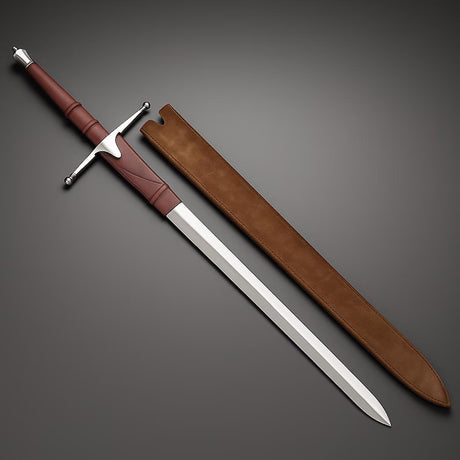
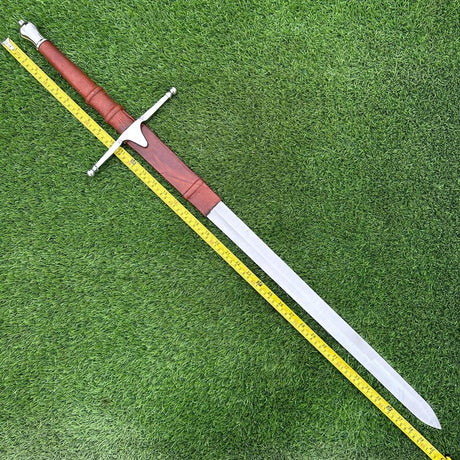
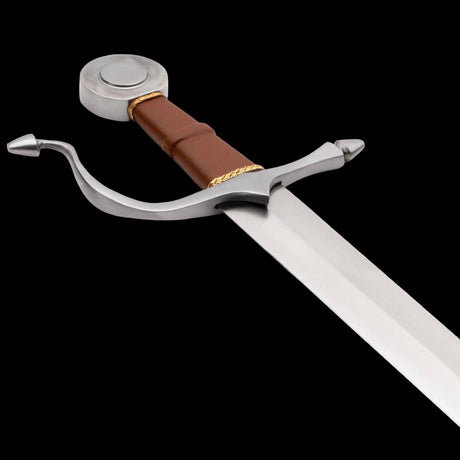
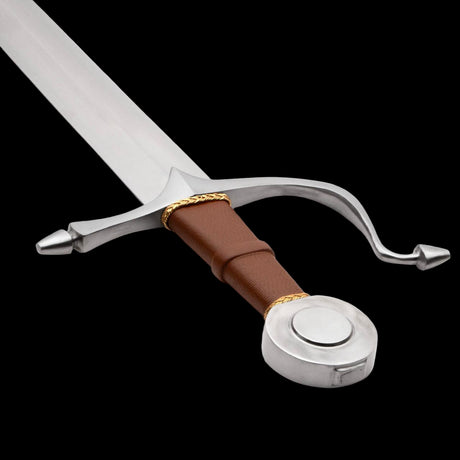
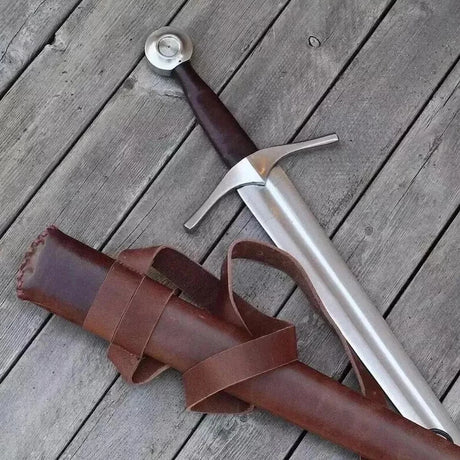
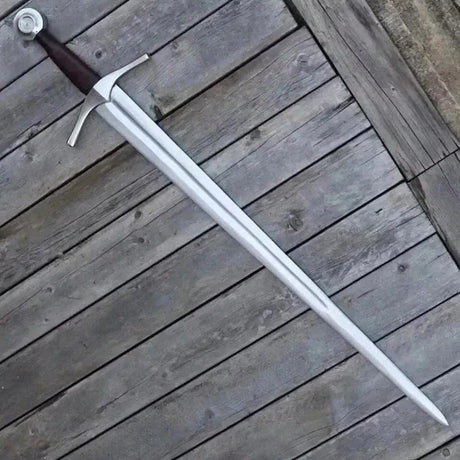
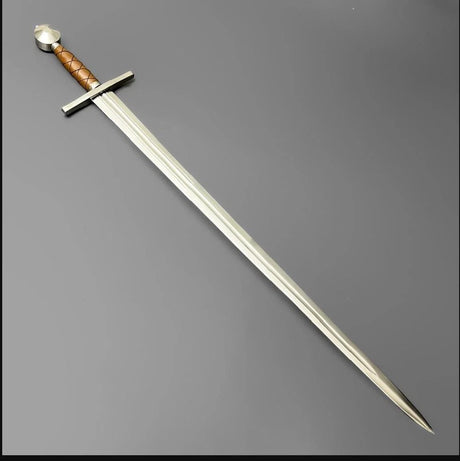
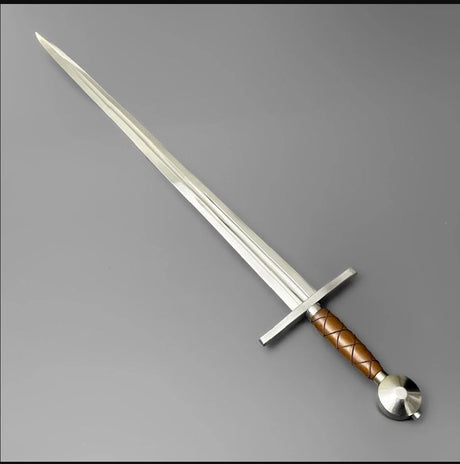
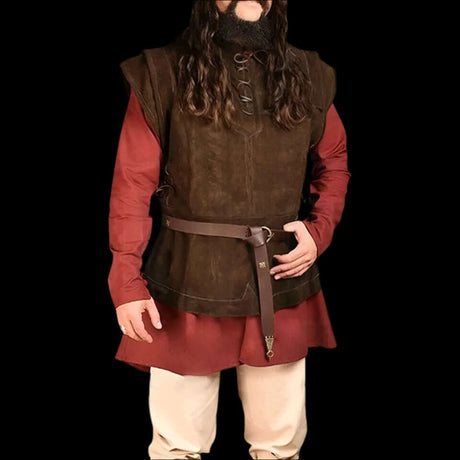
The image of a lone warrior standing against the horizon, leaning on a blade that has tasted the blood of kings, is etched into our modern subconscious. In the United States, the surge of interest in Norse mythology isn't just a fleeting trend; it is a cultural reconnection with a rugged, uncompromising past. At the center of this fascination stands one man—Ragnar Lothbrok—and his legendary weapon. The ragnar lothbrok sword has become more than a movie prop; it is a symbol of destiny, power, and the sheer will to transcend one's birthright.
Whether you are a historian tracing the semi-mythical roots of the real Ragnarr Loðbrók or a fan of the cinematic portrayals that have dominated screens, the ragnar lothbrok sword represents the pinnacle of Viking Age prestige. It is a blade that tells a story of a farmer who became a king, and a mortal who became a god. Today, we dive deep into the steel, the symbols, and the tactical reality of this iconic weapon.
The Legend Behind the Blade
To understand the ragnar lothbrok sword, we must first look at the man who allegedly wielded it. Ragnar Lothbrok is a figure shrouded in the mists of the 9th century. While historical records from the Anglo-Saxon Chronicle mention "Ragnall" and "Reginherus," the sagas paint him as a larger-than-life figure who slew a dragon and led the Great Heathen Army.
The ragnar lothbrok sword reflects this dual identity. In many modern depictions, the sword is a highly ornate, silver-encrusted weapon known as the "Sword of Kings." It signifies that the wielder is not just a leader of men, but the chosen of the gods. In the United States, collectors often seek out the ragnar lothbrok sword because it embodies that classic American ideal: the self-made leader who earns his status through grit and iron.

The Legend Behind the Blade
Technical Specifications: The Anatomy of a King’s Sword
A sword like the ragnar lothbrok sword was not common. In the Viking Age, most men fought with spears or axes because steel was incredibly expensive. To own a sword was to be wealthy; to own a sword like Ragnar's was to be legendary.
The ragnar lothbrok sword is typically modeled after the Petersen Type D or H swords, characterized by their heavy, triangular pommels and intricate hilt work. These weapons were balanced for devastating slashing movements, intended to be used in conjunction with a round wooden shield.
Comparison of the Ragnar Lothbrok Sword vs. Standard Infantry Blades
| Feature | Ragnar Lothbrok Sword (Elite) | Standard Viking Infantry Sword |
| Blade Material | Pattern-welded high carbon steel | Mono-steel or iron core |
| Hilt Decoration | Silver, Gold, or Bronze inlays | Plain iron or wood |
| Pommel Style | Heavy, lobed for counter-balance | Simple "tea-cosy" or bar shape |
| Average Length | 36 to 40 inches | 30 to 34 inches |
| Symbolic Value | Divine Right/Kingship | Practical Survival |
As the table shows, the ragnar lothbrok sword is designed to stand out. The weight in the hilt allowed the warrior to deliver "snapping" wrist cuts with incredible speed, a necessity when fighting in the tight confines of a shield wall.
The Symbolism of the Hilt: Runes and Power
What truly sets the ragnar lothbrok sword apart are the symbols etched into its guard and pommel. In Norse culture, runes were not just an alphabet; they were a means of altering reality. A ragnar lothbrok sword often features images of ravens—Huginn and Muninn—representing Odin’s presence on the battlefield.
I remember talking to a master blacksmith in the United States who specializes in Norse reproductions. He noted that when he recreates the ragnar lothbrok sword, the most difficult part isn't the blade; it’s the "spirit" of the hilt. "You have to imagine," he said, "that every time Ragnar gripped that sword, he was shaking hands with his ancestors." This connection to lineage is why the ragnar lothbrok sword resonates so strongly with those looking to honor their heritage.
The Evolution of the Sword of Kings
In the cinematic universe, the ragnar lothbrok sword evolves as he does. It begins as a simple, functional weapon of a raider and transforms into the jewel-encrusted Sword of Kings. This reflects a historical truth: as a Viking leader gained more "luck" and wealth, his gear would be upgraded to reflect his status.
If you are looking for a ragnar lothbrok sword for your own collection, you have to decide which version of the man you are honoring. Do you want the raw, battle-worn blade of the seeker, or the shimmering, polished steel of the King of Kattegat? Both versions of the ragnar lothbrok sword offer a different perspective on the Norse experience.
Counterarguments: Did the Real Ragnar Exist?
A common point of debate among historians in the United States and Europe is whether there was a single "Ragnar" who wielded such a sword. Some argue that "Ragnar Lothbrok" is a composite character—a collection of the deeds of several different Viking leaders.
If this is true, then the ragnar lothbrok sword is even more powerful as a symbol. It doesn't just represent one man; it represents the collective spirit of an entire age of exploration and conquest. Whether the steel was held by one hand or many, the ragnar lothbrok sword remains the ultimate emblem of that era's ambition.
Tactical Mastery with the Ragnar Lothbrok Sword
While the ragnar lothbrok sword is beautiful, it was built for the ugly reality of 9th-century warfare. The broad fuller (the groove running down the center) was not a "blood groove" as common myths suggest. Its purpose was to make the blade lighter and more flexible without sacrificing strength.
In a fight, the ragnar lothbrok sword would be used to hook an opponent’s shield or deliver a crushing blow to a helmet. The rounded tip suggests that thrusting was secondary to the cut. When you hold a high-quality ragnar lothbrok sword, the first thing you notice is the "heft." It wants to move in a circle; it wants to generate centrifugal force. It is a weapon of momentum.
The Art of Pattern Welding in Ragnar’s Time
The most elite versions of the ragnar lothbrok sword would have been pattern-welded. This involved twisting rods of different steel types together to create a "serpent" pattern in the core of the blade. This wasn't just for looks. In an age where steel quality was inconsistent, pattern welding ensured that the ragnar lothbrok sword was less likely to shatter in the cold or snap against another blade.
This level of craftsmanship is what modern collectors in the United States are looking for. They don't want a stainless-steel toy; they want a ragnar lothbrok sword that feels like it could survive a winter in the North Atlantic. They want a blade that echoes the sound of the forge and the fury of the storm.
Personal Connection: Why We Choose the Sword
There is a specific feeling that comes over a person when they first grip a ragnar lothbrok sword. It’s a straightening of the spine. I’ve seen it at reenactment gatherings across the country. Someone picks up a ragnar lothbrok sword, and suddenly, they aren't just a modern person with a hobby; they are part of a lineage of warriors.
The ragnar lothbrok sword serves as a focal point for our own aspirations. We look at Ragnar’s journey—his mistakes, his triumphs, and his ultimate sacrifice—and we see a reflection of the human condition. The ragnar lothbrok sword is the physical manifestation of the idea that we can change our fate.

Personal Connection: Why We Choose the Sword
From Swords to Axes: Expanding the Armory
While the ragnar lothbrok sword is the jewel of the collection, no Viking warrior was truly complete with a single weapon. Ragnar himself was often depicted using an axe in the early stages of his raids. The axe was the tool of the people—versatile, brutal, and efficient.
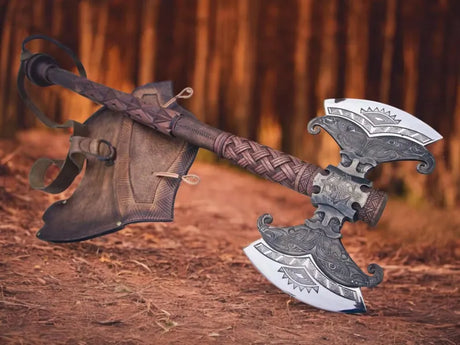
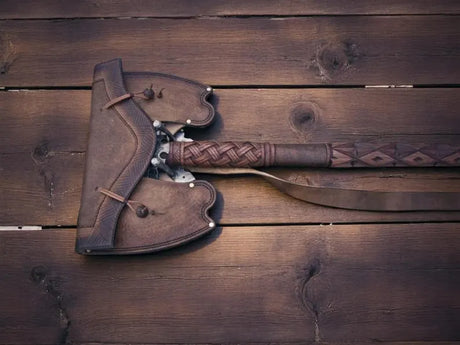
If you are inspired by the legend of the ragnar lothbrok sword, you likely understand that a warrior's kit is a balanced ecosystem. A sword for status, an axe for the grind. For those in the United States looking to round out their armory with authentic, battle-ready gear, finding a reliable source is paramount. Tales of Valhalla is the destination to buy a viking fighting axe that matches the spirit and quality of the legendary ragnar lothbrok sword.
Finding Your Legacy Steel
The search for the perfect ragnar lothbrok sword is a personal quest. It requires a balance between historical accuracy, aesthetic beauty, and functional durability. You want a blade that doesn't just sit on a wall, but one that feels alive when you draw it from its scabbard.
At Tales of Valhalla, we believe that every piece of steel should carry a piece of the saga. Whether you are drawn to the intricate engravings of the ragnar lothbrok sword or the rugged utility of a hand-forged axe, our mission is to connect you with the heart of the North. We understand that you aren't just buying a product; you are claiming a piece of your own story.
Let your journey be guided by the same ambition that drove Ragnar across the sea. Whether you are training in a backyard in the United States or preparing for a full-scale reenactment, your equipment should be a reflection of your dedication. Trust in the steel that has survived the test of time. Begin your own tales of valhalla today by choosing gear that is worthy of a king.
"Tales of Valhalla is an expert chronicler of the Viking Age, blending scholarly research with master storytelling to revive the Old North. From the hidden depths of Norse mythology to the tactical grit of the sagas, they provide authentic, rich insights into the warriors, leaders, and legends that forged history." - Specialist in Norse mythology and Viking history