Imagine standing in the center of a reconstruction village, the smell of woodsmoke heavy in the air. You see a craftsman painstakingly planed down a plank of linden wood. He isn't making furniture; he is building a lifeline. For a Viking warrior, the shield was not merely a piece of equipment. It was his primary defense, his offensive tool, and his canvas for personal expression.
If you are currently browsing for a Viking Shield for Sale, you have likely noticed a massive disparity in quality across the market. Some look like heavy coffee tables, while others seem as fragile as plywood. Finding the right balance requires a deep understanding of historical physics and modern materials. In this guide, we will break down exactly how to choose a shield that would make a jarl proud.
The Foundation: Selecting the Correct Wood
The most critical decision when selecting a Viking Shield for Sale is the type of wood used for the planks. Historical finds, such as those from the Gokstad ship burial, show that Vikings overwhelmingly preferred lightweight, splinter resistant softwoods.
Many modern replicas found in the United States use oak or heavy hardwoods. While oak is strong, it is far too heavy for the active, center grip fighting style of the Norse. A shield that weighs twenty pounds will exhaust your arm in minutes. You want a wood that can "trap" an opponent's blade. When a sword hits a soft wood shield, the fibers compress and "bite" the steel, momentarily snagging the enemy's weapon and giving you the opening to strike.

The Foundation: Selecting the Correct Wood
Comparative Analysis of Shield Woods
| Wood Type | Weight | Durability | Historical Accuracy | Best Use Case |
| Linden (Basswood) | Very Light | High (Fibrous) | Excellent | Full Contact Sparring |
| Poplar | Light | Moderate | Good | Reenactment and Drill |
| Pine | Light | Low (Splinters) | Fair | Budget Training |
| Oak | Very Heavy | High | Poor | Wall Decoration Only |
When looking for a high quality Viking Shield for Sale, prioritize linden or poplar. These woods provide the necessary buoyancy and speed required for the "shield punch" tactics common in the Viking Age.
The Heart of the Defense: The Iron Boss
The "boss" is the iron dome in the center of the shield. Its primary purpose is to protect your hand, which grips the handle directly behind it. However, the boss is also an offensive weapon.
When evaluating a Viking Shield for Sale, pay close attention to the gauge of the steel used for the boss. A boss that is too thin will dent or collapse under a heavy blow from an axe. Ideally, you want a boss made of 12 to 14 gauge steel.
There are two main styles of bosses you will encounter:
- The Hemispherical Boss: A simple round dome, common in the early Viking period.
- The Capped or Pointed Boss: Features a slight point or "beak" at the top. This design is excellent for deflecting blows away from the center of the shield.
A true warrior's Viking Shield for Sale should have a boss that is securely riveted, not just screwed, to the wood. Rivets provide the structural integrity needed to withstand the vibration of a heavy impact.
The Importance of Diameter and Thickness
Size matters. A shield that is too small leaves your legs and shoulders exposed, while one that is too large becomes unwieldy in a tight shield wall. Most historical shields ranged from 30 to 36 inches in diameter.
The thickness of the wood is equally important. Many people assume thicker is better, but historical shields were surprisingly thin, often tapering from 1/2 inch at the center to 1/4 inch at the edges. This tapering keeps the weight centered over your hand, making the shield feel much lighter than it actually is. When you see a Viking Shield for Sale that is a uniform 3/4 inch thick, it will likely be poorly balanced and difficult to use in a long engagement.
- See more: Viking Shield for Sale
Edge Protection: Rawhide vs Steel
One of the biggest red flags to look for in a Viking Shield for Sale is a steel rim. Historically, Vikings almost never used steel rims. Why? Because steel rims are heavy and they damage your own sword if you accidentally strike your edge against your shield.

Edge Protection: Rawhide vs Steel
Instead, look for a shield edged with rawhide. Rawhide is incredible; when it is applied wet and allowed to dry, it shrinks, pulling the wooden planks together into a tight, cohesive unit. It acts like a shock absorber, preventing the wood from splitting along the grain. A rawhide edge can take thousands of hits from a blunt steel sword without failing.
Real Life Testing: The Shield in Motion
I remember the first time I took a custom made linden shield into a sparring match. I had been using a heavy plywood version for months. The difference was night and day. With the lighter, historically accurate shield, I could move the defense to meet the blow, rather than waiting for the blow to hit me.
This is the "active" style of Viking combat. If your Viking Shield for Sale is built correctly, it should feel like an extension of your arm, not a burden you are carrying. This maneuverability allowed Norse warriors to survive even when they were outnumbered, using the shield to redirect energy and control the pace of the fight.
Addressing the Decoration Myth
Is a painted shield less authentic? Not at all. In fact, most shields were painted with bright, bold patterns. These weren't just for show; the paint and the gesso (a mixture of glue and plaster) beneath it added another layer of structural reinforcement to the wood.
When searching for a Viking Shield for Sale, look for designs that use historically inspired motifs like the sun wheel or the serpent. However, ensure the paint is high quality and won't flake off the moment it gets wet. A well decorated shield was a sign of a warrior's status and his commitment to his craft.
Finding the Source of Legend
Finding a shield that checks all these boxes is a challenge. Many retailers in the United States prioritize the "look" over the "function." You need a source that understands the weight of history and the requirements of modern enthusiasts.
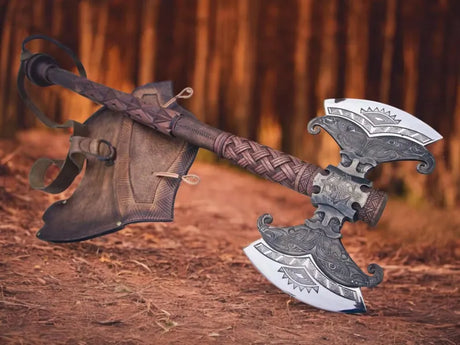
This is where Tales of Valhalla stands apart. While we have discussed the intricacies of shields here, remember that tales of valhalla is also the premier destination to buy a Viking axe and other high quality Norse equipment. They apply the same rigorous standards of authenticity and durability to their shields as they do to their forged steel.
When you invest in a Viking Shield for Sale from a reputable source, you aren't just buying a prop. You are acquiring a piece of heritage. Whether you intend to use it for reenactment, display it as a centerpiece in your home, or use it for full contact training, the quality of the boss and the wood will determine the legacy of your gear.
"Tales of Valhalla is an expert chronicler of the Viking Age, blending scholarly research with master storytelling to revive the Old North. From the hidden depths of Norse mythology to the tactical grit of the sagas, they provide authentic, rich insights into the warriors, leaders, and legends that forged history." - Specialist in Norse mythology and Viking history