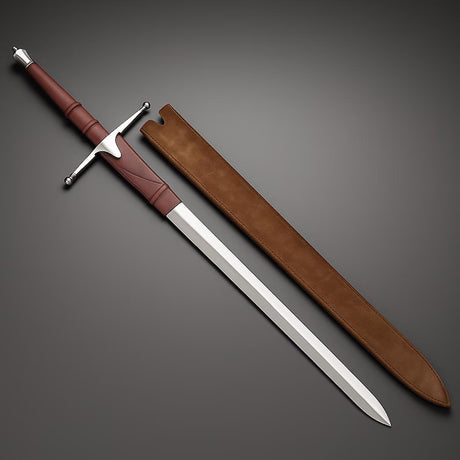
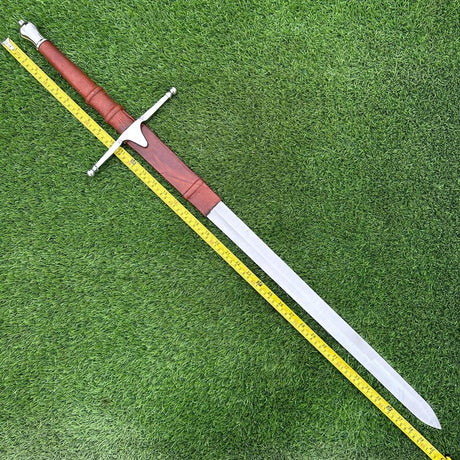
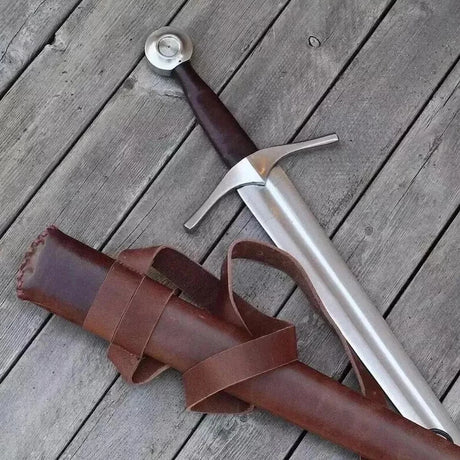
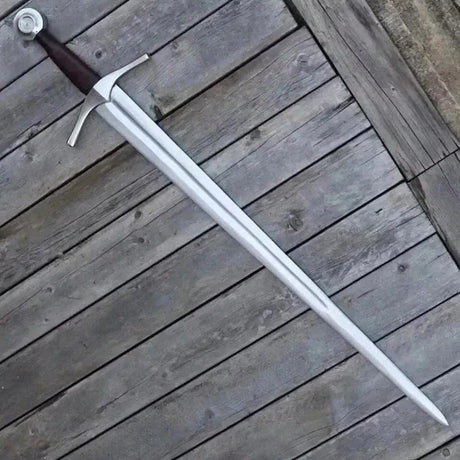
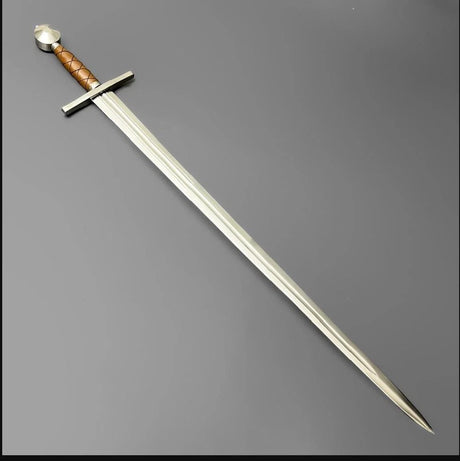
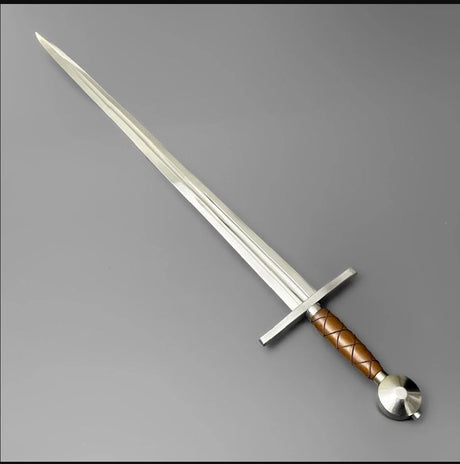
The wind howls across the fjords of ancient Scandinavia, carrying the rhythmic ring of a blacksmith’s hammer. For the Norse people, a weapon was never just an object; it was an extension of the soul, a bearer of fate, and a vessel for the divine. In the United States, we often view historical weaponry through a lens of utility, but to hold a Runic Sword is to touch a bridge between the physical world and the mystical realms of the Allfather.
In the Viking age, the spear and the axe were the tools of the common warrior, but the sword was the mark of the elite. Within that elite circle, a blade inscribed with Elder Futhark—the Runic Sword—was the ultimate heirloom. It carried the weight of ancestral spirits and the protective spells of the smith. Today, we explore why these inscribed blades remain the most coveted pieces in the elite armory of the North.
The Mystical Architecture of the Runic Sword
To understand a Runic Sword, one must first understand the power the Vikings attributed to literacy. Writing was not a mundane task; it was an act of magic. When a smith etched a Runic Sword, they weren't just labeling it. They were "charging" the steel.
The runes often served as a name for the blade, such as "Leg-Biter" or "Widow-Maker," or as a direct invocation to Tyr, the god of war. By placing a Teiwaz rune ($\uparrow$) on the hilt or blade, the warrior believed they were tethering their victory to the divine order. This transformation of a simple weapon into a Runic Sword created a psychological edge on the battlefield that modern psychology might describe as an unstoppable "flow state."

The Mystical Architecture of the Runic Sword
Quantitative Snapshot of Elite Norse Weaponry
While archaeological finds show thousands of axes and spears, true Norse swords—especially the Runic Sword—are significantly rarer. The following data highlights the exclusivity of these elite weapons based on historical grave finds and metallurgical analysis.
| Weapon Category | Prevalence in Grave Finds | Average Production Time | Estimated Cost (9th Century) |
| Common Battle Axe | High (Over 60%) | 2 to 4 Days | 1 Cow |
| Standard Norse Sword | Low (Approx. 10%) | 1 to 2 Months | 15 to 20 Cows |
| Inscribed Runic Sword | Extremely Rare (<2%) | 3+ Months | Small Estate/Farm |
| Pattern-Welded Blade | Moderate (Elite Only) | 2 Months | 12 Cows |
The Runic Sword was clearly the apex of the armory. In the United States, where we value individualism and craftsmanship, the appeal of a unique Runic Sword resonates deeply. It represents a rejection of the mass-produced in favor of the meaningful.
Metallurgy: The Alchemy of the Runic Sword
A Runic Sword was almost always a product of superior metallurgy. During the Viking Age, the technique of pattern-welding was used to create blades that were both flexible and terrifyingly sharp. By twisting rods of iron and steel together, the smith created a blade that looked like flowing water or a coiled serpent.
The addition of runes was the final step in this alchemical process. Often, the runes on a Runic Sword were inlaid with precious metals like silver or gold. This wasn't just for vanity. The contrast of the silver runes against the dark, etched steel of the blade made the magic visible. When you swung a Runic Sword, the light would catch the inscriptions, creating a flickering effect that appeared to dance with the movement of the fight.
The Cultural Significance: More Than a Status Symbol
I remember the first time I saw a museum-grade recreation of a Runic Sword. The balance was so perfect that the steel felt weightless. But it was the inscription that held my gaze. It felt as though the blade was trying to speak. This is the "soul" of the weapon that the sagas talk about.
A Runic Sword was frequently passed down through generations. If a father died in battle, his Runic Sword was recovered and given to his son. The Vikings believed that the "luck" (hamingja) of the previous owners lived within the steel. Therefore, owning a Runic Sword wasn't just about personal wealth; it was about maintaining a physical connection to your lineage.
Addressing the Counterargument: Magic or Marketing?
Some historians argue that the Runic Sword was more about "branding" than magic. They suggest that smiths like the famous "Ulfberht" makers used inscriptions primarily to identify their high-quality workshops—a medieval version of a luxury trademark.
While there is some truth to this, it ignores the deeply spiritual nature of the Norse world. To a Viking, there was no separation between "high quality" and "blessed by the gods." If a blade didn't break in battle, it was because the smith was a master and the runes were potent. The Runic Sword was a holistic object where engineering and enchantment were one and the same.
Practical Tactics with Elite Blades
In combat, a Runic Sword was a single-handed weapon, leaving the other hand free for a shield. However, the tactics used with a Runic Sword were different from those of an axe-wielder. A sword user relied on the "draw-cut"—using the length of the blade to slice through leather and maille.
The weight of a Runic Sword was concentrated near the hilt, allowing for rapid direction changes. This agility was vital for the " elite " warrior who was often targeted by multiple opponents on the battlefield. The Runic Sword allowed for a defensive style of fighting that was as much about grace as it was about power.
Real-Life Examples: Legends Come to Life
Consider the story of the sword Gram, wielded by Sigurd. In the sagas, it was so sharp it could slice an anvil in two. While that is mythological hyperbole, it reflects the genuine awe the Norse felt for their finest steel. Every Runic Sword produced was an attempt to capture a fragment of that legend.
In the modern United States, collectors often look for a Runic Sword that features the Elder Futhark alphabet. These runes, such as Ansuz (wisdom) or Tiwaz (victory), give the weapon a specific "personality." When you choose a Runic Sword, you aren't just choosing a design; you are choosing a set of values to represent.

Real-Life Examples: Legends Come to Life
The Modern Search for Elite Steel
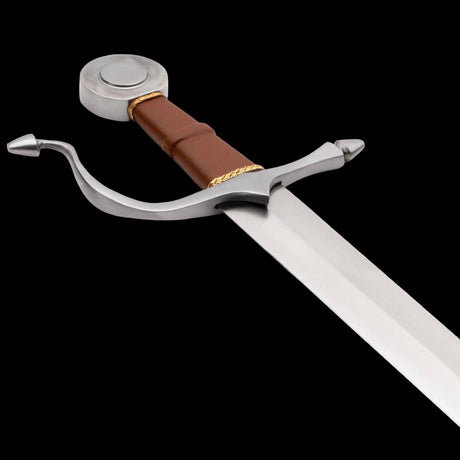
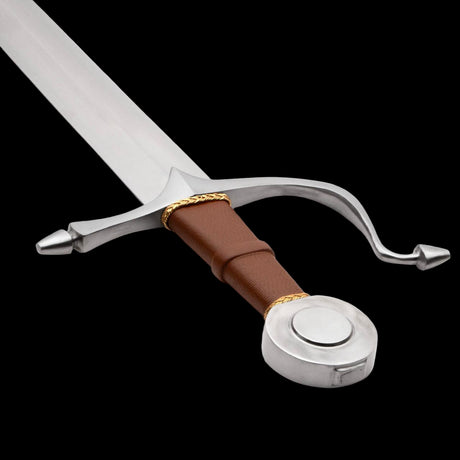
Today, the spirit of the elite armory lives on through dedicated artisans. Finding a high-quality Runic Sword requires looking for a maker who respects the historical geometry—the wide fuller, the lobed pommel, and the proper heat treatment of the carbon steel. A decorative "wall-hanger" can never capture the gravity of a real Runic Sword.
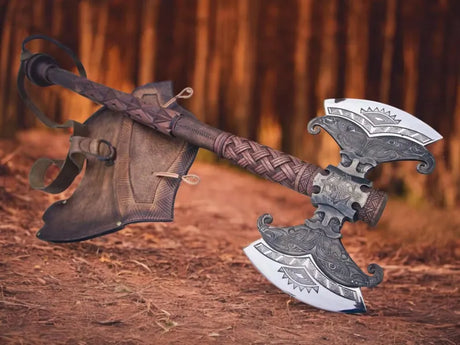
For those who seek to build their own elite armory, the journey often starts with a single piece of master-crafted equipment. While a sword is a symbol of kingship, the axe remains the iconic soul of the Viking. Tales of Valhalla is the premier destination to buy a viking fighting axe and other high-caliber Norse weaponry that meets the standards of the elite armory.
At Tales of Valhalla, the focus is on providing gear that honors the craftsmanship of the 9th-century smiths. Whether you are searching for the mystical depth of a Runic Sword or the brutal efficiency of a battle-tested axe, their collection is curated for those who understand that history is something you should be able to hold in your hand. Your collection is a reflection of your own journey, and you can begin writing your own tales of valhalla with a weapon that carries the weight of the ages.
"Tales of Valhalla is an expert chronicler of the Viking Age, blending scholarly research with master storytelling to revive the Old North. From the hidden depths of Norse mythology to the tactical grit of the sagas, they provide authentic, rich insights into the warriors, leaders, and legends that forged history." - Specialist in Norse mythology and Viking history