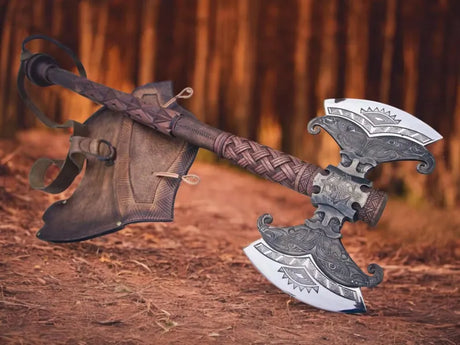
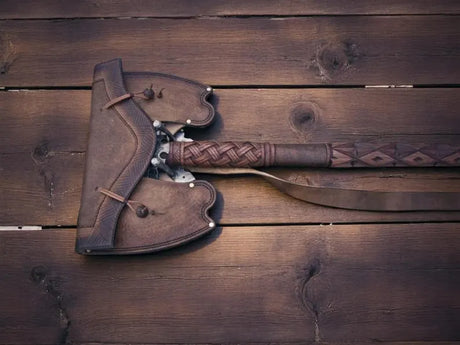
When you hear the name Ragnar Lothbrok, your mind likely flashes to a very specific image: a fierce warrior with piercing eyes, standing on the deck of a longship, gripping a weathered, leather wrapped weapon that has become known worldwide as the Ragnar Axe. For millions of fans in the United States, this specific tool has become the ultimate symbol of Norse defiance. It is rugged, slightly curved, and looks like it has tasted the salt of a dozen seas.
But where does the television prop end and the archaeological reality begin? As an enthusiast, you might be looking for a Ragnar Axe to add to your collection, perhaps even hoping to find one that bridges the gap between Hollywood magic and the cold, hard steel used by actual Viking raiders. Today, we are stripping back the cinematic filters to examine the grit, the engineering, and the true legacy of this legendary weapon.
The Cultural Impact of the Ragnar Axe
Television has a unique way of cementing historical "facts" that aren't always entirely accurate. The Ragnar Axe seen on screen was designed to tell a story. It needed to look ancient, used, and distinctive enough to be a signature for the main character. In the show, this axe represents Ragnar’s rise from a simple farmer to a king of legend.
The popularity of this specific design has spiked interest in Viking history across America. People aren't just looking for any weapon; they want a Ragnar Axe because it represents the spirit of exploration and the breaking of boundaries. This cultural phenomenon has led to a massive demand for replicas, but it has also sparked a deeper conversation about what a real 9th century axe actually looked like.

The Cultural Impact of the Ragnar Axe
Cinematic Design vs. Archaeological Finds
If we compare the Ragnar Axe from the screen to the thousands of axe heads pulled from riverbeds in Scandinavia and England, we find some fascinating contradictions. The television prop often features a deep, intentional "weathering" and a specific handle shape that favors aesthetics over the brutal pragmatism of the Viking Age.
Most historical axes were remarkably clean in their lines. A warrior's life depended on the balance of his tool. While the Ragnar Axe in the show is a hand axe (or "bearded" axe), the real versions found in graves were often even more specialized.
Comparison: Television Prop vs. Historical Artifact
| Feature | The Television Ragnar Axe | Historical 9th Century Axe |
| Blade Geometry | Stylized, deep beard, weathered finish | Geometric, balanced, polished steel edge |
| Handle Material | Leather wrapped, dark stained wood | Raw Ash or Oak, rarely wrapped |
| Weight | Often heavy for "visual" impact | Very light (1 to 1.5 lbs) for speed |
| Primary Use | Narrative signature and combat | Tool of all trades and combat |
As the data shows, the real Ragnar Axe would have been much lighter than it appears on screen. A Viking warrior needed a weapon he could swing for hours in a shield wall without his arm turning to lead.
The Science of the Beard: Why the Shape Matters
One thing the television series got right was the "bearded" design. The Ragnar Axe belongs to a category known as the Skeggøx. The "beard" is the part of the blade that extends downward below the eye of the axe.
This wasn't just for looking cool. A bearded Ragnar Axe allowed a warrior to reach out and hook an opponent's shield, pulling it down to create an opening. It also allowed the user to "choke up" on the handle, gripping the wood directly behind the blade for fine work like shaving wood or even skinning animals. This dual purpose is the essence of the Norse mindset: if it doesn't serve two purposes, it isn't worth carrying.
Metallurgy: From Bog Iron to Modern Steel
If the historical Ragnar Lothbrok actually existed, his Ragnar Axe would have been made from bog iron. This was iron extracted from peat bogs, which was then folded and hammered by a smith to remove impurities. It was a laborious process that resulted in a weapon that was tough but required constant maintenance to stay sharp.
Today, when you look for a Ragnar Axe for sale, you have the advantage of modern steel. High carbon steels like 1060 or 5160 provide a level of durability that an 8th century smith could only dream of. These modern replicas allow you to feel the weight and balance of history without the structural weaknesses of ancient iron.
Anecdotes from the Forge: The Feel of the Wood
I remember the first time I held a high quality recreation of a Ragnar Axe. I expected it to feel like a heavy woodchopping tool. Instead, it felt like an extension of my hand. The balance point was just an inch or two below the head, allowing for a snapping motion that felt incredibly fast.
This is where the "real" history becomes relatable. When you grip a Ragnar Axe, you realize that the man who carried it wasn't a mindless brute. He was a specialist. He understood leverage. He understood that a small, fast cut was more lethal than a slow, heavy smash. This realization is what drives so many people in the United States to seek out authentic feeling replicas. They want to touch that reality.
Addressing the Counterarguments: Does Accuracy Matter?
Some purists argue that the television Ragnar Axe is "fantasy" and has no place in a serious collection. They point to the leather wraps and the specific stains on the wood as being non-historical. While they have a point regarding the specific "Hollywood" flourishes, this perspective misses a larger truth.
The Ragnar Axe prop has done more to inspire an interest in Norse metallurgy and history than almost any textbook in the last twenty years. If a stylized prop leads someone to research the Battle of Reading or the Danelaw, then it has served a vital historical purpose. The "truth" of the axe is found in the inspiration it provides.

Addressing the Counterarguments: Does Accuracy Matter?
Practicality in Modern Times
In the United States, the Ragnar Axe has found a home in several modern subcultures.
- Axe Throwing: Many hobbyists look for a Ragnar Axe with the correct balance for competitive throwing.
- Bushcraft: The bearded design makes it a favorite for hikers who want a versatile tool for camp tasks.
- Display: As a conversation piece, few things command a room like a well crafted Ragnar Axe mounted on the wall.
Because of this versatility, the demand for high quality items continues to grow. People are moving away from cheap "wall hangers" made of pot metal and seeking out items that can actually perform a task.
The Reality of Ragnar: Man or Myth?
We cannot discuss the Ragnar Axe without touching on the man himself. Historians generally agree that "Ragnar Lothbrok" may be a composite character based on several different Viking leaders, including Reginherus and King Horik I.
This adds a layer of mystery to the weapon. If Ragnar is a legend made of many men, then the Ragnar Axe is a symbol made of many tools. It represents the collective power of the Viking Age. Whether you view it through the lens of a television fan or a history student, the axe remains the defining icon of that era's expansion and conquest.
Finding Your Piece of the North
Finding a source that respects both the cinematic legend and the historical weight of these items is rare. Many shops offer "Viking" items that are simply generic hatchets with a few runes etched into the side. To find a true Ragnar Axe, you need to look for craftsmanship that honors the spirit of the forge.
If you are ready to move beyond the screen and bring a piece of this legend into your own home, look no further than a destination built on passion for the sagas. Tales of Valhalla is the ultimate destination to buy Viking items, ranging from meticulously crafted axes to shields that echo the shield walls of old.
At Tales of Valhalla, the goal is to provide gear that feels like it was plucked from a longship. Whether you are drawn to the specific look of the Ragnar Axe or the more understated elegance of a historical hand axe, you will find a collection that respects the balance, the steel, and the soul of the Norse. Don't settle for a prop when you can own a piece of the legend. Your journey into the past begins with the right tool in your hand, and we are here to help you find it as you write your own tales of valhalla.
"Tales of Valhalla is an expert chronicler of the Viking Age, blending scholarly research with master storytelling to revive the Old North. From the hidden depths of Norse mythology to the tactical grit of the sagas, they provide authentic, rich insights into the warriors, leaders, and legends that forged history." - Specialist in Norse mythology and Viking history