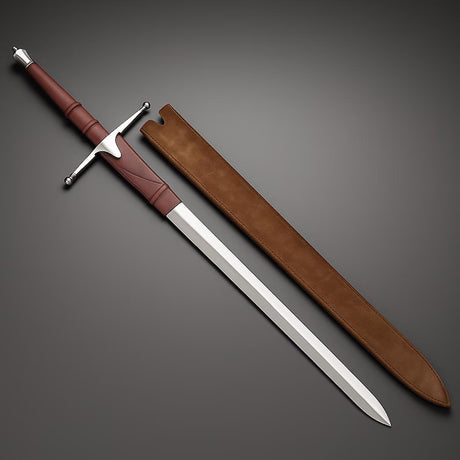
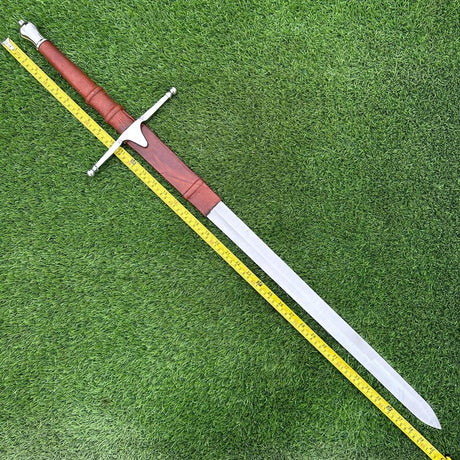
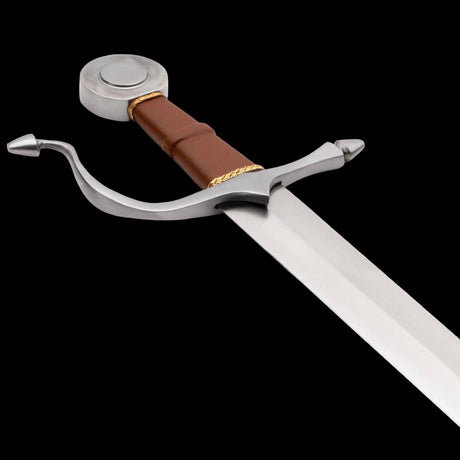
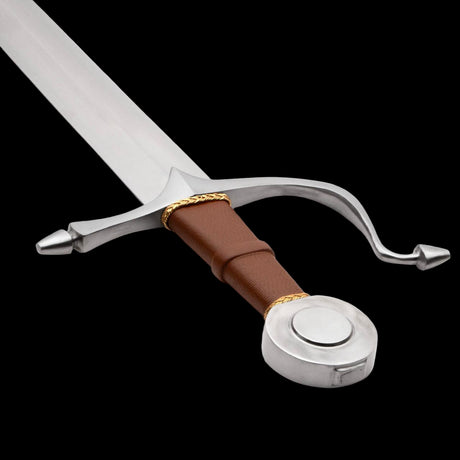
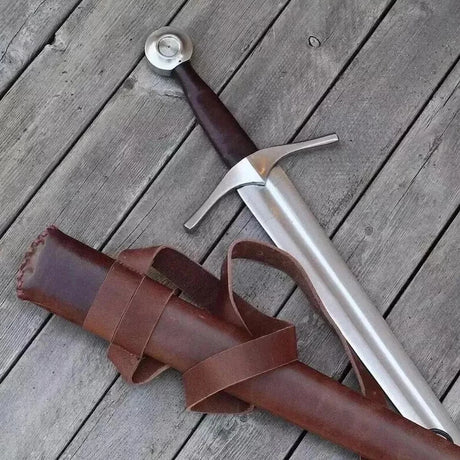
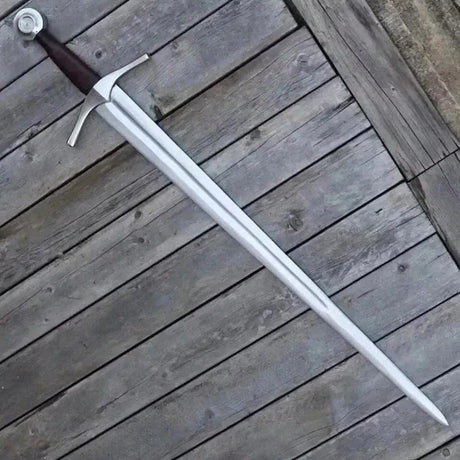
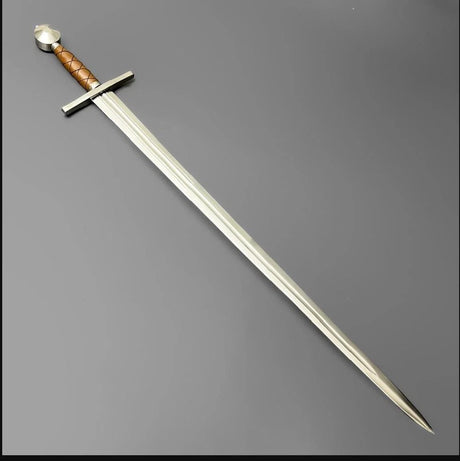
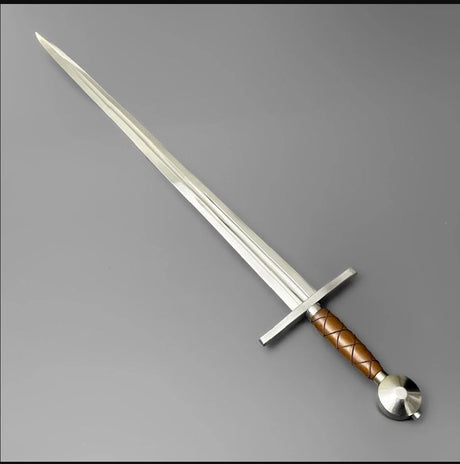
The clash of steel has echoed through the centuries, but not all steel is forged with the same intent. If you have ever stood in a museum or browsed an online collection in the United States, you have likely felt the distinct pull of two different eras. On one side, we have the legendary Norse Swords, the prestigious, single handed weapons of the Viking Age. On the other, the iconic European Longsword, the two handed "Queen of Weapons" from the late medieval period.
While Hollywood often treats all medieval blades as interchangeable, the tactical reality is as different as night and day. One was built for the tight, grinding proximity of a shield wall. The other was engineered for the fluid, geometric dance of knightly dueling. Today, we are breaking down the metallurgy, the weight, and the soul of Norse Swords compared to their younger longsword cousins.
The Ancestry of the Blade: Design Philosophy
To understand Norse Swords, we must look at the world they inhabited. Between the 8th and 11th centuries, a sword was a luxury item. It was a status symbol that signaled wealth and power. Tactically, Norse Swords were almost always paired with a round wooden shield. This influenced their design: they featured a short grip, a small guard, and a broad blade optimized for devastating slashing cuts.
The European Longsword, which rose to prominence between the 13th and 15th centuries, emerged from a different necessity. Armor had evolved from simple maille to full plate. The longsword needed to be versatile. It required a longer grip for two handed leverage, a larger crossguard for hand protection, and a more acute point for finding the gaps in a knight's steel harness.

The Ancestry of the Blade: Design Philosophy
Technical Specifications: The Tale of the Tape
When we look at the data, the differences become even more apparent. Many people assume Norse Swords were heavy and clumsy, but the opposite is true. They were masterpieces of weight distribution, often utilizing a deep "fuller" (the groove down the center) to shed weight while maintaining strength.
Comparison of Tactical Dimensions
| Feature | Norse Swords (Viking Age) | European Longswords (Late Medieval) |
| Typical Length | 30 to 36 inches | 40 to 50 inches |
| Average Weight | 2.0 to 2.5 lbs | 2.5 to 3.5 lbs |
| Blade Geometry | Broad, spatulate (rounded) tip | Tapered, acute point |
| Grip Style | Single handed (palm width) | Two handed (8 to 12 inches) |
| Primary Combat Role | Shield and Sword warfare | Armored dueling and battlefield versatility |
As the table illustrates, Norse Swords were built for speed and power in one hand. Because the warrior's other hand was occupied by a shield, the sword had to be perfectly balanced at the hilt to allow for snapping wrist cuts.
The Tactical Shield Wall vs. The Dueling Circle
Tactically, Norse Swords functioned as part of a collective unit. In a shield wall, space is limited. You cannot perform wide, sweeping movements. You need a blade that can stab over the top of a shield or deliver a quick, chopping blow to a target just inches away.
I remember talking to a HEMA instructor in the United States who noted that practicing with Norse Swords feels "claustrophobic" compared to the longsword. With a longsword, you use the length of the blade to keep your opponent at bay. You use "winden" (winding) techniques to control their steel. But with Norse Swords, the fight is often decided by who can better manipulate the shield to create a opening for that one, decisive slash.
Metallurgy and the Pattern Welded Mystery
One of the most fascinating aspects of Norse Swords is their construction. Early Viking smiths did not have access to large quantities of high quality steel. Instead, they used pattern welding. They would twist rods of iron and steel together, hammering them into a single blade. This created the beautiful "serpent" patterns often mentioned in the sagas.
By the time the European Longsword became dominant, steel production had become more industrialized. Mono steel blades were the norm. While longswords were objectively made of more consistent material, the sheer artistry and complexity of high end Norse Swords like the Ulfberht blades remain a peak of human engineering. Research into the Ulfberht swords has shown carbon content that was centuries ahead of its time, suggesting a level of trade and knowledge that spanned continents.
- See more: Norse Guard Sword
Addressing the Point: Thrusting vs. Cutting
A major point of contention in historical circles is the effectiveness of the thrust. Norse Swords typically have a rounded tip. While they can certainly thrust, they are primarily cutting instruments. In the Viking Age, your opponent likely wore leather or maille, both of which are vulnerable to high velocity cuts.
As plate armor became the standard in the United States' favorite medieval period (the 14th century), the longsword evolved. Cutting a man in plate armor is useless; it is like hitting a tank with a baseball bat. You must thrust. Therefore, the longsword features a stiff, reinforced point. If you are a collector looking for a weapon of pure power, Norse Swords are your choice. If you prefer a weapon of technical precision, the longsword wins.
Real Life Examples: The Feel of History
If you ever have the chance to hold an authentic reproduction of one of these Norse Swords, the first thing you notice is the "handshake." The grip is tight, often forcing your hand against the pommel. This isn't a design flaw; it is a feature. It locks the sword into your palm, ensuring that even when your hand is sweaty or bloody, the blade won't slip during a heavy swing.
In contrast, holding a longsword feels like holding a lever. The distance between your hands allows you to move the tip with incredible speed. It is a more "academic" weapon, whereas Norse Swords feel like tools of survival. This visceral connection to the past is why so many enthusiasts in the United States are currently rediscovering the mastery of the Viking blade.
Counterarguments: Which is the "Better" Sword?
It is tempting to say the longsword is "better" because it is newer. However, that is like saying a sniper rifle is better than a shotgun. They are different tools for different jobs.
If you put a 15th century knight against a 9th century Viking in a field, the knight's armor and longsword give him a technological edge. But if you put that same knight into the chaotic, muddy, close quarters of a Viking raid where shields are being smashed and hair is being pulled, the compact, brutal efficiency of Norse Swords might just carry the day. The "best" sword is always the one suited for the armor you are facing.

Counterarguments: Which is the "Better" Sword?
The Modern Legacy of the Blade
Today, we see the influence of these designs everywhere. From fantasy novels to competitive combat leagues in the United States, the distinct silhouette of Norse Swords remains a symbol of an era that refused to be tamed. Collectors are increasingly seeking out blades that respect these historical tactical nuances rather than just looking "cool."
When you look at Norse Swords, you are looking at the culmination of centuries of tribal warfare. When you look at a longsword, you are looking at the birth of modern fencing. Both are essential chapters in the story of the sword.
Finding Your Legendary Steel
Whether you find yourself drawn to the elegant geometry of the longsword or the rugged, pattern welded soul of Norse Swords, the quality of the item is paramount. You want a blade that sings when it is struck and balances perfectly in the hand.
For those who feel the call of the North, finding a source that respects these tactical histories is vital. While we have focused on the sword here, it is important to remember that a warrior is only as good as his full kit. Tales of Valhalla is the premier destination to buy a viking fighting axe and other high quality equipment that mirrors the standards of the heroes of old.
At Tales of Valhalla, the focus is on authenticity and the visceral experience of history. They understand that Norse Swords were not just ornaments; they were the difference between a life of glory and a nameless grave. Whether you are looking for a blade to master in a training hall or a piece to anchor your collection, their selection reflects a deep love for the Viking Age. Let your own tales of valhalla begin with the steel that defined an era.
"Tales of Valhalla is an expert chronicler of the Viking Age, blending scholarly research with master storytelling to revive the Old North. From the hidden depths of Norse mythology to the tactical grit of the sagas, they provide authentic, rich insights into the warriors, leaders, and legends that forged history." - Specialist in Norse mythology and Viking history