Imagine standing on a windswept cliff in the Hebrides during the late 9th century. Below you, the sleek hulls of Viking longships cut through the grey Atlantic. But these aren’t just raiders coming for gold; they are settlers, traders, and cultural sponges. As they step onto the shores of Ireland and Scotland, they encounter a symbol unlike any they have seen in the fjords of Norway: the Celtic Cross.
For many in the United States, the Celtic Cross is a beautiful piece of jewelry or a marker of heritage. However, its historical significance is far more radical. It served as a spiritual bridge. It was the medium through which the fiery, polytheistic world of Norse Paganism began to meld with the ascetic, mystical world of Celtic Christianity.
This blog explores that intersection—a time when Odin and Christ existed side-by-side on the same stone carvings, and how the Celtic Cross became the ultimate emblem of a hybridized northern world.
The Birth of the Celtic Cross: A Symbol of Synthesis
Before we can understand its influence on the Vikings, we have to look at what the Celtic Cross actually is. Unlike the simple Roman cross, the Celtic Cross features a distinct circle—a nimbus—surrounding the intersection.
Legend attributes its creation to St. Patrick, who allegedly combined the Christian cross with the idea of the sun (a pagan symbol) to explain the concept of Christ's eternal light to the Irish. While that makes for a great story, historians suggest it was a practical evolution in stonework. The circle provided structural support for the heavy stone arms of the "High Crosses" that began appearing across the British Isles.
By the time the Vikings arrived, these stone monuments were the towering skyscrapers of their era. To a Norseman, who viewed the world through the lens of Yggdrasil (the World Tree), a towering stone cross covered in intricate knotwork didn't feel entirely "foreign." It felt like a different version of their own sacred geometry.

The Celtic Cross: How Celtic Christianity Reshaped Norse Paganism
When the North Met the West: The Viking Age in the Celtic Fringe
The Viking expansion into the "Celtic Fringe"—Ireland, Scotland, and the Isle of Man—wasn’t just about conquest. It was about assimilation. As Vikings settled, they took local wives and raised children in a bilingual, bi-religious environment.
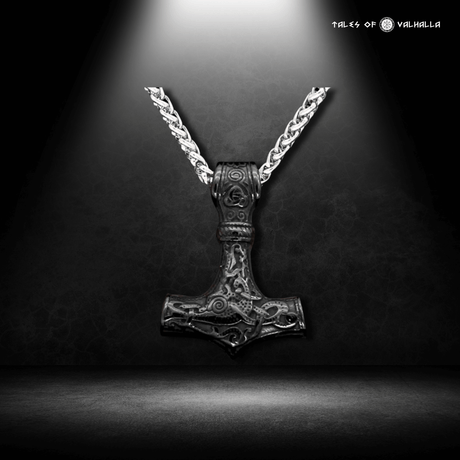
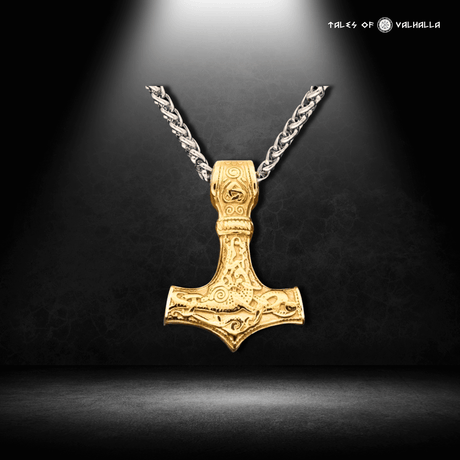
This led to a fascinating period of "dual-faith." Archaeological finds in the Irish Sea region often show graves containing both a "Thor’s Hammer" and a Celtic Cross. This wasn't necessarily because the Vikings were confused; it was because they were "hedging their bets."
- See more: Geri and Freki
Historical Data: Christianization Trends in Norse Settlements
To understand the scale of this influence, let’s look at the archaeological evidence of Christian symbols found in traditionally Norse settlement areas between 800 AD and 1100 AD.
| Region | Predominant Pagan Finds (Pre-900 AD) | Christian/Norse Hybrid Finds (Post-1000 AD) | Percentage of Hybrid Symbolism |
| Isle of Man | Thor's Hammers, Ship Burials | Manx Crosses (Norse Runes on Crosses) | ~65% |
| Ireland (Dublin) | Pagan Grave Goods | Stone Celtic Cross monuments | ~40% |
| Scottish Highlands | Pictish Stones | Interlaced Celtic Cross carvings | ~55% |
| Northern England | Scandinavian Jewelry | Gosforth Cross (Biblical/Norse scenes) | ~70% |
These statistics highlight that the Celtic Cross wasn't just a religious icon; it was a cultural magnet that pulled the Norse away from the strict worship of the Aesir and toward a new, "Northernized" version of Christianity.
The Celtic Cross as a "Christian Yggdrasil"
One of the most profound ways the Celtic Cross influenced Norse Paganism was through visual language. Norse art was dominated by "horror vacui"—a fear of empty spaces—resulting in the famous "Gripping Beast" and "Jellinge" styles of intricate, winding animals.
When the Norse saw the Celtic Cross, they saw a mirror of their own art. The interlacing knots of the Celtic style looked remarkably like the serpent-loops of Jormungandr or the roots of the World Tree.
Bridging the Mythology
In the eyes of a Norse convert, the Celtic Cross became a stand-in for Yggdrasil. Both represented a central pillar that held the universe together. Both were symbols of sacrifice—Odin hung from the tree to gain wisdom, while Christ hung from the cross for humanity.
The Gosforth Cross in Cumbria, England, is the "smoking gun" of this influence. It is a tall, slender stone monument that looks like a Celtic Cross but is carved with scenes from Ragnarok alongside the crucifixion of Christ. You can see Vidar tearing the jaws of the Fenris wolf on the same stone that honors the Christian God. This wasn't an accident; it was a deliberate attempt to use the Celtic Cross to explain the new faith using the vocabulary of the old.
The Isle of Man: The Laboratory of Cultural Fusion
If you want to see the influence of the Celtic Cross at its peak, you have to look at the Isle of Man. The "Manx Crosses" are a unique category of archaeological treasure. These stones were commissioned by wealthy Viking settlers.
Interestingly, these crosses often feature Runic inscriptions. A settler named Gaut, for instance, carved a Celtic Cross and signed it in Runes: "Gaut made this and all in Man."
This represents a major shift in Norse Paganism. The pagan tradition was largely oral, but the contact with Celtic Christianity and its stone-carving traditions encouraged the Norse to immortalize their names and their new faith in stone. The Celtic Cross gave the Vikings a permanent voice in the landscape of the British Isles.

The Isle of Man: The Laboratory of Cultural Fusion
Counterarguments: Was it Influence or Erasure?
Some historians argue that "influence" is too soft a word. They suggest that the Celtic Cross was a tool of cultural erasure—that the Church used the familiar aesthetics of the cross to trick Pagans into abandoning their heritage.
However, the "trickery" theory doesn't hold up when you look at the sheer enthusiasm with which the Vikings adopted the Celtic Cross. They didn't just accept it; they evolved it. They brought the "Borre" and "Mammen" art styles from Scandinavia and applied them to the cross. If this was erasure, it was a very collaborative form of it. The Vikings weren't just being converted; they were "Viking-izing" Christianity.
The Influence on Modern Spirituality in the United States
Why does the history of the Celtic Cross and Norse Paganism matter to someone in the United States today? We live in a "melting pot" culture, and many Americans of Northern European descent feel a pull toward both their Christian roots and their ancestral Pagan lore.
The Celtic Cross stands as a historical precedent for this "both/and" identity. It proves that cultures don't have to exist in a vacuum. You can admire the strength of Thor and the sacrifice of the Cross simultaneously. This historical fusion has paved the way for modern "Celtic-Norse" spiritualities that value nature, craftsmanship, and a deep sense of ancestral connection.
Technical Aspects: The Geometry of Influence
When we analyze the Celtic Cross from a design perspective, we see how it simplified complex Norse ideas. The four arms of the cross easily mapped onto the four cardinal directions—North, South, East, and West—which were vital to Viking navigation.
The circle, or nimbus, represented the sun, which the Norse associated with the goddess Sól. By placing the cross inside the circle, the Celtic Cross effectively "tamed" the wilder elements of Norse nature-worship into a structured, theological framework.
- The Vertical Beam: Represented the connection between Heaven (Asgard) and Earth (Midgard).
- The Horizontal Beam: Represented the physical world and the human experience.
- The Circle: Represented the cyclical nature of time—a concept deeply embedded in the Norse idea of the "Urd" (the past) and the inevitable "Ragnarok" (the end and rebirth).
Future Projections: What New Archaeology Tells Us
We are currently in a golden age of "Viking DNA" and isotopic analysis. Recent studies of graves in Scotland have shown that many people buried under a Celtic Cross were first-generation immigrants from Norway.
This tells us that the transition wasn't slow or generational. It was immediate. A Viking could raid a monastery in June and be commissioning a Celtic Cross for his deceased father by October. This rapid adoption suggests that the Celtic Cross filled a spiritual "gap" that Norse Paganism, with its focus on worldly fate and martial glory, perhaps left open as the Vikings transitioned from warriors to farmers and traders.
Conclusion
The Celtic Cross is more than just a relic of the past; it is a testament to the power of cultural exchange. It took the raw, untamed energy of Norse Paganism and gave it a new shape, while in turn, the Norse gave the cross a vitality and an artistic flair that it had never seen before.
As we look back at the wind-swept ruins of Iona or the intricately carved stones of the Isle of Man, we see a story of two worlds colliding and creating something beautiful. The influence of Celtic Christianity on the Vikings wasn't a defeat of the North; it was an evolution. It allowed the stories of the gods to survive within a new framework, ensuring that the spirit of the Viking Age would endure through the centuries.
Whether you wear a Celtic Cross to honor your ancestors or simply admire its complex beauty, you are participating in a tradition that once helped a band of seafaring warriors find their place in a changing world. These are the true tales of valhalla.