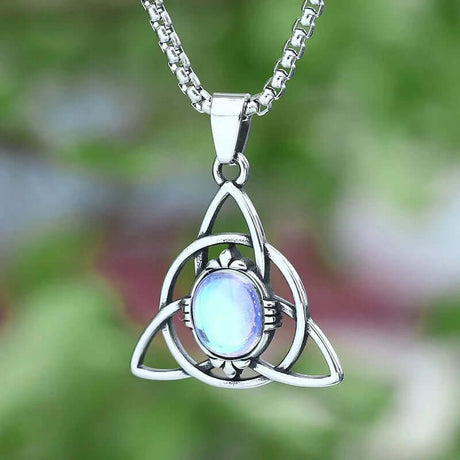
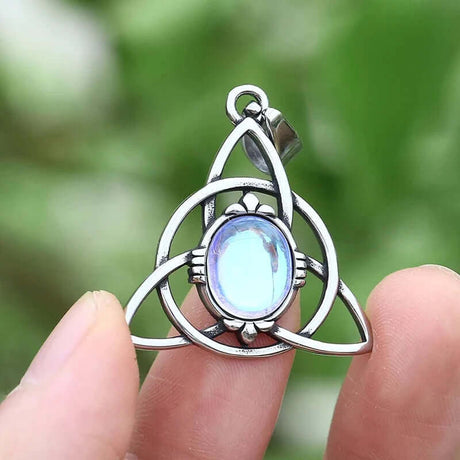
Across the mist-shrouded history of Northern Europe, few symbols have maintained such a profound and mysterious grip on the human imagination as the triquetra. Also known as the Trinity Knot, this three-pointed emblem consists of one continuous, interlacing line that loops back upon itself. It is a symbol with no beginning and no end, representing the eternal nature of the soul and the interconnectedness of all things.
For many in the United States, the triquetra is a bridge to an ancestral past. We see it carved into ancient stone monuments, illuminating the pages of medieval manuscripts, and dangling from the ears of modern fashion icons. But what does it truly signify? Whether you are a student of Norse mythology, a lover of Celtic art, or someone seeking a deeper spiritual connection, understanding the triquetra is a journey into the heart of ancient wisdom.
The Origins of the Triquetra: A Cross-Cultural Mystery
While often associated with Celtic culture, the triquetra has appeared in various forms across the globe for thousands of years. It has been found on Indian heritage sites dating back 5,000 years and on Germanic runestones that date to the early Viking Age.
A Geometry of Three
The word itself comes from the Latin tri- (three) and quetrus (cornered). In its simplest form, it is a triangle made of three arcs. However, the true beauty of the triquetra lies in its "interlacing"—the way the line passes over and under itself. This design suggests that the three forces it represents are not just separate entities but are woven into a single, inseparable fabric.
I remember visiting a museum in Chicago that featured a Viking Age silver hoard. Among the heavy arm rings and coins was a small, delicate brooch featuring a triquetra. It was a reminder that even in a culture known for its rugged warriors, there was a deep appreciation for the complex, mathematical beauty of the universe.

Symbolic Meanings: The Power of Three
In almost every culture that has used the triquetra, the number three is considered sacred. It is the number of harmony, balance, and completion. Because the knot is continuous, it often represents concepts that are eternal.
| Domain | First Aspect | Second Aspect | Third Aspect |
| The Natural World | Earth | Sea | Sky |
| The Human Experience | Mind | Body | Spirit |
| The Passage of Time | Past | Present | Future |
| Life Cycles | Life | Death | Rebirth |
As the table illustrates, the triquetra acts as a visual shorthand for the fundamental triads of existence. It reminds the wearer that one cannot exist without the others; you cannot have a future without a past, and the spirit is hollow without the grounding of the body.
The Triquetra in Norse and Celtic Tradition
In the Celtic world, the triquetra reached its artistic peak in the Book of Kells, where it was used as a decorative element to signify the Holy Trinity. However, long before the arrival of Christianity, pagans used the knot to represent the Triple Goddess.
In the Norse tradition, the triquetra is closely related to the Valknut (the knot of the slain). It was often associated with Odin and the Valkyries, symbolizing the power of the god to bind and unbind the minds of men in battle. It was a sign of divine protection and a marker of those who were destined for higher realms.
Today, many Americans embrace the triquetra as a symbol of their own personal "trinity"—perhaps their family, their faith, or their connection to nature. It is a versatile icon that adapts to the heart of the person who holds it.

Celtic Cat Triquetra Necklace
Modern Relevance: Why We Still Wear the Knot
In an age of fast-paced technology and temporary digital connections, the "eternal" nature of the triquetra offers a sense of stability. It is a popular choice for tattoos and jewelry because it conveys a message of "forever." It is a way to wear your values on the outside.
Research into modern jewelry trends shows that consumers are increasingly looking for "meaning-driven" pieces. A simple gold hoop is nice, but a triquetra earring tells a story. It suggests that the wearer is tuned into the ancient rhythms of the world and respects the heritage of the North.
Conclusion
The triquetra is more than just a geometric shape; it is a vessel for the stories of our ancestors. It carries the weight of the sea, the height of the sky, and the endurance of the earth. When you wear this symbol, you are stepping into a lineage of heroes, goddesses, and mystics who understood that all life is a beautifully tangled knot.
If you feel called to channel this ancient energy, there is no better way than through pieces that honor these divine connections. In Norse mythology, Freya is the goddess of war, love, fertility, and prophecy, known as the wife of Odin and mother of Balder. She rides a chariot pulled by cats, Bygul and Trjegul, gifted by Thor. The Celtic Trinity Knot symbolizes the three phases of the moon and the three aspects of the pagan Moon Goddess: Mother, Maiden, and Crone. Don't miss these beautiful Viking earrings—perfect for yourself or a loved one! They are a stunning tribute to the enduring and mystical tales of valhalla.
"Tales of Valhalla is an expert chronicler of the Viking Age, blending scholarly research with master storytelling to revive the Old North. From the hidden depths of Norse mythology to the tactical grit of the sagas, they provide authentic, rich insights into the warriors, leaders, and legends that forged history." - Specialist in Norse mythology and Viking history