The sky darkens over the horizon. A low rumble starts in the distance, vibrating through the very soles of your feet before a jagged streak of light tears through the clouds. For most people today, this is just a meteorological event. But for the ancient Norse, and for millions of enthusiasts in the United States today, that sound is the rolling chariot of Thor. He is the heavy hitter of the pantheon, the blue collar god who gets his hands dirty to keep the world safe from the forces of chaos.
While many of us first met Thor through the colorful pages of comic books or the high budget spectacle of the Marvel Cinematic Universe, his roots go much deeper. He is a figure of immense complexity, representing not just raw power, but the sanctity of the home, the reliability of the weather, and the physical strength required to protect what matters. In this deep dive, we are going to move past the silver screen to explore the authentic, hammer wielding protector who has captivated human imagination for over a thousand years.
We will look at his legendary tools, his surprising family life, and why Thor remains the most relatable god for the modern person. Whether you are a history buff or a casual fan, understanding the God of Thunder is key to understanding the heartbeat of Norse mythology.
Who is Thor? The People’s God
If Odin is the distant, mysterious king of the gods, Thor is the man of the people. He is the son of Odin and the earth goddess Jörð, a lineage that perfectly explains his dual nature. He belongs to the high halls of Asgard, yet he feels a deep, ancestral connection to the physical world. In the ancient Norse social structure, kings and poets looked to Odin, but the farmers, the laborers, and the warriors looked to Thor.
His popularity in the United States today mirrors this ancient trend. We tend to admire the "working man" hero—the individual who shows up, does the hard work, and protects his community without needing a complex philosophical reason to do so. Thor is the ultimate guardian. He is the barrier between the organized world of humans (Midgard) and the wild, unpredictable realms of the giants (Jötunheimr).

Who is Thor? The People’s God
A God of More Than Just Thunder
While his name is synonymous with the storm, Thor held jurisdiction over several vital areas of life:
- Agriculture: As the bringer of rain, he was essential for crops and fertility.
- Hallowing: He used his power to sanctify marriages, births, and even the boundaries of land.
- Justice: Though he was a warrior, he was often called upon to settle disputes through his undeniable presence.
The Arsenal of the Storm: Mjölnir and Beyond
You cannot talk about Thor without talking about his gear. In Norse mythology, tools define the character, and Thor possesses some of the most iconic artifacts in human history.

The Arsenal of the Storm: Mjölnir and Beyond
Mjölnir: The Crushing Hammer
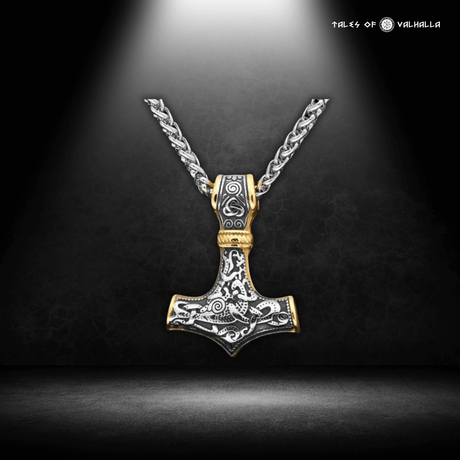
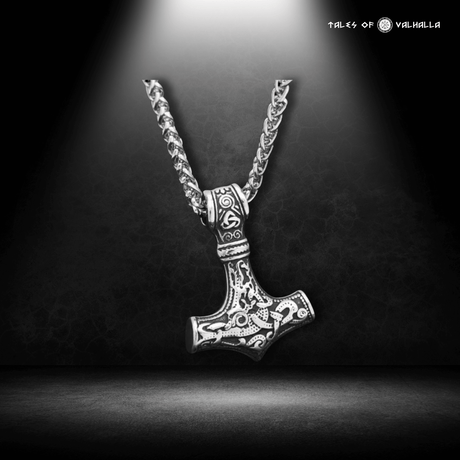
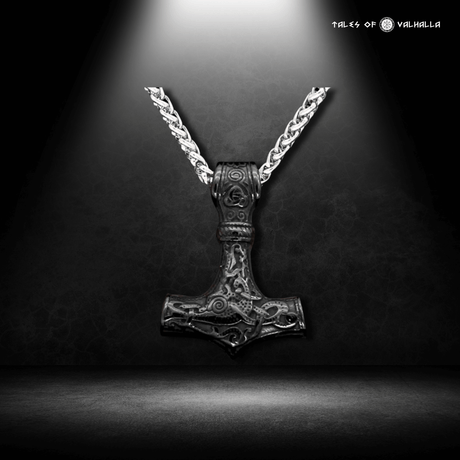
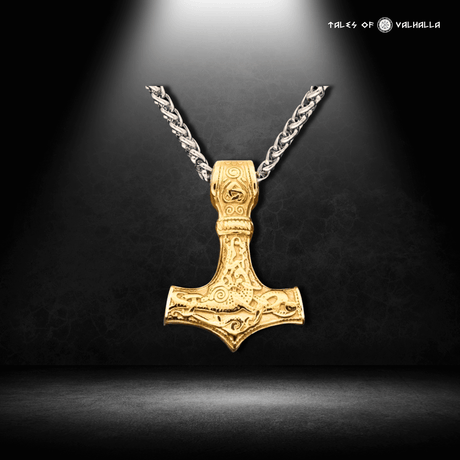
This is not just a weapon; it is a symbol of divine protection. Mjölnir was forged by the dwarves Brokkr and Sindri during a bet with Loki. Although the handle was shorter than intended—a classic case of divine workplace accidents—the hammer became the most feared object in the nine realms. It never misses its mark, and it always returns to Thor’s hand like a loyal companion.
Megingjörð and Járngreipr
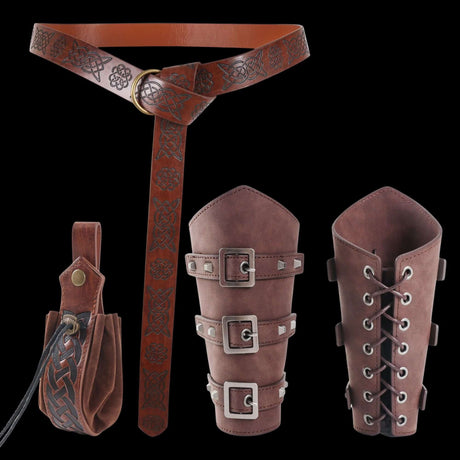
To handle such immense power, Thor requires more than just muscle. He wears Megingjörð, a belt of power that doubles his already godlike strength. Additionally, he wears Járngreipr, iron gauntlets that allow him to grip the white hot metal of his hammer. These items remind us that even the strongest among us need the right tools to perform at their peak.
The Chariot of Goats
Forget golden horses or flying cars. Thor travels the sky in a chariot pulled by two massive goats, Tanngrisnir and Tanngnjóstr. The ingenuity of this myth is slightly dark: Thor could kill and eat his goats for dinner, and as long as he didn't break their bones, he could resurrect them the next morning with his hammer. This highlights his role as a god of life, death, and the endless cycle of the seasons.
Statistical Impact: The Cultural Footprint of Thor
It is easy to say Thor is popular, but the data actually backs this up. From naming conventions to modern media consumption, the God of Thunder dominates the cultural landscape of the United States.
| Category | Historical/Modern Metric | Impact Level |
| Days of the Week | Thursday (Thor's Day) | Universal |
| Naming Trends (US) | 200% increase in "Thor" as a name since 2011 | Growing |
| Box Office Impact | Over $6 billion for Thor-centric films | Massive |
| Archaeological Finds | "Thor's Hammer" amulets outnumber all other symbols | Primary |
The table clearly shows that Thor is not just a relic. He is a living part of our language and our entertainment industry. The surge in naming trends specifically points to a desire for names that evoke strength and ancient heritage.
The Relatable Warrior: Flaws and Feats
One reason we love Thor in the United States is that he isn't perfect. He has a legendary temper, he eats too much, and he is often outwitted by those more clever than he is. This makes him human. We see our own struggles in his stories—the struggle to control one's anger, the desire to protect family, and the occasional feeling of being overwhelmed by tasks.
The Myth of Útgarða-Loki
In one famous anecdote, Thor travels to the castle of a giant king where he is challenged to a series of contests. He fails to empty a drinking horn, fails to lift a cat, and fails to win a wrestling match against an old woman. He leaves the castle feeling dejected and small.
However, the giant king later reveals that it was all an illusion. The drinking horn was connected to the ocean (Thor drank so much he created the tides), the cat was actually the Midgard Serpent (he lifted it so high it touched the sky), and the old woman was Old Age itself, which no one can defeat. This story tells us that even when we feel like we are failing, our efforts might be having a massive, unseen impact on the world around us.
Thor in the Modern United States: A Symbol of Resilience
In the American context, Thor has evolved into a symbol of resilience. Following the global challenges of the last few years, many people find comfort in the idea of a protector who doesn't quit. We see his hammer worn as jewelry not just by those of Scandinavian descent, but by anyone who identifies with the idea of being a "shield" for others.
The Heroic Ideal
Expert mythologists often point out that Thor represents the "protective masculine." In a society that is constantly redefining what it means to be a hero, Thor provides a stable blueprint: use your strength to serve others, keep your word, and stand your ground against the storm. He is the archetype of the first responder, the soldier, and the parent who works three jobs to keep the lights on.
"Thor is the god of the common man because his struggles are our struggles. He deals with the physical reality of the world, making him the most grounded figure in Asgard." — Dr. Soren Holm, Nordic Studies Professor.
Counterarguments: Is Thor Too Violent for Modern Times?
Some critics argue that a god who solves every problem with a hammer is a poor role model for a modern, diplomatic world. They suggest that Thor represents an era of "might makes right" that we have moved past.
However, this perspective misses the nuance of the lore. Thor rarely starts the fight. He is the one called in when diplomacy has already failed and the "giants"—representing natural disasters, chaos, and destruction—are at the door. He is a defensive force. In the ancient world, and arguably in our own, there are moments where physical strength and the courage to act are the only things standing between order and total collapse.
Ragnarok: The Final Storm
Every great hero has a final act. For Thor, that act occurs at Ragnarok. He is destined to face his greatest rival, Jörmungandr, the Midgard Serpent. The serpent is so large it circles the entire world, biting its own tail. It represents the ultimate poison and the ultimate boundary.
In the final battle, Thor kills the serpent with a single, earth shattering blow from Mjölnir. However, the serpent's venom is so potent that Thor only manages to take nine steps before he, too, falls. It is a bittersweet ending. He saves Midgard, but he pays the ultimate price. This sacrifice is the hallmark of a true protector. He doesn't survive the storm; he stops it so that others might see the sun again.

How to Channel the Energy of Thor Today
You don't need a magical hammer to embody the spirit of the Thunderer. Here are a few ways to bring that energy into your daily life:
- Be a Protector: Stand up for those who cannot stand up for themselves. This is the core of Thor’s identity.
- Physical Discipline: Honor the "God of Strength" by taking care of your own body. Physical movement is a form of modern meditation.
- Keep Your Word: In the sagas, Thor is known for his honesty. In a world of fine print and broken promises, being a person of your word is a radical act.
- Face the Storm: When life gets difficult, don't hide. Pick up your "hammer"—whatever tool or skill you possess—and get to work.
I remember talking to a veteran in the Midwest who wore a Mjölnir pendant. He told me it didn't represent a religion to him as much as a reminder. Whenever things got tough, he would touch the pendant and remind himself that he was a protector. That is the "Thor Effect" in action. It is a psychological anchor that provides strength when the clouds gather.
The Future of the Thunderer
As we move deeper into the 21st century, the legend of Thor is only expanding. With new films, games, and a renewed interest in ancestral spirituality, the God of Thunder is experiencing a second golden age.
Projections for the Archetype
| Scenario | Likelihood | Impact |
| Environmental Iconography | High | Using Thor as a symbol for protecting the Earth. |
| Fitness Industry Integration | Very High | "Thor-style" strength training continues to peak. |
| Educational Growth | Moderate | More universities offering Old Norse mythology courses. |
We are seeing Thor transition from a "warrior" to a "steward." As we face global storms like climate change, the imagery of a god who protects the earth (his mother) becomes even more poignant. He is the guardian we need for the challenges of the future.
Conclusion
Thor is more than a character in a movie or a figure in a dusty book. He is the lightning in our veins when we decide to be brave. He is the rain that allows our dreams to grow. He is the shield that protects our homes. By understanding his myths, we gain a better understanding of our own capacity for strength and resilience.
The ancient Norse knew that the world was a dangerous place, full of giants and serpents. They created Thor to remind themselves that they weren't alone in the dark. Today, we still face our own versions of giants, and we still need that thunderous reassurance.
As the wheels of his chariot continue to roll across the heavens of our collective consciousness, we find that his strength is our strength. His stories aren't just myths; they are invitations to be the heroes of our own lives. He is the eternal protector, a golden light in the storm, and the heart of the most epic tales of valhalla.
"Tales of Valhalla is an expert chronicler of the Viking Age, blending scholarly research with master storytelling to revive the Old North. From the hidden depths of Norse mythology to the tactical grit of the sagas, they provide authentic, rich insights into the warriors, leaders, and legends that forged history." - Specialist in Norse mythology and Viking history