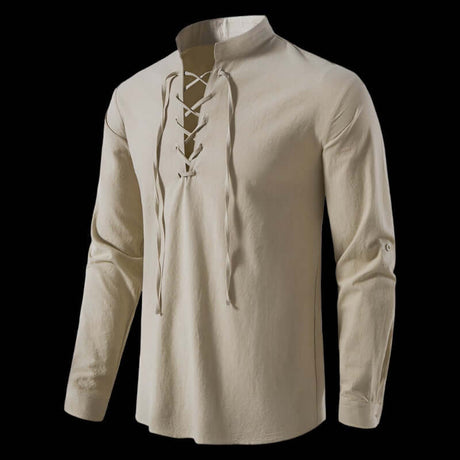
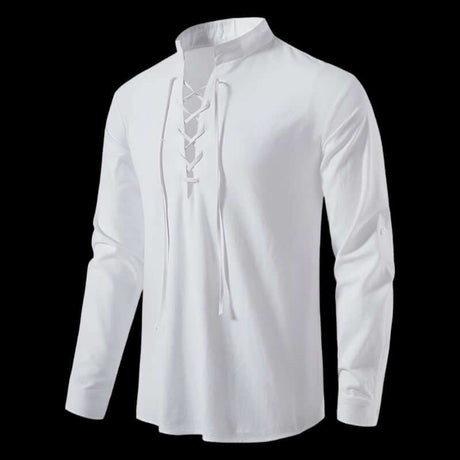
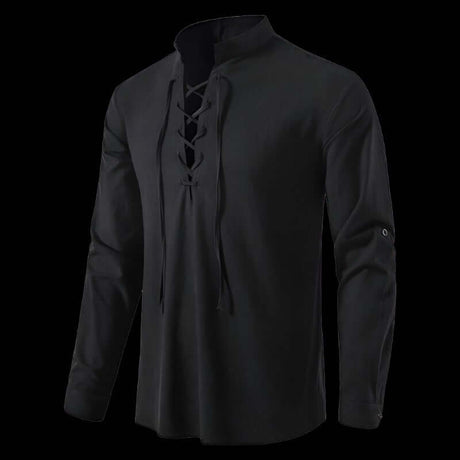
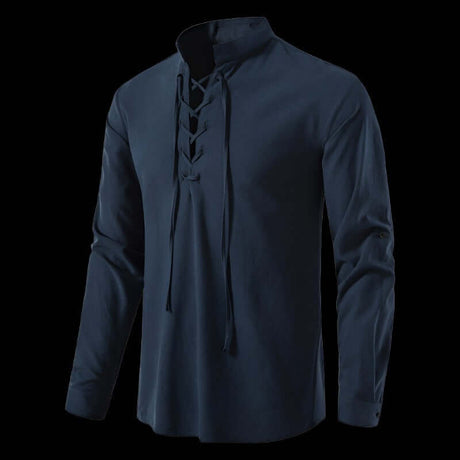
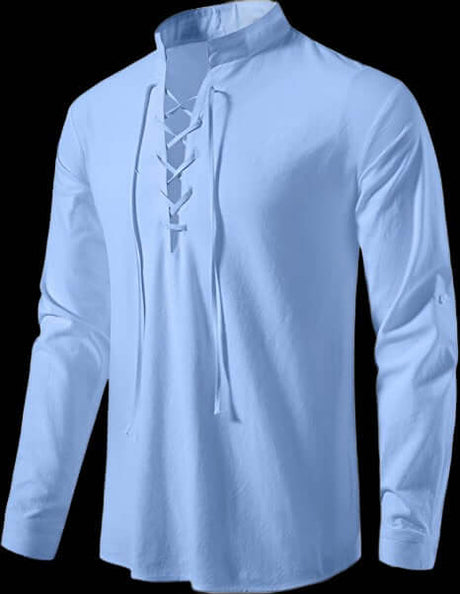
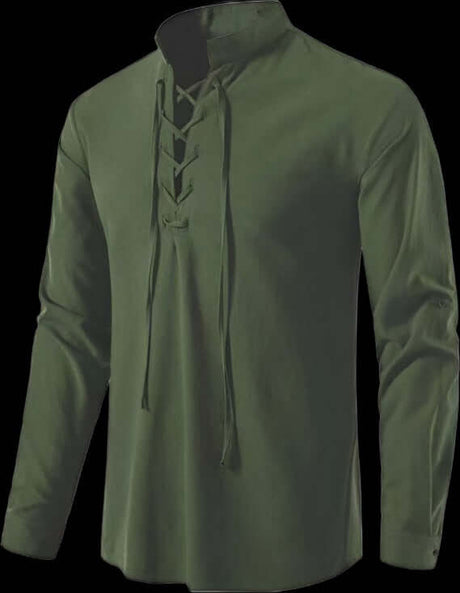
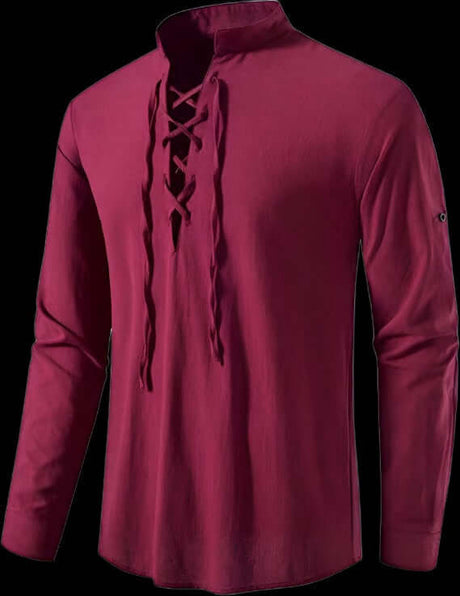
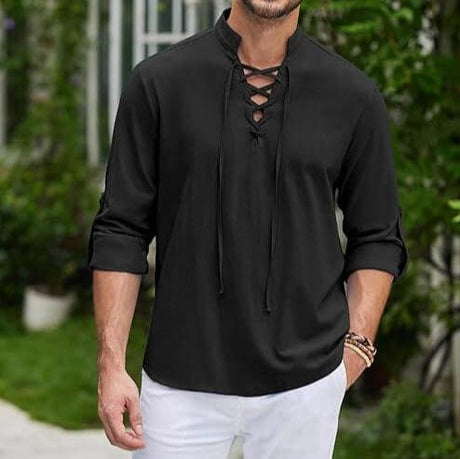
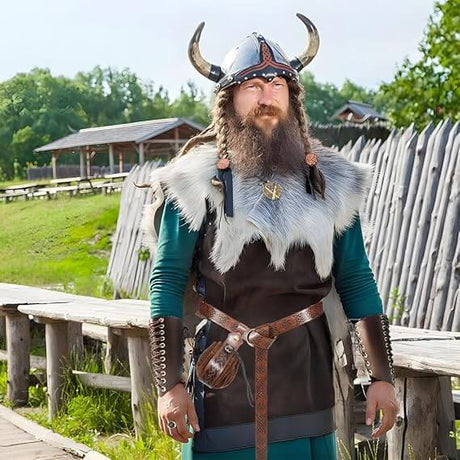
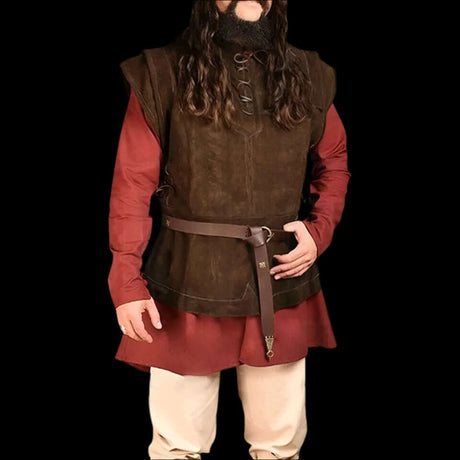
Close your eyes and picture a Viking. If you’re like most people in the United States, your mind immediately conjures a massive man draped in dark, heavy leathers, covered in dirt, and wearing a helmet adorned with menacing horns. It’s a powerful image, popularized by decades of Hollywood cinema and hit TV shows. But if you were to step off a longship in 10th-century Scandinavia wearing that, you would look less like a fearsome warrior and more like a confused traveler.
In reality, the authentic Viking outfit was a masterpiece of textile engineering. It was colorful, layered, and meticulously crafted to survive some of the harshest environments on Earth. For the Norse people, clothing was a declaration of status, a tool for survival, and a canvas for artistic expression.
In this exhaustive 2,500-word guide, we are going to strip away the cinematic myths and explore the true anatomy of the Viking outfit. We will look at the materials that kept them warm, the social hierarchy hidden in their hems, and the archaeological discoveries that continue to redefine our understanding of Norse fashion.
The Foundation: Materials and Textile Production
To understand the Viking outfit, you must first understand the labor that went into it. In an age before mass production, every single thread was a product of human hands—specifically, the hands of women.
Wool: The "Gore-Tex" of the Middle Ages
The backbone of any Viking outfit was wool. The Scandinavian sheep of the Viking Age had a double-layered coat: a soft, insulating under-wool and a long, water-shedding outer hair. When spun together, this created a fabric that was warm even when soaking wet and remarkably durable.
For someone living in the damp, freezing climates of the North, a wool Viking outfit was the difference between life and death. It breathed during physical labor but trapped body heat during the long, dark winters.

Wool: The "Gore-Tex" of the Middle Ages
Linen and the Luxury of Silk
While wool was for the exterior, linen was for the skin. Derived from the flax plant, linen was much more labor-intensive to produce than wool. A high-quality linen undergarment was a staple of a well-made Viking outfit, providing a soft barrier against the itch of raw wool.
At the top of the social ladder, we find silk. Through trade routes stretching to Byzantium and the Silk Road, wealthy Norsemen incorporated silk into their Viking outfit. It wasn't just for comfort; it was a loud, shimmering statement of global connections and immense wealth.
The Anatomy of the Male Viking Outfit
For the Norse man, practicality was king, but style was never far behind. A standard male Viking outfit consisted of several key layers designed for movement and warmth.
1. The Under-Tunic and Kyrtill
The base of the male Viking outfit was the under-tunic, usually made of un-dyed linen. Over this, a man wore the kyrtill (tunic). These were typically thigh-length and featured a "T-shaped" construction. To allow for better movement, especially when rowing or fighting, the sides were often slit.
2. Trousers and Leg Wraps (Winingas)
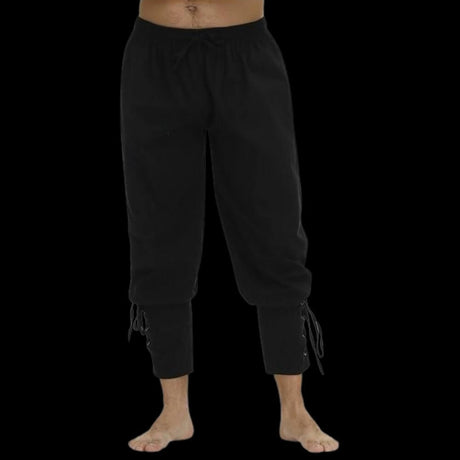
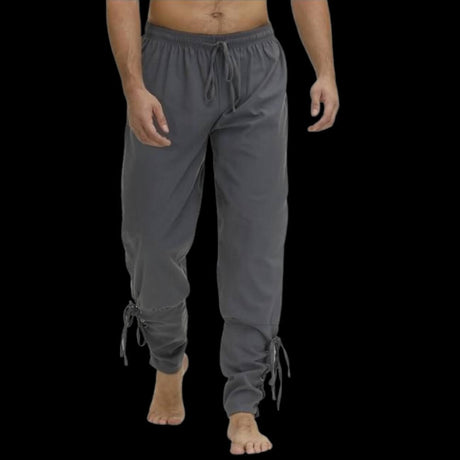
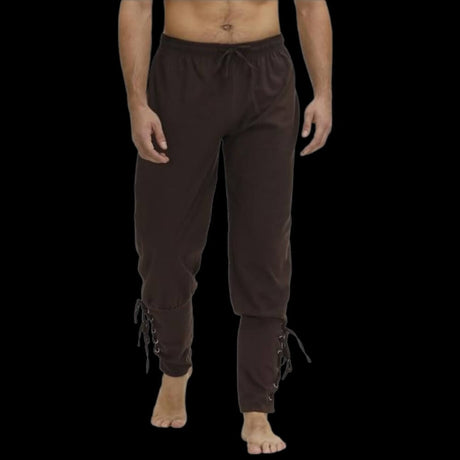
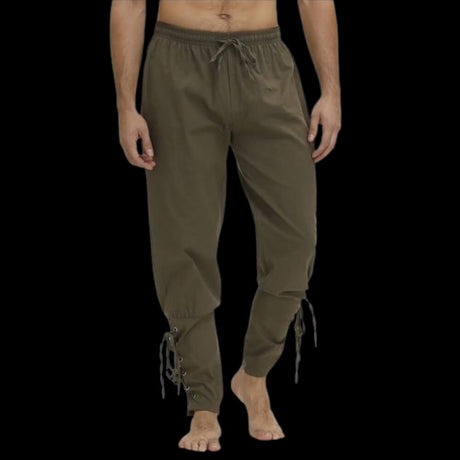
Viking trousers came in two main styles:
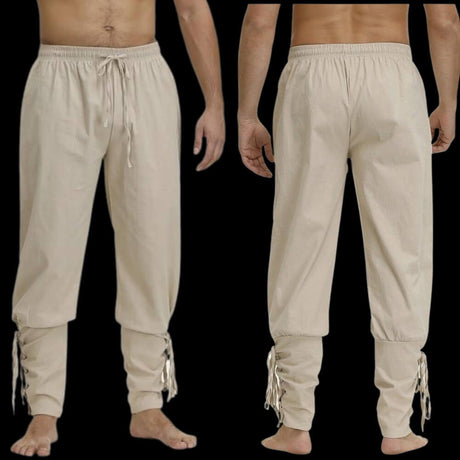
- The Narrow Pant: Similar to modern slim-fit trousers, these were practical for everyday farm work.
- The "Bloomer" Style: Highly popular in Eastern Viking regions (like the Rus), these were incredibly baggy trousers that used a massive amount of fabric—sometimes up to 20 yards. This was a "flex" of wealth; if you could afford that much fabric for one pair of pants, you were doing well.
To keep the pants from snagging and to provide extra warmth, men used winingas (leg wraps). These were long strips of wool wound from the ankle to the knee, secured with small bronze hooks. No Viking outfit was complete without these distinctive wraps.
3. The Cloak: A Portable Bed
The most iconic part of the male Viking outfit was the rectangular cloak. It wasn't just a garment; it was a blanket, a shield, and a status symbol. These were often pinned at the right shoulder with a heavy penannular brooch. Why the right shoulder? So the man could draw his sword with his right hand without being tangled in fabric.
The Anatomy of the Female Viking Outfit
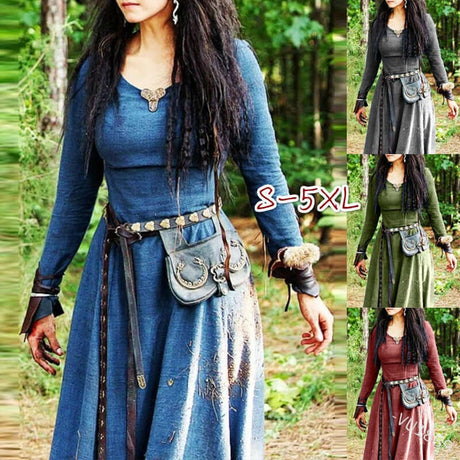
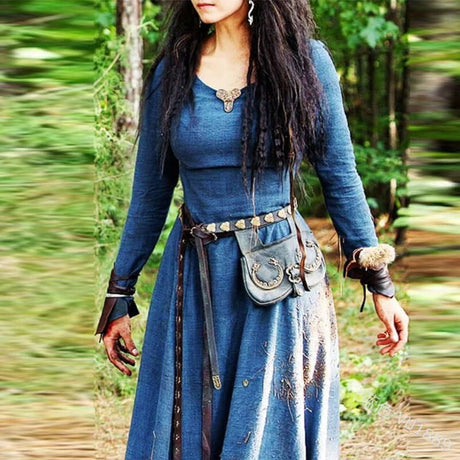
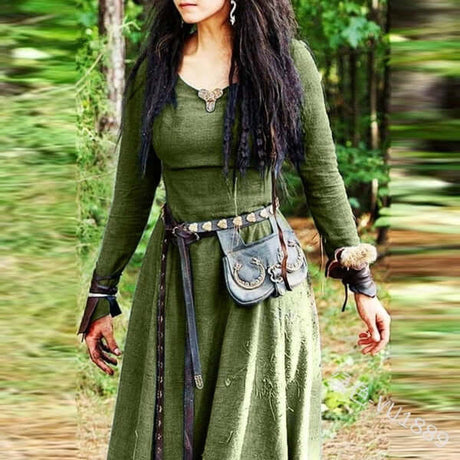
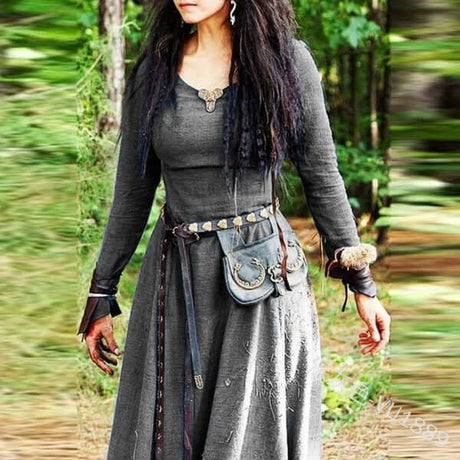
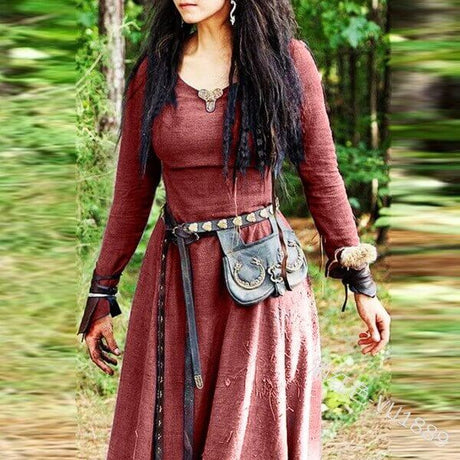
Women’s fashion in the Viking Age was distinct, elegant, and highly functional. The centerpiece of the female Viking outfit was the smokkr, also known as the apron dress or hangerock.
The Apron Dress and Turtle Brooches
The standard female Viking outfit began with a long linen shift or smock. Over this, a woman wore the apron dress—two rectangular pieces of fabric held up by shoulder straps.
These straps were fastened with the most famous accessory in Norse history: Oval (Turtle) Brooches. These large, domed bronze pins were the hallmark of the Viking woman’s identity. They didn't just hold the dress together; they served as anchors for "festoon" chains, where a woman would hang her keys, whetstones, and grooming kits.
Headcoverings and Social Status
In many regions, married women in a traditional Viking outfit would wear a headcovering, such as a silk scarf or a linen cap. This wasn't necessarily for religious reasons but was a social signal of their status as the mistress of a household.
Viking Textiles: By the Numbers
To appreciate the complexity of a Viking outfit, we need to look at the sheer amount of work required to create one.
| Item | Estimated Labor Hours | Material Required | Durability |
| Simple Wool Tunic | 150 - 200 hours | 2.5 - 3 meters | High (Years of use) |
| Linen Under-Smock | 300+ hours | 3 meters | Medium (Needs repair) |
| Large Baggy Trousers | 250 - 400 hours | 10+ meters | High |
| Hand-Woven Cloak | 100 - 150 hours | 4 meters | Very High |
| Pair of Turnshoes | 10 - 15 hours | Leather / Sinew | Low (Needs frequent replacement) |
Data based on experimental archaeology and textile reconstruction studies from the Birka and Hedeby excavations.
Expert Quote: "The Viking outfit was a testament to the community. When you look at the thread count of some found fragments, it rivals modern industrial machines. These weren't 'barbarians'; they were master weavers." — Dr. Anne Stine Ingstad, Archaeologist
Color and Status: The Palette of the North
One of the biggest misconceptions is that the Viking outfit was always brown, grey, or black. On the contrary, Vikings loved color. They used natural dyes derived from plants, insects, and minerals to turn their drab wool into a vibrant spectrum.

Color and Status: The Palette of the North
- Blue: Derived from woad. This was a high-status color because of the complexity of the dyeing process.
- Red: Derived from madder root. Very common and beloved for its boldness.
- Yellow: Derived from weld or onions.
- Purple: The rarest and most expensive, often imported from the Mediterranean.
A wealthy person’s Viking outfit would be a riot of color, often finished with elaborate tablet-woven braids that featured silver or gold threads. When a Viking entered a room, you knew exactly how much they were worth by the brightness of their sleeves.
Footwear and Practical Accessories
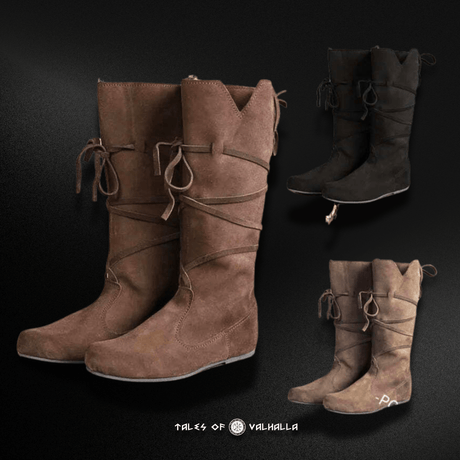
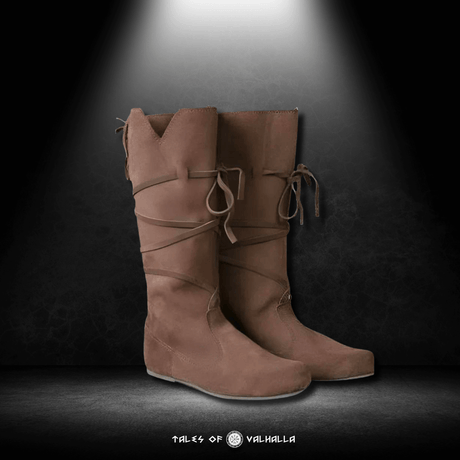
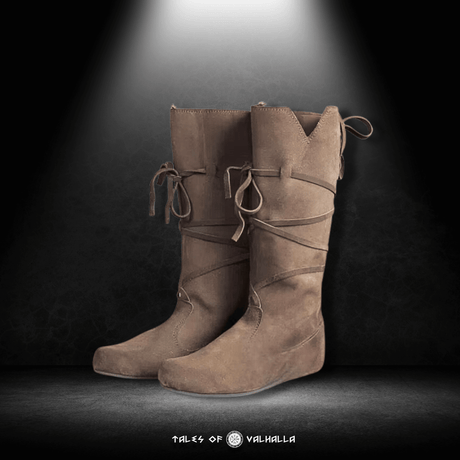
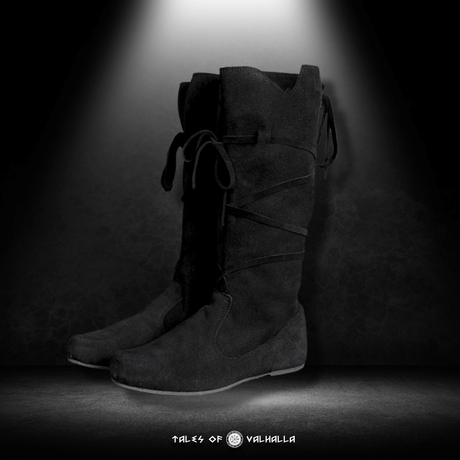
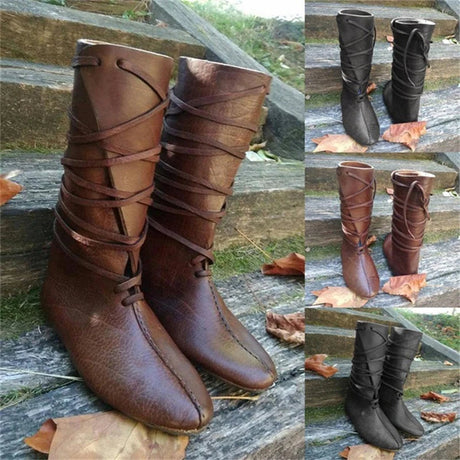
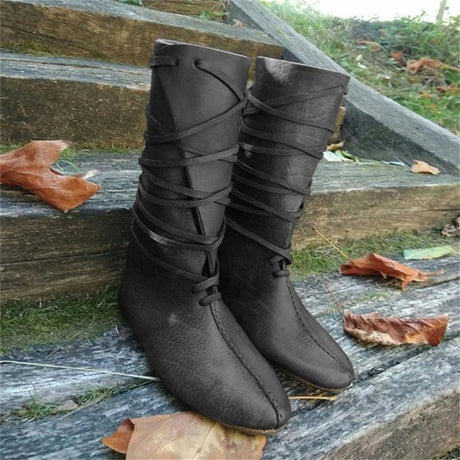
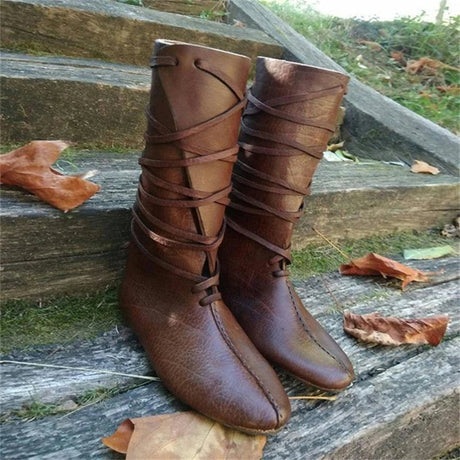
The "boots" you see in movies—tall, buckled, and heavy—are almost entirely inaccurate. The Viking outfit relied on "turnshoes."
The Turnshoe
These were made by sewing a leather shoe inside-out and then "turning" it right-side out once finished. This hid the seams and protected them from wear. Because they had no thick rubber soles, Vikings would often stuff their shoes with dried grass for insulation. These shoes were thin and flexible, allowing the wearer to feel the ground—essential for navigating the rocky terrain of Scandinavia or the deck of a swaying ship.
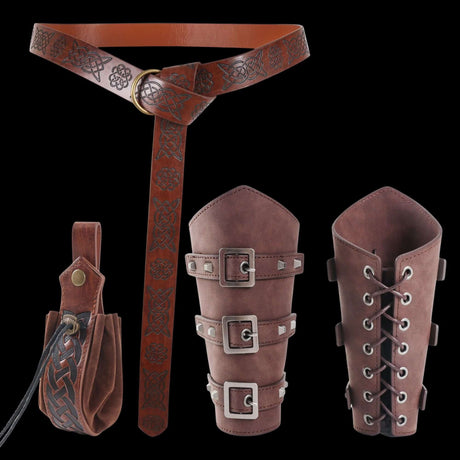
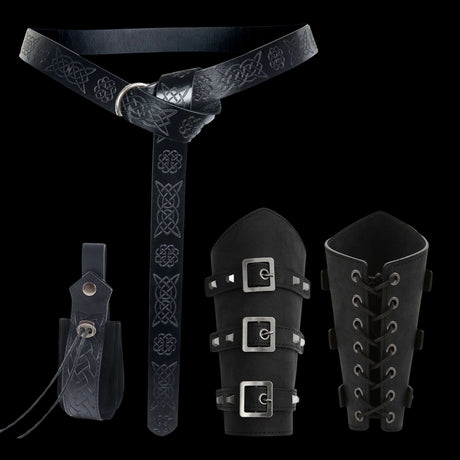
The Belt: A Viking's Utility Belt
A Viking outfit didn't usually have pockets. Instead, everything was carried on a leather belt. A typical belt would hold:
- A small knife (seax) for eating and utility.
- A pouch for silver coins and "hacksilver."
- Fire-starting tools (flint and steel).
- A comb (Vikings were notoriously obsessed with hair grooming).
Armor vs. Clothing: The Warrior's Viking Outfit
When it came time for war, the Viking outfit was modified for protection. However, most Vikings did not wear heavy plate armor.
The Gambeson and Mail
The primary armor was the gambeson—a thick, quilted jacket made of many layers of linen or wool. It acted like a "bulletproof vest" against blunt force. Over this, a wealthy warrior might wear a byrnie (mail shirt). A single mail shirt required thousands of hand-riveted iron rings and could weigh 25 pounds.
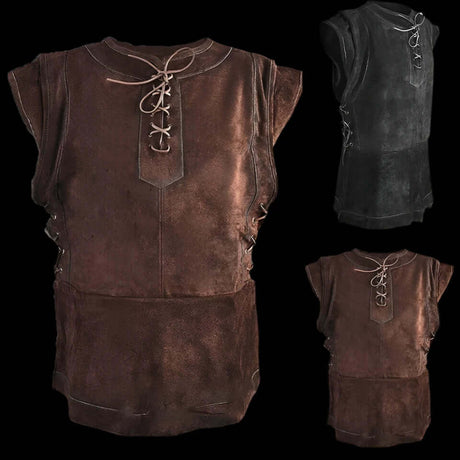
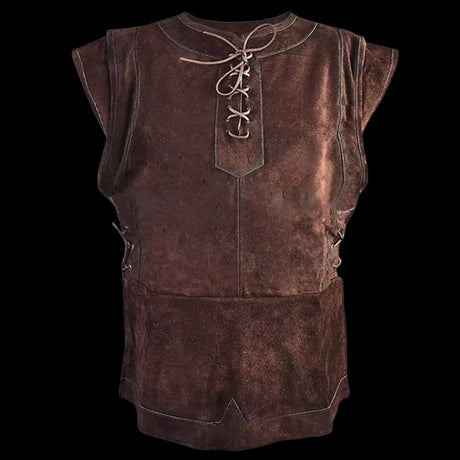
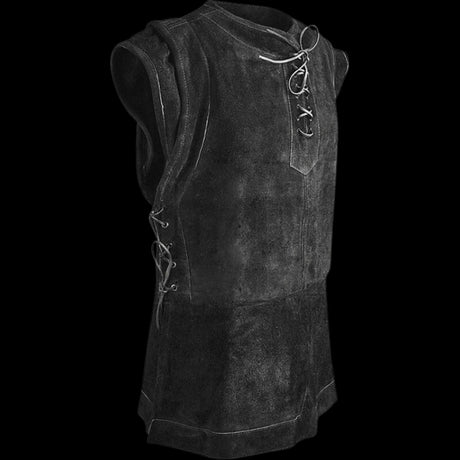
The Myth of Leather Armor
You will often see "biker leather" in modern depictions of a Viking outfit. There is almost zero archaeological evidence for molded leather chest-pieces. Leather was expensive and hard to maintain in the wet North. Most warriors relied on their shields and their quilted layers for protection.
Archaeological Context: The Finds That Changed Everything
How do we know all this? We owe our knowledge to a few "time capsules" found in the earth.
The Oseberg Ship
In 1904, a Viking ship burial was discovered in Norway. Inside were the remains of two high-status women and a treasure trove of textiles. We found fragments of silk, elaborate tapestries, and detailed clothing that proved the Viking outfit was far more sophisticated than we ever imagined.
The Birka Graves
Excavations in the Swedish trading town of Birka have revealed over 1,100 graves. Because of the unique soil conditions, scraps of clothing survived. These finds showed us the Eastern influence on the Viking outfit, including the baggy pants and kaftans inspired by the Steppe nomads and the Byzantine Empire.
-
You may also want to check out this product: An In-Depth Guide to the Authentic Viking Outfit
The Viking Outfit in Modern America
Why do we care so much about what people wore 1,000 years ago? In the United States, the "Viking Aesthetic" has become a massive cultural movement.
Reenactment and Living History
From the Society for Creative Anachronism (SCA) to specialized Viking festivals, thousands of Americans spend their weekends sewing authentic Viking outfits. For them, it’s a way to disconnect from the fast-fashion "throwaway" culture of today. Making your own Viking outfit teaches you a profound respect for the resources and time required to live.
The "Vikingcore" Fashion Trend
We see the influence of the Viking outfit in modern "Nordic Noir" fashion—oversized knits, layered wools, and earthy tones. While we’ve traded the turtle brooches for enamel pins, the core philosophy remains: dressing for durability, warmth, and a connection to the natural world.
Addressing the Counterarguments: Was it All Just Rags?
Some historians argue that we focus too much on the "elite" Viking outfit. What about the poor? It is true that a slave (thrall) or a poor farmer wouldn't have had silk or madder-dyed wool. Their Viking outfit would have been made of "wadmal"—a coarse, un-dyed, water-resistant wool fabric.
However, even the most basic Viking outfit followed the same structural rules. The Norse culture was one of extreme pride. Even a poor farmer would take care to groom his hair and keep his wool tunic mended. The "dirty, ragged Viking" is a modern invention; the historical Viking was someone who took immense pride in their appearance.
How to Build Your Own Authentic Viking Outfit
If you are looking to create a Viking outfit for a festival, a costume, or just for the love of history, here is the human-centered approach:
- Start with the Smock/Tunic: Use 100% linen or a linen-cotton blend. Avoid shiny synthetics; they don't drape the way an original Viking outfit should.
- Focus on Wool: If you can, get a wool outer layer. It smells different, feels different, and gives the outfit a weight that looks authentic.
- The Accessories are Key: Don't just buy a cheap belt. Invest in a pair of bronze brooches or a hand-forged knife. These are the details that turn a "costume" into a Viking outfit.
- No Horns on the Helmet: Please. For the love of Odin, skip the horns. If you want a helmet, go for a simple "spectacle" helmet or a conical iron cap.
Conclusion: The Living History of the Viking Outfit
Viking clothing was a sophisticated survival system, not a uniform. It tells a story of global trade and female craftsmanship—the material reality behind the tales of valhalla. Forget the black leather stereotypes; the true Viking legacy is one of color, texture, and beauty. Their threads were their armor, and their fashion was their soul.
"Tales of Valhalla is an expert chronicler of the Viking Age, blending scholarly research with master storytelling to revive the Old North. From the hidden depths of Norse mythology to the tactical grit of the sagas, they provide authentic, rich insights into the warriors, leaders, and legends that forged history." - Specialist in Norse mythology and Viking history