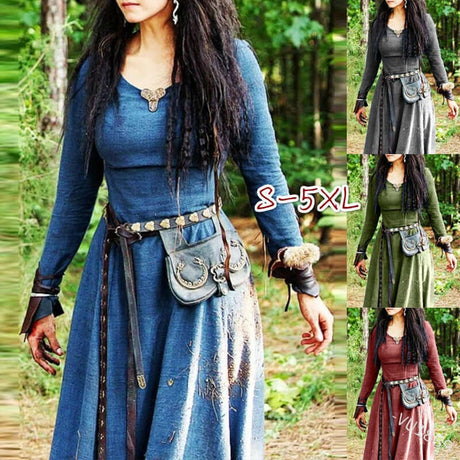
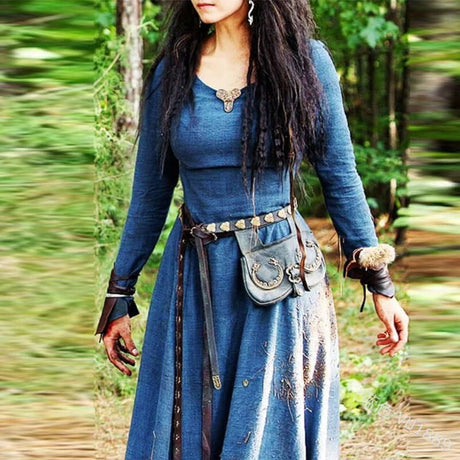
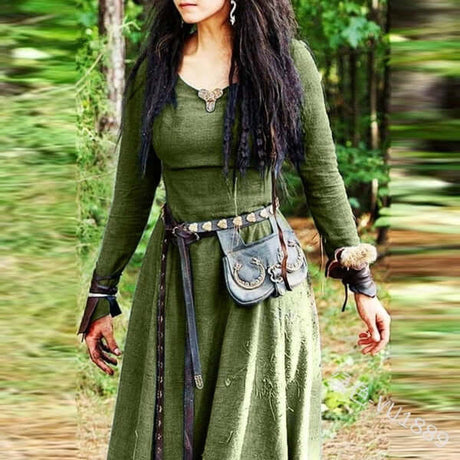
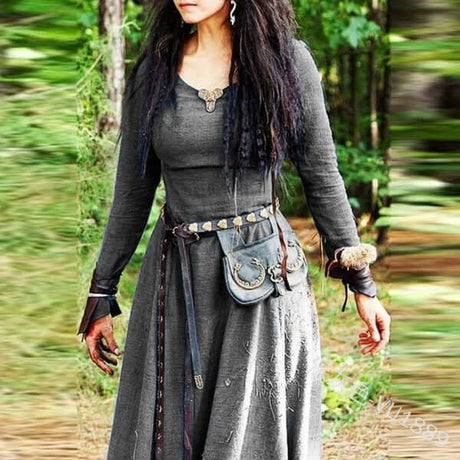
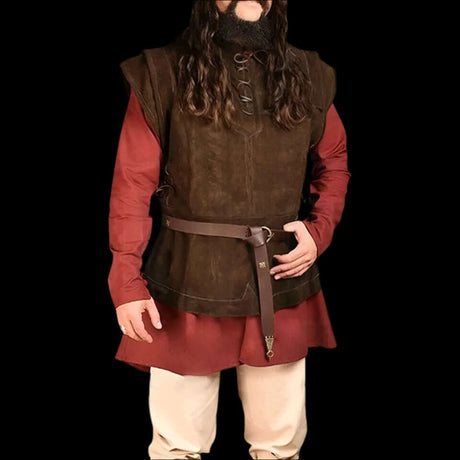
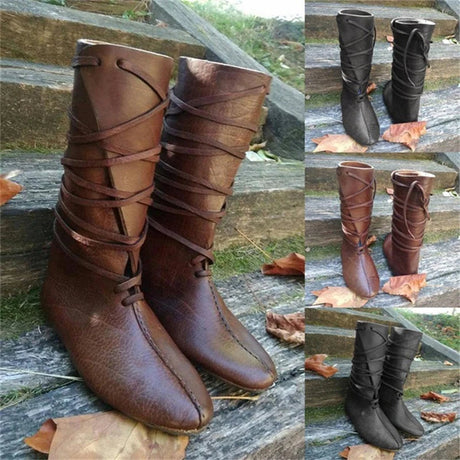
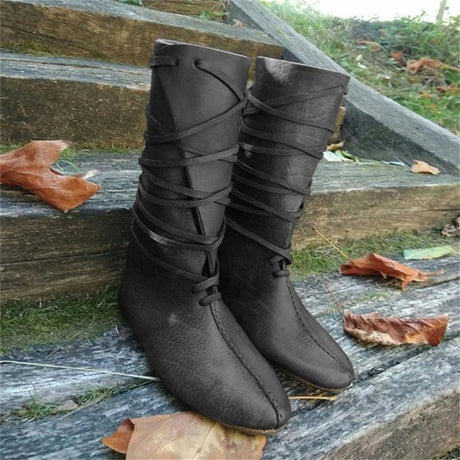
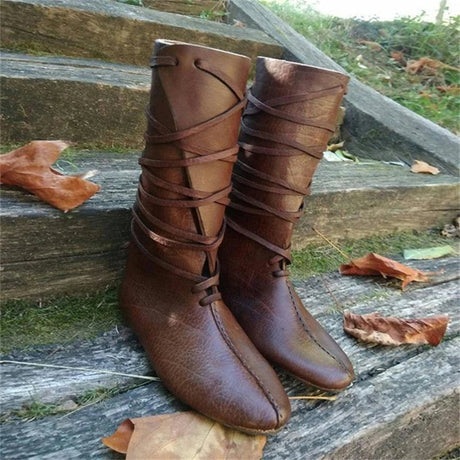
If you were to be transported back a thousand years to a bustling Viking-age harbor, your first sensation wouldn't be the sight of shields or the sound of Old Norse. It would be the smell: the earthy, lanolin-rich scent of damp Viking Wool and the crisp, grassy aroma of drying flax.
In our modern world of fast-drying synthetics and ultra-lightweight polyesters, it is easy to look at the clothing of the past as primitive. We see rough tunics and heavy cloaks and think of them as the "rags of history." But for the Norsemen and women who conquered the North Atlantic, their textiles were high-technology. They were the "space suits" of the 10th century, engineered to protect the human body in environments where the weather was a literal predator.
Today, we are going to dive deep into the materials of the North. We will explore why Viking Wool was the most valuable commodity in Scandinavia—sometimes even more precious than silver—and how linen became the hidden luxury that defined Norse comfort.
The Superpower of Viking Wool: Nature’s Engineered Shield
In the United States, we often view wool as an itchy sweater material reserved for the depths of winter. For a Viking, however, Viking Wool was a year-round survival tool. The sheep of the Viking Age (the ancestors of modern Icelandic and Shetland sheep) were not the fluffy, mono-coated animals we see on modern industrial farms. They were primitive, "short-tailed" breeds with a unique double-coat.

The Superpower of Viking Wool: Nature’s Engineered Shield
Tog and Þel: The Dual Layer System
The secret to the legendary durability of Viking Wool lay in its two distinct types of fibers:
- The Tog (Outer Hair): These were long, coarse, and incredibly strong fibers. They were naturally coated in high levels of lanolin (wool grease), making them almost entirely waterproof.
- The Þel (Under-wool): This was the soft, downy fluff close to the sheep's skin. It was incredibly fine and possessed superior insulating properties.
When these two fibers were spun together, they created Viking Wool yarn that was water-repellent on the outside and warm on the inside. A cloak made from this material wouldn't just keep you warm; it would shed rain and sea spray like a duck’s back.
The "Wadmal" Standard
Wool was so central to Norse life that it became a form of currency. They called it vaðmál (wadmal). In a world before banks, a bolt of high-quality Viking Wool was a liquid asset. It was used to pay taxes, settle legal fines at the Althing, and purchase land. If you had a storehouse full of Viking Wool, you were a wealthy person, regardless of how much gold was in your chest.
Linen: The Breathable Luxury of the North
While Viking Wool provided the protection, linen provided the comfort. Derived from the flax plant, linen was the preferred material for undergarments, veils, and summer tunics.
The Labor of Flax
If you think spinning wool is hard work, linen is a whole different level of intensity. To get fibers from a flax plant, you have to "ret" it (rot the stems in water), "brake" it (smash the stems), "heckle" it (comb it through metal spikes), and finally spin the delicate fibers.
Because of this labor-intensive process, linen was expensive. It was a status symbol. A crisp, white linen shirt worn under a Viking Wool tunic was a sign that the wearer had the resources—or the skilled labor in their household—to afford the best.
Why Linen Mattered
In the damp climate of Scandinavia, linen was a godsend. It is highly absorbent and dries much faster than wool. By wearing a linen serk (under-dress) or shirt, a Viking could stay dry against their own skin, preventing the "chilled to the bone" feeling that comes from damp cloth in a cold wind.
Comparison of Norse Textiles: Wool vs. Linen
To understand why these two materials ruled the Viking Age, we have to look at their performance metrics.
| Feature | Viking Wool | Nordic Linen |
| Source | Sheep (Tog and Þel) | Flax Plant (Stem fibers) |
| Primary Benefit | Thermal insulation & Water resistance | Moisture-wicking & Skin comfort |
| Weight | Heavy (especially when wet) | Light and breathable |
| Labor Intensity | Medium (Shearing to spinning) | High (Harvesting to heckling) |
| Durability | Extremely High (lasts decades) | Moderate (prone to abrasion) |
| Common Use | Cloaks, Trousers, Sails, Blankets | Underwear, Smocks, Head-wraps |
Expert Quote: "If the longship was the skeleton of Viking expansion, Viking Wool was the skin. Without the development of heavy, grease-filled wool sails, the Viking Age simply could not have happened." — Dr. Ellen Østergård, Textile Archaeologist
The Sail: The Greatest Use of Viking Wool
When we talk about a Viking outfit, we usually think of clothes. But the most important "outfit" a Viking ever made was the sail for their ship.
I once had the chance to speak with a modern ship-reconstructor who explained that a single sail for a large longship could require the wool from over 200 sheep. It took a team of skilled women several years to spin and weave the Viking Wool required for one sail.
These sails weren't just sheets of cloth. They were heavy, wind-stopping engines. They were often treated with a mixture of animal fat and ochre to make them airtight. When a Viking fleet appeared on the horizon, it wasn't just a military force; it was a massive display of textile wealth. Each sail represented thousands of hours of human labor and generations of sheep breeding.
From Fleece to Fabric: The Human Element
Let’s talk about the people behind the Viking Wool. In Norse society, textile production was almost exclusively the domain of women. From the highest-ranking queen to the lowest-ranking thrall, the drop spindle was a constant companion.
The Spinners of Fate
Archaeologists find spindle whorls (the weights used for spinning yarn) in almost every female grave from the Viking Age. It was a task that never ended. A woman would spin Viking Wool while walking, while talking, and while sitting by the fire.
The very language of the Vikings reflects this. The Norns, the goddesses of fate, were depicted as spinners. They didn't just "decide" the future; they spun it. When a woman sat at her loom to weave a Viking Wool cloak, she was participating in a divine act of creation.
The Loom (Veftöpt)
The Vikings used a "warp-weighted loom." This was a vertical frame where the vertical threads (the warp) were held taut by heavy stones. The weaver would stand in front of it, walking back and forth, beating the horizontal threads (the weft) upward. It was a physically demanding job that required a deep understanding of geometry and tension. If the tension was off by even a fraction, the Viking Wool fabric would be uneven and fail in the rain.
The Myth of the Drab North: Color and Dye
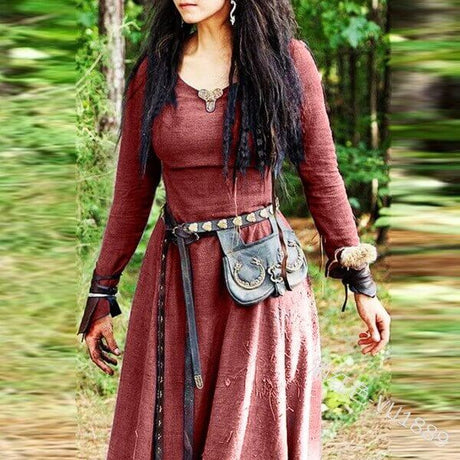
One of the most persistent misconceptions is that Viking Wool was always a muddy brown. While undyed wool was common for daily workwear, the Vikings were actually obsessed with color.
The Plant-Based Palette
- Woad (Blue): The most prestigious color. Producing blue Viking Wool was a long, smelly, and expensive process. It was the color of the elite.
- Madder (Red): Used to create deep brick reds and oranges. Red was a favorite for warriors and chieftains.
- Weld/Onion (Yellow): The most accessible dyes, used to brighten up everyday Viking Wool tunics.
I remember seeing a reconstructed Viking outfit at a museum in Denmark. The colors were so vivid they almost hurt the eyes—bright reds, deep blues, and lime greens. They didn't want to blend in with the landscape; they wanted to stand out against the grey of the sea.
Why These Materials Mattered in Battle
If you are a warrior on a raiding voyage, your Viking Wool is your first line of defense.
The Gambeson Effect
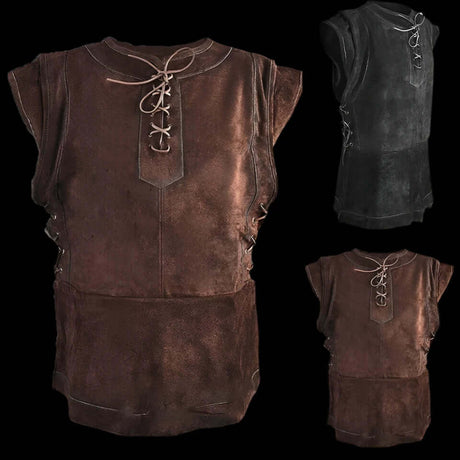
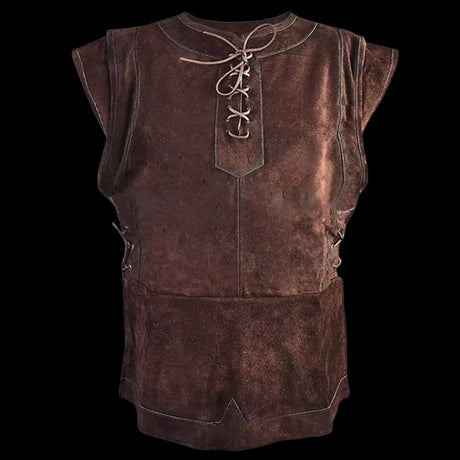
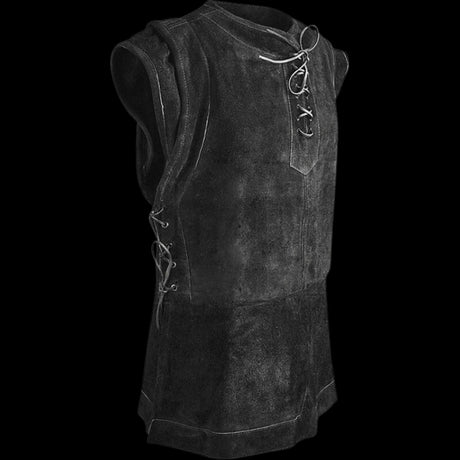
While the movies show Vikings in leather vests, history shows them in quilted wool and linen. A "gambeson" or "padded jack" was made by layering many sheets of linen and Viking Wool. This created a thick, shock-absorbent layer. If a sword hit you, the metal rings of your mail might stop the cut, but the Viking Wool underneath stopped the bones from breaking.
Sea-Worthiness
Imagine being in an open boat in the North Atlantic. If you wear leather, it becomes heavy, cold, and begins to rot when it gets wet. If you wear Viking Wool, the lanolin keeps the water out for hours. Even if the water does soak through, wool generates heat through a chemical reaction when it gets wet. Viking Wool was the only material that could keep a sailor alive after a rogue wave soaked them in 40-degree water.
Challenging the Perspective: Was Silk Better?
As the Vikings traded with the Byzantine Empire and the East, they encountered silk. We find silk fragments in wealthy graves, often used as trim on Viking Wool dresses.

Challenging the Perspective: Was Silk Better?
The Counterargument
Some might say that silk was the "ultimate" material of the Viking Age. It was lighter, stronger, and more beautiful. However, silk was a "prestige" material, not a "survival" material. You couldn't build a sail out of silk, and it wouldn't keep you alive in a blizzard. Silk was for showing off; Viking Wool was for staying alive. In the harsh reality of the North, the sheep was always more important than the silkworm.
Why Americans Love Viking Wool Today
In the United States, we are seeing a massive resurgence in the appreciation for these ancient materials. The "Slow Fashion" movement and the rise of high-end outdoor gear have brought us back to the wisdom of the Vikings.
The Merino and Icelandic Boom
Americans are moving away from synthetic "fleece" (which is essentially plastic) and returning to real wool. Brands that emphasize the natural properties of wool—its odor resistance, its warmth when wet, and its sustainability—are essentially selling the same benefits that a Norse merchant would have touted in a 10th-century market.
Reenactment and Craft
There is a growing community of "spinners and weavers" in the US who are dedicated to recreating Viking Wool textiles using original methods. They find that the process of spinning wool by hand connects them to a rhythm of life that is missing in the digital age. It is a form of "living history" that you can feel between your fingers.
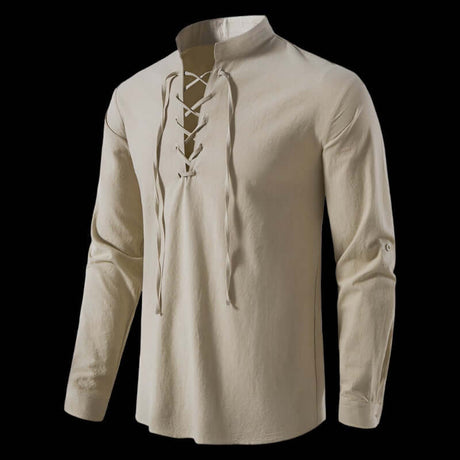
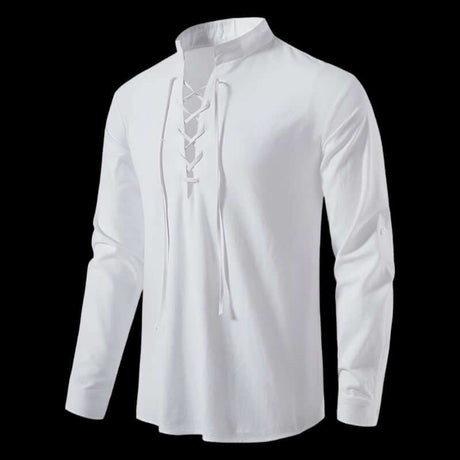
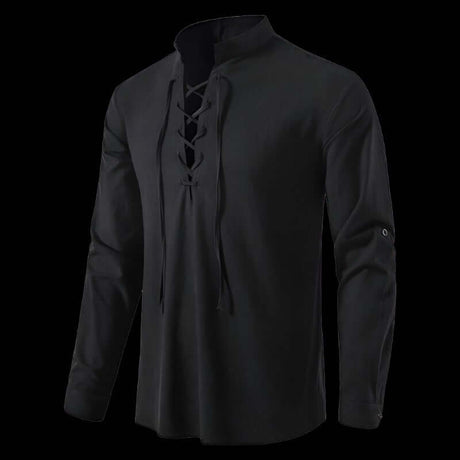
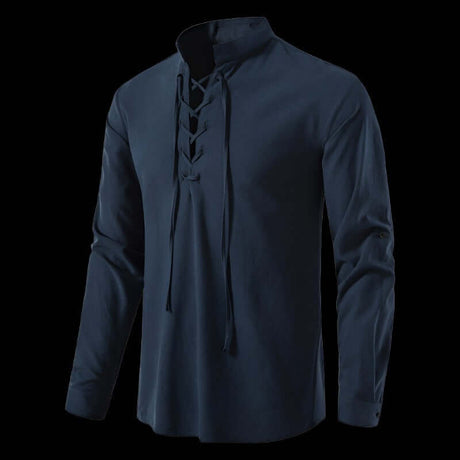
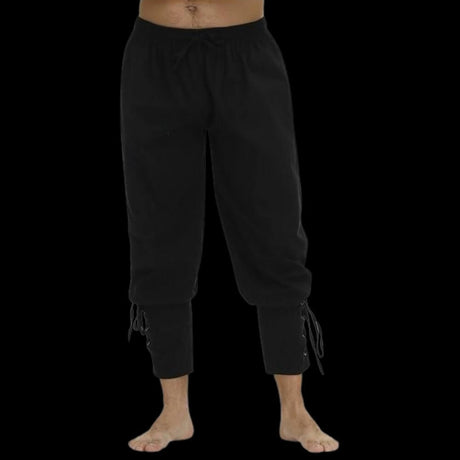
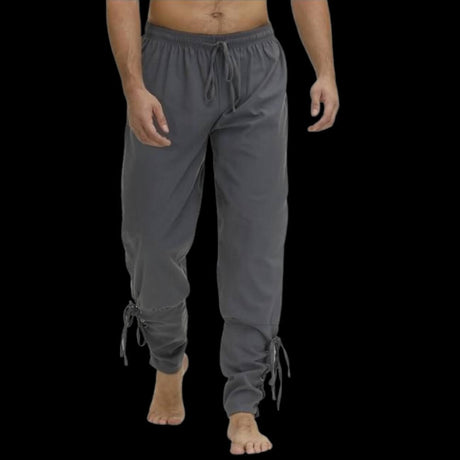
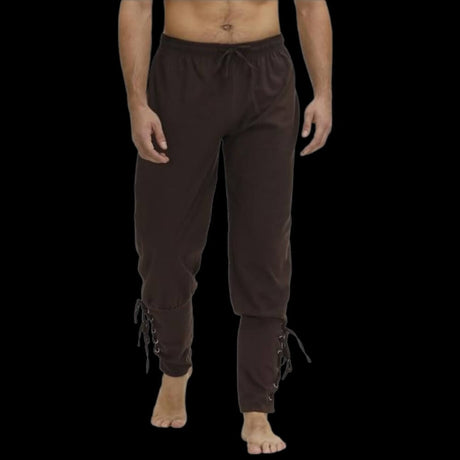
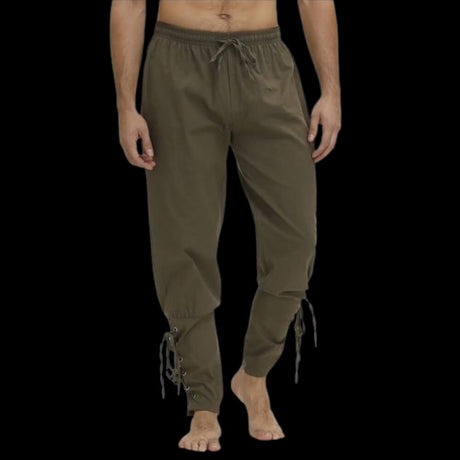
- You might be interested in this product: Mens Costumes
The Science of the "Sheep to Shirt" Pipeline
To appreciate the scale of this industry, let's look at the numbers involved in outfitting a standard Viking household of ten people.
| Item | Wool Needed (Raw) | Time to Spin | Time to Weave |
| Standard Tunic | 3 - 5 lbs | 40 - 60 hours | 15 - 20 hours |
| Heavy Cloak | 8 - 10 lbs | 100+ hours | 30 hours |
| Under-Serk (Linen) | 4 lbs (Flax) | 150+ hours | 40 hours |
| Bedding/Blankets | 15 lbs | 200+ hours | 60 hours |
Estimates based on experimental archaeology data from the Lejre Land of Legends, Denmark.
When you look at these numbers, you realize that a Viking woman was essentially a full-time textile engineer. Every minute of her day that wasn't spent on food was spent on Viking Wool.
How to Spot Authentic Viking Wool Today
If you are looking to buy or create your own Viking outfit, you need to know what to look for. Not all wool is created equal.
- Look for the "Luster": Authentic Viking Wool (like Icelandic wool) has a slight shine. This is the "Tog" fiber reflecting light.
- The Smell Test: Real wool should have a faint, earthy scent. If it smells like nothing, it has been over-processed and the natural oils (which provide the water resistance) are gone.
- Check the "Hand": It should feel substantial. Viking Wool wasn't meant to be "airy"; it was meant to be a barrier.
- Embrace the "Itch": Historical wool was coarser than modern Merino. That coarseness is what gave it the strength to survive a decade of hard use.
Conclusion: The Fabric of a Civilization
While we remember the "clang of the sword," the Viking Age was equally defined by the "clatter of the loom." Wool and linen were the silent partners in every conquest and the physical foundation for the tales of valhalla.
These textiles were a technology of survival that allowed the Norse to bridge the gap between the icy shores of Greenland and the markets of Baghdad. More than just clothing, wool was the engine of exploration and the thread that bound the Norse world together. In the battle against nature, the sheep provided the armor, and the weaver provided the victory.
"Tales of Valhalla is an expert chronicler of the Viking Age, blending scholarly research with master storytelling to revive the Old North. From the hidden depths of Norse mythology to the tactical grit of the sagas, they provide authentic, rich insights into the warriors, leaders, and legends that forged history." - Specialist in Norse mythology and Viking history