Imagine standing at the edge of a cosmic precipice, where the shimmering, prismatic colors of a rainbow bridge—the Bifrost—arch across the void toward the glittering spires of Asgard. Now, imagine you are the only person standing between the safety of the gods and the infinite, hungry chaos of the giants. You cannot sleep. You can hear a single blade of grass growing in a field a thousand miles away. You can see through the thickest darkness as if it were high noon.
This is the life of Heimdall.
In the pantheon of Norse mythology, Heimdall is often overshadowed by the thunderous charisma of Thor or the complex wisdom of Odin. Yet, without Heimdall, the halls of Valhalla would have fallen long before the horn of Ragnarök ever sounded. He is the "White God," the "Silent Sentinel," and the "Guardian of the Bifrost." But who is he beneath the golden armor, and what is the story behind his famous "Goldtooth" moniker?
In this exhaustive 2,500-word exploration, we’re going deep into the lore of Heimdall. We will analyze his mysterious birth, his supernatural senses, his role in shaping human society, and his inevitable, tragic showdown with the trickster Loki.
The Enigmatic Origins: Born of Nine Mothers
Most gods have a mother and a father. Heimdall, however, defies biological convention in a way that only Norse mythology can manage. According to the Poetic Edda, Heimdall was born to nine different mothers.

The Enigmatic Origins: Born of Nine Mothers
The Wave-Maidens
These nine mothers are generally identified as the daughters of Ægir and Rán—the personifications of the sea waves. This unique lineage suggests that Heimdall is a being born of the sea, possessing the relentless, rhythmic power of the ocean.
When I first read this as a student of mythology, I found it hard to wrap my head around. How does one person have nine mothers? Think of it less as a literal biological event and more as a symbolic one. Heimdall represents a convergence of forces. He is the son of the waves, brought forth by the collective power of the sea to serve the land of the gods.
The "White God"
Heimdall is frequently referred to as "the whitest of the gods" (hvítastr ása). In the Old Norse context, "white" didn't just refer to skin tone; it symbolized light, purity, and perhaps even a blinding, solar radiance. Heimdall is a creature of the dawn, the light that stands at the edge of the world to push back the night.
The Supernatural Sentinel: Characteristics of Heimdall
If the gods were a modern security system, Heimdall would be the high-definition thermal cameras, the seismic sensors, and the satellite uplink all rolled into one. His physical characteristics aren't just traits; they are specialized tools designed for his eternal watch.
The Senses of a God
Heimdall possesses abilities that make even the most advanced modern technology look primitive.
- Vision: He can see for a hundred leagues (roughly 300 miles), both by day and by night. Darkness is no obstacle to Heimdall.
- Hearing: His hearing is so acute that he can hear the wool growing on the backs of sheep and the grass growing in the meadows of Midgard.
- The Sleep of a Bird: Heimdall requires less sleep than a bird, allowing him to maintain a 24/7 vigil over the Bifrost without ever flickering an eyelid.
The Mystery of "Goldtooth" (Gullintanni)
One of the most intriguing titles for Heimdall is Gullintanni, which translates to "Goldtooth." For years, scholars debated whether this was a metaphor for the sun's rays reflecting off his mouth or a literal description.
However, recent archaeological finds in Scandinavia have shed a fascinating "real-world" light on this. Archaeologists have discovered Viking-age skulls with horizontal grooves filed into the front teeth, sometimes filled with colored resins or metals. For a Viking warrior, having "gold teeth" or decorated teeth was a sign of status and intimidation. Heimdall having golden teeth reinforces his status as an elite, high-ranking member of the Æsir.
The Tools of the Guardian: Gjallarhorn and More
Every great guardian needs the right equipment. Heimdall doesn’t just stand there with his hands in his pockets; he is armed with some of the most potent artifacts in Asgard.
Gjallarhorn: The "Yelling Horn"
The most famous of his possessions is the Gjallarhorn. Contrary to popular belief, Heimdall doesn't use this horn to play music. Its sound is so loud it can be heard throughout all nine worlds. It is the cosmic alarm system.
When the giants finally march on Asgard, Heimdall will blow the Gjallarhorn to signal the beginning of Ragnarök. It is a sobering thought: the most important sound in the universe is one that Heimdall only intends to make once.
Gulltoppr and Hofud
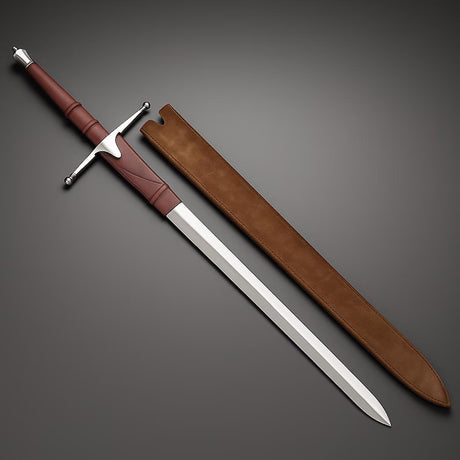
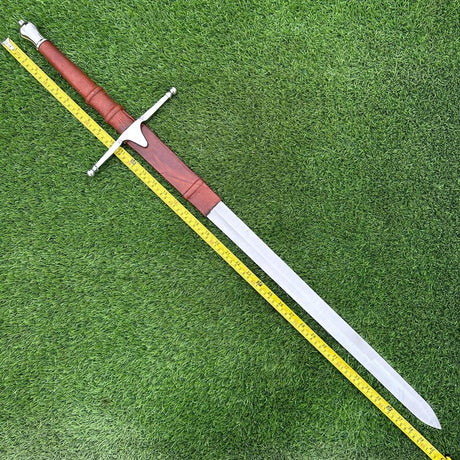
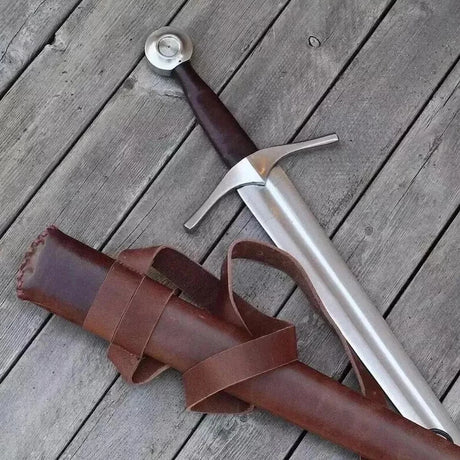
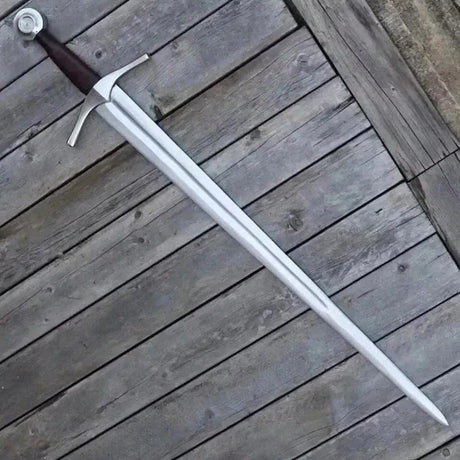
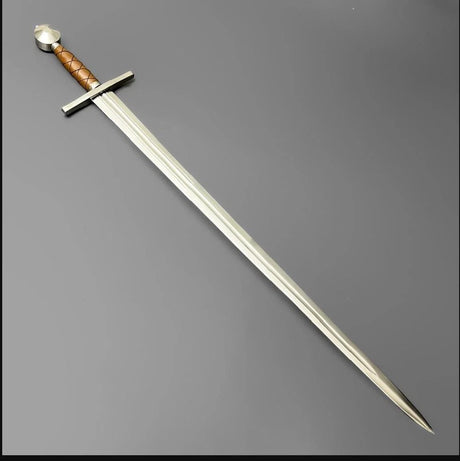
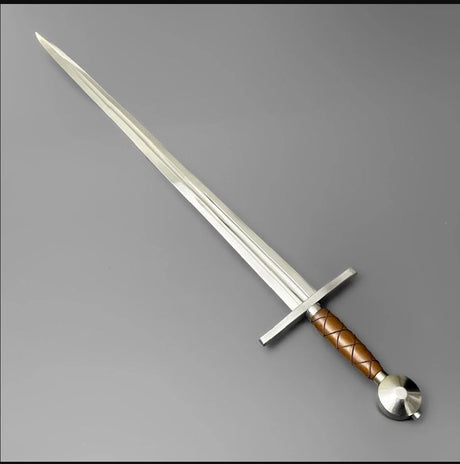
When he needs to travel, Heimdall rides Gulltoppr ("Gold-top"), a horse with a shimmering mane that reflects his own radiant nature. In battle, he wields a sword named Hofud (which simply means "Head"). The naming of his sword "Head" is a grim pun in Norse lore, as Heimdall is often associated with the head as the seat of the senses.
Expert Quote: "Heimdall is the personification of vigilance. He is the bridge between the physical and the divine, the one who perceives the threat before it even manifests." — Dr. Jackson Crawford, Old Norse Specialist
Comparison of Mythic Guardians
To understand Heimdall better, we can look at how his "specs" compare to other famous guardians of world mythology.
| Guardian | Culture | Domain | Primary "Power" |
| Heimdall | Norse | The Bifrost / Asgard | Omniscient Senses (Hearing/Vision) |
| Argus Panoptes | Greek | Hera’s Priestess / Sacred sites | 100 Eyes (Never all sleep at once) |
| Cerberus | Greek | Gates of Hades | Multi-headed Ferocity |
| Ganesha | Hindu | Thresholds / Entrances | Remover of Obstacles / Wisdom |
| Heimdall (Modern) | Pop Culture | The Bifrost | Interdimensional Travel / Swordplay |
As the table shows, Heimdall is unique because his power isn't just about strength or intimidation; it's about information. In the ancient world, as in the modern one, knowing the enemy is coming is half the battle.
The Father of Mankind: Heimdall as Ríg
Many people think of Odin as the "All-Father," but in the poem Rígsthula, it is Heimdall who is credited with establishing the structure of human society. Under the pseudonym "Ríg," Heimdall traveled through Midgard and visited three different homes, fathering the three classes of Norse society:
- Thralls (Serfs/Slaves): The laborers who did the hard work of the world.
- Karls (Free Farmers/Craftsmen): The backbone of the economy.
- Jarls (Earls/Nobility): The warriors and leaders.

The Father of Mankind: Heimdall as Ríg
Why Does This Matter?
This myth shows that Heimdall is deeply invested in the human world. He isn't just a distant guard on a bridge; he is the architect of the social order. For the people of the United States, who value social mobility and structure, this aspect of Heimdall is fascinating. It suggests that the "Guardian" also cares about the stability of what he is guarding.
I remember discussing this with a friend who works in cybersecurity. He noted that Heimdall acts like a "Root User"—someone who sets up the system architecture and then stays at the firewall to make sure no one breaks it. It's a remarkably modern way to view an ancient god.
The Eternal Rivalry: Heimdall vs. Loki
Every hero needs a foil, and for Heimdall, that foil is Loki. Their relationship is one of pure, fundamental opposition. Heimdall is the god of order, vigilance, and duty. Loki is the god of chaos, deception, and impulse.
The Theft of Brísingamen
In one famous tale, Loki steals Freyja's beautiful necklace, Brísingamen. Because of his incredible sight, Heimdall is the only one who sees the theft. He pursues Loki to the sea, where both gods transform into seals to fight for the necklace. Heimdall eventually wins, returning the necklace to its rightful owner.
The End of All Things
Their rivalry reaches its peak at Ragnarök. As the world falls apart, Heimdall and Loki will meet on the battlefield for the final time. They are destined to kill each other.
Think about the poetic justice in that: the man who sees everything and the man who hides everything eventually cancel each other out. It is a reminder that in the Norse worldview, even the most perfect guardian cannot survive the end of the system he protects.
Heimdall in the Modern World: Marvel vs. Myth
If you ask a random person in a coffee shop in New York or Los Angeles who Heimdall is, they will likely describe Idris Elba in a golden helmet. The Marvel Cinematic Universe (MCU) has done a massive service in bringing Heimdall to a global audience, but how accurate is it?
The Similarities
The MCU gets the "vibe" of Heimdall right. He is stoic, incredibly loyal, and possesses "all-seeing eyes." The orange glow of his eyes in the movies is a brilliant visual shorthand for his supernatural vision.
The Differences
In the myths, Heimdall is much more "weird." The nine mothers, the golden teeth, and his role as the father of social classes are largely absent from the movies. Also, while the movies portray him as a warrior first, the mythology portrays him more as a sacred priest-guardian.
Heimdall in the myths is less about swinging a sword and more about the burden of his senses. Imagine never being able to turn off the sound of a billion blades of grass growing. It’s a level of sensory input that would drive a mortal insane.
-
You might be interested in this product: Nidhogg Dragon Ring
Refined Analysis: Is Heimdall Actually the Sun?
Some researchers and mythologists suggest a deeper, more elemental identity for Heimdall. There is a strong case to be made that Heimdall is a solar deity or a personification of the world tree, Yggdrasil, itself.
-
The Solar Theory: His golden teeth, his "whiteness," and his rivalry with Loki (often associated with wildfire) suggest a conflict between the steady light of the sun and the flickering, dangerous light of fire.
-
The World Tree Theory: Some scholars point to the fact that his "hearing" is hidden under the roots of Yggdrasil (just as Odin's eye is hidden in Mimir's well). This suggests that Heimdall is part of the very fabric of the universe, not just a resident of it.
Addressing the "White God" Controversy
In recent years, the term "White God" has occasionally been misused by hate groups to promote exclusionary ideologies. It is vital to state that in the context of Old Norse studies, this term had nothing to do with racial superiority. It was a descriptive term for light and holiness. The Vikings were a seafaring, globalizing culture that interacted with many different peoples; their gods were universal archetypes of human experience—duty, fear, strength, and vigilance.
Real-Life Lessons from the Guardian
What can a modern person living in the United States take away from the story of Heimdall? Why do we still tell his story?
- The Value of Vigilance: In an age of digital threats and global uncertainty, the "Sentinel" archetype is more relevant than ever. Heimdall teaches us that protection requires constant, quiet attention.
- The Burden of Responsibility: Heimdall doesn't get to go to the parties in Valhalla. He stands at the gate. He teaches us that leadership and protection often require sacrifice and solitude.
- Order vs. Chaos: The rivalry with Loki reminds us that there is a constant tension between the rules that keep us safe and the impulses that tear things down. Balancing the two is the work of a lifetime.
Anecdote: I once met a lighthouse keeper in Maine who had a small statue of Heimdall on his desk. He told me, "Most people think my job is boring until there's a storm. Then, I'm the only person who matters." That is the essence of Heimdall. He matters most when things are at their worst.
Frequently Asked Questions About Heimdall
Q: Can anyone else lift the Gjallarhorn?
A: Unlike Thor's hammer, there is no "worthiness" enchantment on the horn. However, its purpose is so specific that only Heimdall has the authority and the lung capacity to blow the note that signals the end of the world.
Q: Why does he hate Loki so much?
A: It’s not necessarily personal hatred; it’s fundamental opposition. A guard's natural enemy is the thief. Loki is the ultimate thief of peace, and Heimdall is the ultimate guard of it.
Q: Does Heimdall have any children?
A: In the myth of Ríg, he is essentially the father of all humanity. Beyond that, his focus is entirely on his duty to Asgard.Conclusion: The Quiet Strength of the Sentinel
Conclusion
Heimdall is a study in contrast: a god of immense power who serves in solitude. He reminds us that not all heroes in the tales of valhalla are found in the center of the shield wall; some are the silent observers watching at the world's edge.
Next time you see a rainbow, remember the watchman with the golden teeth and all-seeing eyes. He still stands at the horizon, making sure the light stays lit just a little longer.
"Tales of Valhalla is an expert chronicler of the Viking Age, blending scholarly research with master storytelling to revive the Old North. From the hidden depths of Norse mythology to the tactical grit of the sagas, they provide authentic, rich insights into the warriors, leaders, and legends that forged history." - Specialist in Norse mythology and Viking history