Picture a world where the sun has seemingly abandoned the earth. In the deep midwinter of Scandinavia, the darkness isn't just a lack of light; it’s a physical weight. The wind doesn't just blow; it howls like a starving wolf. For the ancient Vikings, this was the time of Yule. While we modern Americans might associate the end of December with bright LED lights, frantic trips to the mall, and peppermint lattes, for the Norsemen, Yule was a high-stakes battle between life and death, light and darkness, and the community versus the cold.
If you’ve ever felt a strange, primal urge to bring a pine tree into your living room or burn a massive log in your fireplace, you are tapping into a spiritual DNA that is thousands of years old. Yule is the ancestor of our modern Christmas, but it was far more "metal" than our current festivities. It was a festival of "drinking Yule," where the act of feasting was a sacred duty to ensure the sun would actually return.
In this deep-dive exploration, we will peel back the layers of tinsel to find the raw, pagan heart of Yule. We’ll look at why the Vikings sacrificed boars, how Odin became the blueprint for Santa Claus, and why the "Twelve Days of Christmas" were originally the twelve nights of Yule. Grab a horn of ale (or a mug of cocoa), pull your chair closer to the fire, and let’s journey back to the ancient North.
What Exactly Is Yule? Defining the Midwinter Mystery
To understand Yule, we have to stop thinking of it as a single day. In the Viking Age, Yule (or Jól in Old Norse) was a season. It centered around the Winter Solstice—the shortest day and longest night of the year.

What Exactly Is Yule? Defining the Midwinter Mystery
The Etymology of the Word
The word Yule itself is shrouded in mystery. Some linguists believe it comes from the Old Norse jól, which might be related to the word for "wheel," symbolizing the turning of the year. Others suggest a connection to Jólnir, one of the many names for Odin. Regardless of the exact root, Yule represented a "liminal" time—a threshold where the veil between the world of the living and the world of the dead was at its thinnest.
The Timing of the Feast
Unlike our fixed date of December 25th, the ancient Yule was celebrated when the moon was right, usually falling sometime between mid-December and early January. It wasn't until the 10th century, under King Haakon the Good of Norway, that Yule was legally moved to align with the Christian celebration of Christ’s birth. This was a strategic move to ease the transition from paganism to Christianity, ensuring that the people could keep their party, even if they had to change the reason for it.
🍻 "Drinking Yule": The Sacred Act of the Feast
One of the most common phrases in Old Norse texts isn't "celebrating Yule," but "drinking Yule." This tells us everything we need to know about the priority of the festival. For the Vikings, the act of consuming ale and meat wasn't just about getting full; it was a form of prayer.
The Law of the Ale
In the ancient Gulaþing laws of Norway, it was actually illegal not to brew ale for Yule. Each farmer was required to brew a certain amount of beer based on the size of his farm. If a farmer failed to brew ale for three years in a row, he could lose his property to the king or the church.
The first cup was always hoisted for Odin, for victory and power. The second was for Njord and Freyr, for peace and a good harvest. These weren't just toasts; they were "minni"—sacred memories shared with the divine. When you "drank Yule," you were weaving yourself into the fabric of the gods’ favor.
The Sacrifice of the Boar
Have you ever wondered why many American families serve a Christmas ham? You can thank the god Freyr and the traditions of Yule. Freyr was the god of fertility and sunshine, and his sacred animal was the boar. During Yule, a "sonargöltr" (sacrificial boar) would be brought into the hall.
Men would place their hands on the bristles of the boar and make "vows of Yule." These were solemn oaths of what they would achieve in the coming year. The boar was then sacrificed and eaten. This is the direct ancestor of the Christmas ham—a meal that originally served as a bridge between a man’s word and the gods’ power.
The Symbols of Yule: From Forest to Living Room
Many of the things we consider "classic Christmas" are actually Yule traditions that refused to die. The Vikings were practical people; they saw that while everything else in the forest turned brown and died, the evergreens stayed stubbornly green.
The Yule Tree and the Spirits
While the Vikings didn't decorate trees exactly like we do with ornaments from Target, they did bring evergreen branches (fir, pine, holly, and mistletoe) into their homes. They believed these plants held the "spirit" of life that could survive the winter. By bringing them inside during Yule, they were inviting the protective spirits of the forest to shelter with them until the spring.
The Yule Log: A Fire to Last the Night
In the United States, we often see "Yule Log" videos on Netflix or buy chocolate sponge cakes shaped like logs. Originally, however, the Yule Log was a massive piece of oak or ash that was meant to burn for the entire twelve nights of Yule.
The log was decorated with ribbons and sometimes sprinkled with ale. It served as a symbolic hearth-fire that kept the "Great Dark" at bay. The ashes of the Yule Log were kept throughout the year, believed to protect the house from lightning and fire—a direct nod to Thor’s protection.
Yule vs. Christmas: A Cultural Comparison
How much of our modern holiday is actually Viking? The following table breaks down the transition of these ancient Yule traditions into the modern era.
| Ancient Yule Tradition | Modern Christmas Equivalent | Original Significance |
| The Sonargöltr | The Christmas Ham | Sacrifice to Freyr for fertility and vows. |
| Evergreen Boughs | The Christmas Tree | Symbol of eternal life in the dead of winter. |
| Drinking "Minni" | Toasting / Eggnog | Sacred drinking to honor gods and ancestors. |
| The Wild Hunt | Santa’s Sleigh | Odin flying through the sky with his spirits. |
| Jólakötturinn | The "Ugly Sweater" / Fashion | The Yule Cat who ate those without new clothes. |
| The Yule Goat | Straw Goat Decorations | Associated with Thor’s goats, Tanngrisnir and Tanngnjóstr. |
Odin: The Original Father of Yule
When we think of Santa Claus, we think of a jolly, plump man in a red suit. But if you strip away the Coca-Cola marketing, the silhouette of Santa looks suspiciously like Odin during the season of Yule.
The Long-Bearded Wanderer
Odin was known by the name Jolnir (The Yule One) and Langbarðr (Long Beard). During the winter nights, Odin was said to lead the "Wild Hunt"—a ghostly procession of spirits and hounds galloping across the sky. He rode his eight-legged horse, Sleipnir, who could travel between worlds.
The Gifts in the Shoes
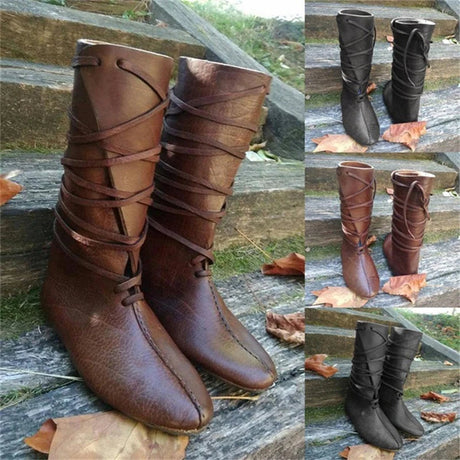
Children in Norse cultures would leave their boots by the chimney, filled with hay and carrots for Sleipnir. In return, Odin would leave small gifts or sweets. Sound familiar? While the modern Santa is much friendlier, the "All-Father" of Yule was the original midnight visitor who rewarded the brave and ignored the cowardly.
The Darkness of Yule: The Yule Cat and the Draugr
Not everything about Yule was cozy and bright. Because it was a time when the veil was thin, the Vikings believed that ghosts (draugr) and monsters were particularly active.
The Yule Cat (Jólakötturinn)
One of the most terrifying legends comes from Iceland. The Yule Cat is a monstrous, house-sized feline that prowls the snowy countryside during Yule. It doesn't look for mice; it looks for people. Specifically, it eats anyone who did not receive a new piece of clothing before Yule Eve.
This might sound like a weird way to encourage the textile industry, but it had a social purpose. Everyone in a Viking community had to work together to process wool before winter. If you didn't have new clothes, it meant you were lazy or that the community hadn't supported you. The Yule Cat was a manifestation of the fear of social failure and the harsh reality that "laziness equals death" in a cold climate.
The Night of the Spirits
I once spent a winter in a remote part of Norway, and when the sun goes down at 2:00 PM, you start to understand why the Vikings believed in the Yule spirits. The silence is so absolute that any crack of a branch sounds like a footstep. During Yule, the Vikings would often leave an empty seat at the table and food out for the spirits of their ancestors. They weren't just celebrating with the living; they were celebrating with the "Mound-Dwellers."
-
You may also want to check out this product: Rooted Tree of Life Ring
The Great Shift: From Yule to Christmas
The transition from Yule to Christmas wasn't an overnight event. It was a centuries-long process of "syncretism"—the blending of two different cultures.
Christianization by Celebration
Missionaries realized that they couldn't stop the Vikings from feasting in December. It was too deeply ingrained in their survival strategy. Instead, they re-branded the feast. The "Return of the Sun" became the "Birth of the Son." The Yule Log became a symbol of the light of Christ.
Expert Quote: "The church did not abolish the pagan festivals; it simply gave them new names and new reasons. Yule was too powerful to kill, so it was baptized." — Dr. Emily Midwinter, Historian of Norse Religion
The Persistence of the Name
Interestingly, in Scandinavia today, the word for Christmas is still Jul. They never adopted the word "Christmas." In the United States, we still use the term "Yuletide" in our carols. We are speaking Old Norse without even realizing it. The language of Yule is the language of our winter joy.
Why Yule Resonates in the United States Today
In a modern America that feels increasingly disconnected from the seasons, the "Old Ways" of Yule are making a massive comeback. People are looking for something more substantial than plastic decorations.

Why Yule Resonates in the United States Today
The Minimalism of the North
The "Hygge" trend (the Danish concept of coziness) is essentially a modernized version of the Yule spirit. It’s about creating a sanctuary against the storm. Americans are rediscovering that the best part of the holidays isn't the shopping—it’s the fire, the shared meal, and the defiance of the dark.
Addressing the Counterarguments: Was it All Blood and Sacrifice?
Some critics argue that we shouldn't romanticize Yule because it involved animal sacrifice (Blót). It’s true that the Vikings lived in a bloody world. However, we have to look at the intent. Sacrifice wasn't about cruelty; it was about the "circle of life." You gave something valuable to the gods so that the community could survive. In a world where food was scarce, a sacrifice was the ultimate act of faith. It was the original "paying it forward."
How to Bring the Yule Spirit Into Your Home
You don't have to be a Viking or a Neo-pagan to appreciate the wisdom of Yule. Here are a few simple ways to honor the ancient festival of life this December:
- Light a Real Fire: If you have a fireplace, treat your firewood as a Yule Log. If not, light a large candle to represent the "Return of the Light."
- Feast with Intention: When you sit down for your holiday meal, take a moment to "drink Yule." Toast to your ancestors and to the friends who stood by you this year.
- Bring in the Green: Use real cedar or pine branches. The scent alone is enough to trigger that ancient, deep-winter nostalgia.
- Make a Yule Vow: Instead of a "New Year's Resolution" that you'll break by January 5th, make a Yule Vow. State it out loud. Make it something that honors your community or your character.
Conclusion: The Light That Never Goes Out
Yule is a story of resilience—the human spirit behind the tales of valhalla. The Vikings didn't just endure the dark; they earned the sun's return through community and fire.
Beneath the modern holiday rush, that ancient Yule fire still burns. It reminds us that winter is a season to be lived, not just survived. Drink your ale, hug your kin, and keep the fire burning. The wheel is turning, and the light is coming back.
"Tales of Valhalla is an expert chronicler of the Viking Age, blending scholarly research with master storytelling to revive the Old North. From the hidden depths of Norse mythology to the tactical grit of the sagas, they provide authentic, rich insights into the warriors, leaders, and legends that forged history." - Specialist in Norse mythology and Viking history