When we think of dragons in the modern United States, our minds often drift to the soaring, majestic beasts of high fantasy or the fire breathers of blockbuster cinema. However, the Norse legend of Fafnir offers something much darker and more intimate. It is not just a story of a monster, but a psychological study of how the human—or in this case, dwarven—soul can be utterly consumed by greed. Fafnir represents the ultimate cautionary tale: the moment where internal avarice becomes so heavy that it physically manifests as a scaled, venom-breathing nightmare.
The story of Fafnir is a cornerstone of the Volsunga Saga and a primary inspiration for legendary works like J.R.R. Tolkien’s The Hobbit. Yet, to truly understand Fafnir, we have to go back to a time before the scales and the fire. We have to look at a family destroyed by a golden curse and a brotherly bond severed by the weight of a magical ring.
The Origin Story: A Family Bound by Blood and Gold
Long before he was a dragon, Fafnir was the son of Hreidmar, a powerful dwarf king. He had two brothers, Regin and Otter. Their lives were relatively peaceful until the day the gods Odin, Hoenir, and Loki crossed their path. While traveling, Loki spotted an otter near a waterfall and killed it with a stone. Unbeknownst to the gods, this otter was actually Hreidmar’s son, Otter, who had a penchant for fishing in animal form.
When the gods arrived at Hreidmar’s hall boasting of their kill, the dwarf king was overcome with grief and rage. He imprisoned the gods and demanded a "weregild"—a blood price—to pay for his son’s life. He insisted that the skin of the otter be stuffed and covered completely with gold. To satisfy this debt, Loki traveled to the home of the dwarf Andvari and stole his massive hoard, including a specific magical ring capable of creating more gold.

Fafnir: The Dragon-Dwarf and the Fatal Curse of Avarice
The Birth of the Curse
Andvari, devastated by the loss of his livelihood, placed a terminal curse on the gold. He proclaimed that the treasure would bring death and destruction to whoever possessed it. When Hreidmar received the gold, the curse took root immediately. Fafnir and Regin approached their father, asking for their share of the compensation for their brother's death. Hreidmar, already infected by the "dragon-sickness" of hoarding, refused to give them a single coin.
Driven by a sudden, violent impulse of avarice, Fafnir murdered his own father in his sleep. He seized the entire hoard and fled to the desolate Gnita-heid (Gnita-heath). But he didn't just want to protect the gold; he wanted to become part of it.
The Transformation: How Greed Shapes the Soul
What makes Fafnir unique in the annals of mythology is that his transformation was not a curse placed upon him by an external wizard or a disgruntled god. It was a physical reaction to his own internal state. As Fafnir sat upon his pile of gold, his mind became twisted. He became paranoid, solitary, and filled with a burning hatred for anything that might threaten his treasure.
Over time, his skin thickened into impenetrable scales. His limbs elongated and grew claws. His breath, once used for laughter and song in his father's halls, became a toxic cloud of poison. This metamorphosis serves as a vivid metaphor. In Norse culture, a leader's primary duty was to be a "ring-giver"—someone who shared wealth to strengthen the community. By hoarding the gold, Fafnir effectively removed himself from the "human" social contract, turning into a literal monster that lived only to consume and protect.
Comparing Dragon Archetypes
To understand the significance of Fafnir, we can look at how different cultures perceive the "greedy dragon" trope.
| Culture | Dragon | Transformation Source | Primary Weapon |
| Norse | Fafnir | Personal Greed / Curse | Toxic Breath & Scales |
| Greek | Ladon | Born a Monster | Multiple Heads |
| English | Beowulf's Dragon | Ancient Guardian | Fire & Teeth |
| Modern | Smaug | Inherited Hoard | Fire & Intelligence |
The Fafnir myth is distinct because it emphasizes the transition from a person with agency to a beast of instinct.
The Shadow of Regin and the Sword Gram
While Fafnir rotted on his heath, his brother Regin was busy plotting. Regin was a master smith, but he lacked the physical strength to kill a dragon. He eventually took a young hero named Sigurd (or Siegfried) under his wing. Regin’s plan was simple: use Sigurd to kill Fafnir, then kill Sigurd and take the gold for himself.
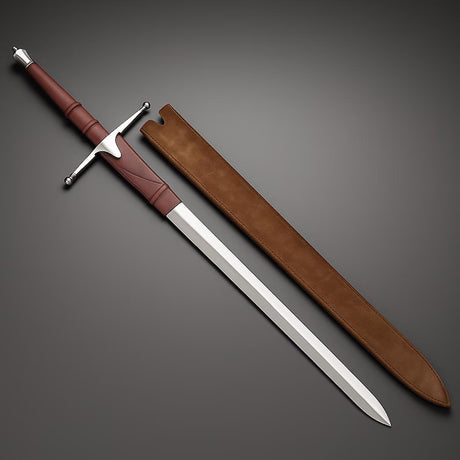
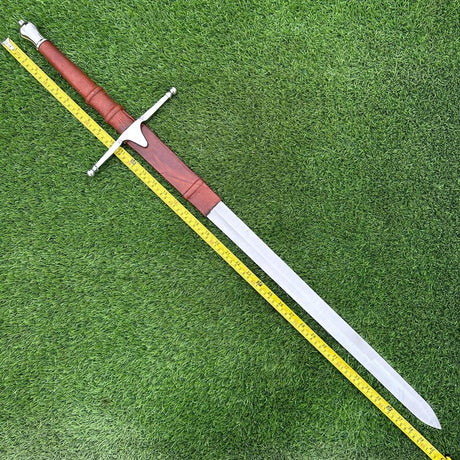
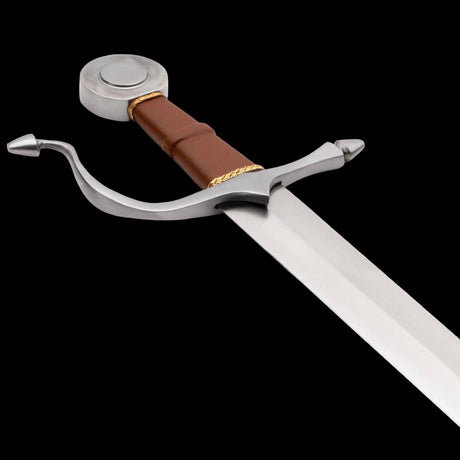
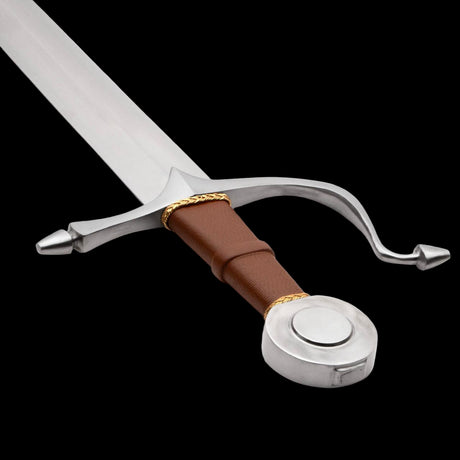
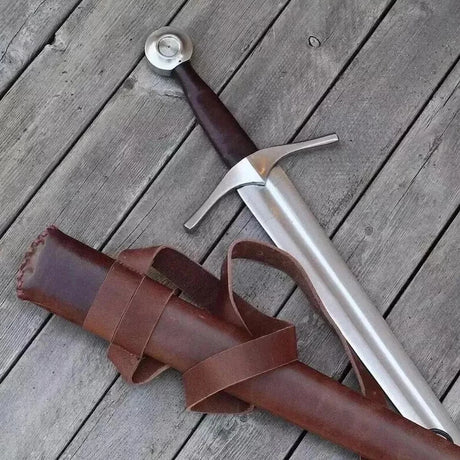
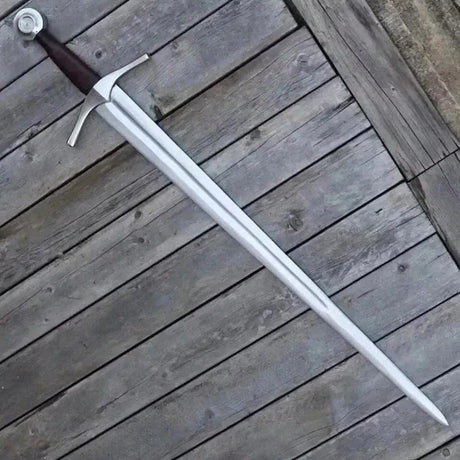
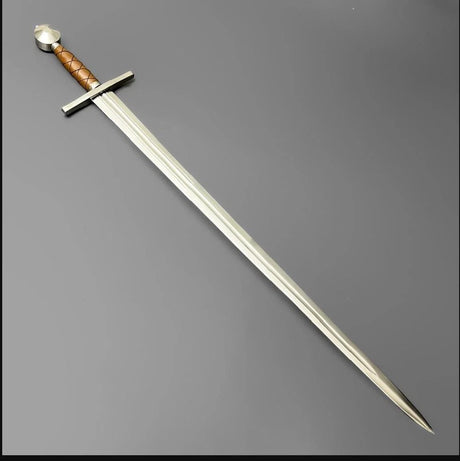
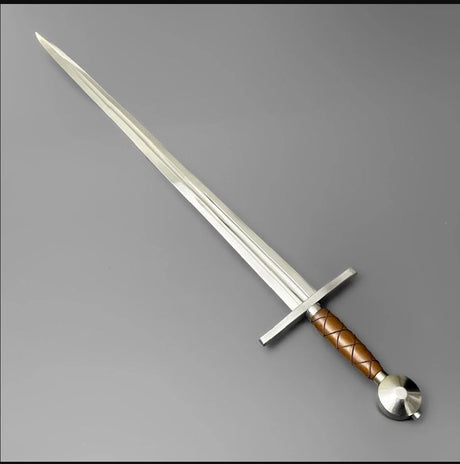
Regin forged several swords for Sigurd, but the young hero broke them all in testing. Finally, Sigurd brought the shattered pieces of his father’s sword, Gram. Regin reforged the blade, creating a weapon so sharp it could slice a piece of wool floating in a stream and so strong it could cleave an anvil in two. This sword was the only thing in the world capable of piercing the hide of Fafnir.
The Death of Fafnir: A Hero’s Strategy
Sigurd did not charge at Fafnir head-on. That would have been suicide, as the dragon’s poison breath would have melted his lungs before he could strike. Instead, Sigurd used his wit. Following the advice of an old man (who was actually Odin in disguise), Sigurd dug a series of trenches in the path Fafnir took to reach the water.
As Fafnir slithered over the trenches, his soft underbelly was exposed. Sigurd, hiding in the pit, thrust the sword Gram upward, piercing the dragon's heart. As Fafnir lay dying, he didn't just roar in pain; he spoke. This is a crucial element of the myth. Fafnir regained a portion of his dwarven wisdom in his final moments. He warned Sigurd about the curse of the gold and specifically warned him that Regin would betray him.

The Death of Fafnir: A Hero’s Strategy
The Heart of the Dragon
After Fafnir died, Regin asked Sigurd to roast the dragon's heart for him to eat. While checking if the meat was done, Sigurd burnt his thumb and instinctively sucked on it. By tasting the blood of Fafnir, Sigurd gained the ability to understand the language of birds. These birds warned him that Regin was preparing to strike. Sigurd, now fully aware of the treachery, killed Regin and took the treasure for himself, unaware that the curse of Fafnir would soon follow him too.
- See more: The Ouroboros
Avarice in the Modern World: Lessons from Fafnir
Why do we still talk about Fafnir today? For the audience in the United States, the concept of "the grind" and the accumulation of wealth is a central cultural pillar. The story of Fafnir serves as a mirror. It asks us: at what point does the pursuit of "more" turn us into something we no longer recognize?
Psychologists often refer to the "hedonic treadmill," where no amount of success or money ever feels like enough. This is essentially the "dragon-sickness" of Fafnir. When we prioritize the hoard over our relationships—our fathers, our brothers, our communities—we risk the same isolation that the dragon faced on the heath.
Expert Insights on the Myth
Historical scholars often point out that the Fafnir story was a way for ancient societies to regulate behavior. By making the hoarder a literal monster, they reinforced the idea that wealth must flow to be healthy. Dr. Jackson Crawford, a renowned Old Norse specialist, often notes that the "poison" of the dragon represents the toxic nature of stolen or unearned wealth.
Counterarguments: Was Fafnir Just a Victim?
Some modern reinterpretations of the myth suggest that Fafnir was a victim of the gods' carelessness. Had Loki not killed Otter and stolen the gold, Fafnir might have lived out his days as a peaceful dwarf prince. In this view, the gods represent the chaotic forces of the world that force us into impossible positions.
However, the Norse sagas are firm on the concept of "fate" (wyrd) and personal responsibility. While the gods provided the gold, it was Fafnir who chose to kill his father. It was Fafnir who chose to flee with the hoard rather than share it. The dragon was not a curse forced upon an innocent; it was the inevitable result of a series of dark choices.
The Legacy of the Hoard
The treasure of Fafnir, known as the Rhinegold in some traditions, continued to cause misery for generations. It led to the downfall of the Burgundians and the death of Sigurd’s wife, Brynhild. The message is clear: once the cycle of avarice begins, it is incredibly difficult to break.
In our current era, we see the "hoard" taking different forms—data, power, or influence. The scales of Fafnir might look like digital firewalls or legal loopholes today, but the underlying rot remains the same. The story encourages us to be like the "ring-givers" of old, finding value in what we can provide for others rather than what we can keep for ourselves.
Conclusion: Finding the Path Through the Heath
The legend of Fafnir remains a powerful narrative because it deals with the most human of flaws. It reminds us that our actions and our desires have the power to shape our very being. We are what we love, and if we love only gold, we may find ourselves alone in a cold pit, breathing poison and waiting for a hero to find our weakness.
By studying these ancient myths, we gain a map to navigate our own "Gnita-heaths." We learn to recognize the early signs of dragon-sickness and the importance of keeping our swords sharp and our hearts open. The story of the dragon-dwarf is more than just a campfire tale; it is a vital part of the enduring tales of valhalla.