When most people in the United States think of the Vikings, they conjure images of raiding parties landing on the shores of England or sacking monasteries in France. These Rus Vikings—primarily originating from Sweden—tell a vastly different, yet equally dramatic, story. Their saga is not one of fleeting coastal raids, but of deep penetration into the European heartland, founding major urban centers, pioneering vast trade networks, and ultimately, becoming the most feared and trusted military force in the most magnificent city of the age: Constantinople.
The history of the Rus Vikings is a complex tapestry woven from conquest, commerce, and cultural assimilation. They didn't just visit Eastern Europe; they laid the political, economic, and geographic foundations for what would become the largest medieval state in Europe—Kievan Rus'. Their story is the missing link between the barbarian North and the Roman South, a powerful testament to the multifaceted nature of the Viking Age.
This exhaustive 2,500-word analysis will chart the epic journey of the Rus Vikings from the cold shores of the Baltic to the gilded halls of Byzantium, examining their unique riverine economy, their political achievements, their military might, and the enduring cultural legacy they left behind.
The Watery Highway: The Birth of the Eastern Trade
Unlike their Danish and Norwegian counterparts who dominated the Atlantic, the Swedish Vikings looked East. They followed the vast, winding rivers that promised wealth through trade, rather than relying solely on plunder. This pursuit of commerce fundamentally defined the identity of the Rus Vikings.
 The Watery Highway: The Birth of the Eastern Trade
The Great River Systems
The Rus Vikings were masters of the riverine landscape. Their success hinged on two major river routes:
- The Volga Trade Route: This route connected the Baltic Sea (via Lake Ladoga) to the Volga River, leading directly to the Caspian Sea. This granted the Rus Vikings access to the rich Islamic Caliphates, where they traded furs, honey, and slaves for silver dirhams—the primary currency of the Eastern Vikings.
- The Dnieper Trade Route (The Route from the Varangians to the Greeks): This legendary path connected the Baltic to the Black Sea, culminating at the ultimate prize: Constantinople (Miklagard, the Great City). This route was fraught with danger, particularly the numerous impassable rapids on the Dnieper River, where the Rus Vikings had to portage their Knorrs (their sturdy, purpose-built trade vessels), all while defending against hostile local tribes.
Expert Insight: Historian Thomas S. Noonan described the silver flow through the Volga as the "lifeblood of the early Rus economy." Archaeological evidence, particularly the enormous hoards of Islamic dirhams found in Scandinavia, overwhelmingly confirms that the Eastern focus of the Rus Vikings was fundamentally economic.
The Foundation of Kievan Rus'
The Rus Vikings didn't merely travel through the East; they settled and organized it. The Primary Chronicle, the foundational history of the early East Slavs, credits the founding of the ruling dynasty to the Rus Vikings.
- Rurik and the Legend (c. 862 AD): The Chronicle states that Slavic tribes invited the Varangians (the Scandinavian term for the Rus) to come and rule over them. Rurik, a Norse chieftain, supposedly established himself at Novgorod, laying the groundwork for the Rurikid Dynasty.
- Oleg and Kiev: Rurik's successor, Oleg, moved south, capturing Kiev around 882 AD. Kiev, strategically positioned on the Dnieper, became the epicenter of the new political entity known as Kievan Rus'. This Viking elite successfully imposed political structure and defense over a vast, diverse Slavic and Finno-Ugric population.
The Golden Target: Confronting Constantinople
The ultimate goal of the Rus Vikings' river journeys was Byzantium, the wealthiest, most powerful empire in Europe. Their relationship with the Byzantines was a dynamic, volatile mix of raid, treaty, and eventual assimilation.
The Raids on the World's Capital
The sight of longships—the same vessels that terrified Western Europe—appearing in the Bosporus was a recurring nightmare for the Byzantine Emperors.
- 860 AD and Beyond: The first major raid on Constantinople by the Rus Vikings was recorded in 860 AD. These assaults were not just for plunder; they were forceful attempts to leverage better trade terms from the Emperor. The Byzantines called them the 'Rhōs'—a Greek transliteration of the term Rus.
- The Power of Greek Fire: The Byzantine Navy's secret weapon, Greek Fire, was often the only thing that saved the capital from the fierce, tenacious attacks of the Rus Vikings.
Peace and Partnership: The Treaties
After each brutal, failed siege, the Rus Vikings would invariably negotiate treaties with the Emperors. These documents, detailed in the Primary Chronicle and Byzantine texts, reveal the true intentions of the Rus: they craved trade access more than conquest.
| Year (Approx.) | Rus Leader | Outcome of Treaty | Significance |
| 911 AD | Oleg of Kiev | Rus merchants granted favorable trading conditions in Constantinople (free lodging, tax-free trade). | Established Rus as legitimate, long-term trade partners, not just raiders. |
| 945 AD | Igor of Kiev | Limited the number of Rus ships, required oaths on pagan gods and Christian relics. | Demonstrated Byzantine attempts to regulate and control the influx of Rus Vikings. |
| 971 AD | Sviatoslav I | Peace agreement after Sviatoslav's failed Balkan campaign. Required the Rus to swear never to attack Byzantine lands again. | Markedly increased the recruitment of Rus Vikings into the imperial army. |
From Raider to Bodyguard: The Varangian Connection
The most profound cultural and military legacy of the Rus Vikings in Byzantium was their transformation into the elite imperial bodyguard: the Varangian Guard.
The Transfer of Loyalty
The Byzantines had a strategic method of dealing with powerful foreign enemies: harness their strength. Recognizing the unparalleled ferocity and reliability of the Norse warriors, the Emperor offered immense gold and prestige for their service. The Varangian Guard was formally constituted after the baptism of Vladimir the Great of Kievan Rus' in 988 AD, who sent 6,000 Rus Vikings to Emperor Basil II as a military and political guarantee.
 From Raider to Bodyguard: The Varangian Connection
- The Guard’s Role: These Norse warriors guarded the Emperor and the treasury, acting as the ultimate, impartial fighting force. They had no local loyalties, ensuring their complete dedication to the Emperor who paid them in precious gold nomismata.
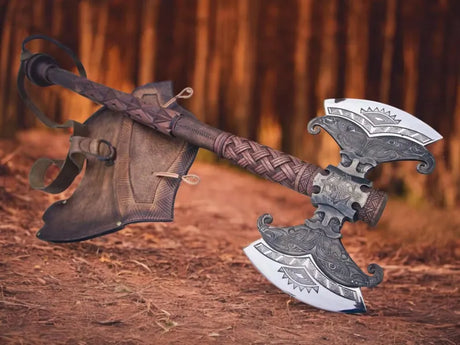
- Axe-Wielding Elite: The Rus Vikings brought with them the fearsome Dane Axe, a weapon that became the signature of the Varangian Guard, marking them as shock troops unrivaled in close quarters.
Analogy: The Rus Vikings were like a specialized, non-union security firm hired to protect the assets of the CEO. They didn't care about internal company politics; they cared only about the contract and the unparalleled compensation.
Cultural Synthesis and Religious Conversion
The enduring interaction with Byzantium had a colossal impact on the Rus Vikings and Kievan Rus'.
- Christianization: The most significant event was the conversion of Prince Vladimir the Great around 988 AD. By choosing Orthodox Christianity, he inextricably linked the culture and future of Kievan Rus' to the Byzantine world. This shift was not just spiritual; it was political, facilitating deep diplomatic and economic ties.
- Byzantine Influence: Byzantine architecture, art (icons), written script (Cyrillic), and legal codes were all imported into Rus', dramatically civilizing and structuring the young state. The Rus Vikings, initially pagan raiders, became the patrons and protectors of a sophisticated Orthodox Christian culture.
The Wealth of the East: Archaeological Evidence
The story of the Rus Vikings is one that can be told in physical artifacts, particularly the vast quantities of Islamic silver found in their homelands. This archaeological data powerfully supports the narrative of trade being their primary driver.
The Silver Hoards of Sweden
Archaeological discoveries, especially on the island of Gotland in Sweden, reveal the sheer scale of the Eastern Viking trade.
- Estimated Silver: Tens of thousands of Islamic silver coins (dirhams) have been unearthed in Scandinavia, vastly outnumbering the finds of Western European coinage. This demonstrates the superior wealth and volume flowing through the Volga and Dnieper routes, directly benefiting the Rus Vikings.
- Trade Commodities: While silver was the currency, the trade was built on: Furs (sable, ermine, fox), Honey (essential for sweetening and mead), and Slaves (primarily captured Slavs and Finno-Ugrics).
This economic power established the Rus Vikings as the dominant political elite across Eastern Europe, allowing them to consolidate power and found cities like Novgorod and Kiev.
Challenging the Narrative: The Nuance of Identity
The concept of the Rus Vikings is not without its historical debate, particularly concerning the exact nature of the relationship between the Norse elite and the Slavic majority.
The "Normanist Theory" Counter-Argument
The so-called "Normanist Theory" posits that the Kievan state was purely founded by the Norse (the Rus Vikings). Critics argue this overemphasizes the Scandinavian role and minimizes the development of the native East Slavic social structures.
- Synthesis, Not Conquest: The more balanced, modern scholarly view argues for a cultural synthesis. The Rus Vikings provided the initial political and military structure, the governing dynasty, and the trade organization. Over generations, however, these Norse elites rapidly assimilated. They adopted Slavic names (e.g., Vladimir instead of Valdemar), spoke Slavic, and converted to the Eastern Orthodox faith.
- The Name: The very name Rus—which became the name for the land and people—likely derived from the Old Norse word rōþs (related to rowing), initially referring to the Swedish rowers and traders, before becoming a geographic and ethnic designation for the region. This linguistic legacy shows the foundational role of the Rus Vikings.
The Military Legacy Beyond the Guard
The influence of the Rus Vikings extended beyond the imperial bodyguard. Kievan Rus' itself became a major power, capable of fielding formidable armies. The most feared Rus prince, Sviatoslav I (d. 972), expanded the territory dramatically, campaigning deep into the Balkans and even threatening the Byzantine Empire until his final defeat. His reign demonstrates the military application of the Viking ethos blended with a rapidly expanding Slavic state structure.
Legacy: The Enduring Mark of the Rus Vikings
By the High Middle Ages, the Rus Vikings had merged with Slavic populations to form Kievan Rus'. Their story transitioned from the nomadic river trade and tales of valhalla to the creation of an Orthodox Christian state.
This journey bridged the gap between Far East riches and Europe, ultimately defining the cultural split between the Orthodox East and the Catholic West. The Rus legacy isn't one of destruction, but of entrepreneurship and adaptability—a people who sought gold and inadvertently founded a civilization that altered history.
"Tales of Valhalla is an expert chronicler of the Viking Age, blending scholarly research with master storytelling to revive the Old North. From the hidden depths of Norse mythology to the tactical grit of the sagas, they provide authentic, rich insights into the warriors, leaders, and legends that forged history." - Specialist in Norse mythology and Viking history