Imagine a bitter winter night in a remote forest. The wind howls with a frequency that sounds almost like a human scream. Suddenly, above the whistling pines, you hear it: the baying of spectral hounds and the thunderous beat of hooves against the clouds. You’ve been told the stories since childhood, but you never truly believed them until now. You drop to the ground, pressing your face into the frozen dirt, because to look up is to be lost forever. You are witnessing the Wild Hunt.
For centuries, the myth of the Wild Hunt has served as one of Europe’s most chilling and persistent legends. It isn’t just a ghost story; it is a primal manifestation of nature’s fury and the thin veil between our world and the next. Whether led by a Norse god, a cursed king, or a biblical sinner, the Wild Hunt represents a terrifying procession of soul-collecting spirits that gallop across the winter sky.
In this deep-dive exploration, we will uncover the ancient roots of the Wild Hunt, trace its journey through different cultures, and examine how it has been reimagined for modern audiences in everything from The Witcher to Marvel comics. As we peel back the layers of this celestial stampede, we’ll see why the Wild Hunt continues to fascinate and frighten us even in an age of science and satellites.
The Roots of the Wild Hunt: Where Folklore Meets Fear
The term "Wild Hunt" (or Wilde Jagd) was famously popularized by Jacob Grimm in his 1835 work Deutsche Mythologie. However, the phenomenon itself predates his research by millennia. At its core, the Wild Hunt is a folk myth involving a phantasmal group of huntsmen in equestrian pursuit across the sky or along the ground.
 The Roots of the Wild Hunt: Where Folklore Meets Fear
Odin and the Proto-Germanic Origins
The earliest and most prominent version of the Wild Hunt is inextricably linked to the Norse god Odin (or Woden). In this context, the hunt was known as Oskoreia or "Asgard’s Ride." Odin, the god of war, wisdom, and the dead, would lead a host of fallen warriors, spirits, and monstrous hounds through the sky during the Twelve Nights of Christmas (Yule).
For the ancient Germanic tribes, the Wild Hunt was a seasonal explanation for the violent winter storms. The high winds were the breath of Odin’s eight-legged horse, Sleipnir, and the rolling thunder was the sound of his spectral army. Seeing the Wild Hunt was a dire omen—it predicted war, pestilence, or at the very least, the death of whoever was unfortunate enough to witness it.
The Evolution of the Leader
As Christianity spread across Europe, the figure leading the Wild Hunt began to change. The Church sought to demonize pagan deities, so Odin was often replaced by "safer" or more villainous figures:
- King Herla: A legendary Briton king who spent centuries at a dwarf's wedding, only to return and find his kingdom unrecognizable. He was cursed to lead the Wild Hunt until the end of time.
- Cain or Nimrod: Biblical figures associated with sin or the hunt were frequently cast as the leaders in medieval Christian versions.
- The Devil: In many later European tales, the Wild Hunt became a literal "Hell Hunt," with Satan himself leading demons to claim the souls of the unbaptized.
A Map of the Hunt: Regional Variations Across Europe
The Wild Hunt is not a monolith; it adapted to the geography and anxieties of the people who whispered its name. Each region added its own unique flavor to the spectral procession, creating a diverse tapestry of terror.
The Germanic Wilde Jagd
In Germany, the Wild Hunt was often led by "Hans von Hackelberg," a huntsman who preferred hunting to heaven. On his deathbed, he supposedly asked God to let him keep hunting until the Day of Judgment. His wish was granted, and he remains the quintessential leader of the German Wild Hunt, accompanied by night-ravens and fire-breathing dogs.
The British Herne the Hunter and Gabriel Hounds
In England, the legend took a more localized turn. In Windsor Forest, the Wild Hunt is often associated with Herne the Hunter, a ghost wearing stag antlers. In other parts of Britain, the myth focused on the "Gabriel Hounds"—spectral dogs whose yelping in the night sky (actually the sound of migrating geese) was said to herald the Wild Hunt.
The Scandinavian Oskoreia
In Norway and Sweden, the Wild Hunt was often viewed as a "terrifying ride" of the restless dead. These weren't just warriors; they were the "Guro Rysser," a group of spirits that would break into homes during Yule to steal food, drink, and occasionally, human souls.
| Region | Primary Leader | Accompanying Entities | Seasonal Peak |
| Scandinavia | Odin / Lusse | The Einherjar (Fallen) | Yule / Midwinter |
| Germany | Woden / Hackelberg | Spectral Hounds / Ravens | Winter Solstice |
| British Isles | Herla / Herne / Arthur | Gabriel Hounds / Cursed Knights | Samhain / Christmas |
| France | Hellequin | Cursed Souls / Demons | Carnival / Lent |
The Anatomy of a Spectacle: Hounds, Horses, and Heralds
What does the Wild Hunt actually look like? Descriptions vary, but certain motifs remain constant across centuries and borders. These elements combine to create a sensory experience that is as evocative as it is terrifying.
The Spectral Hounds
No version of the Wild Hunt is complete without the dogs. These aren't your typical golden retrievers; they are often described as having glowing red eyes, black fur as dark as the void, and voices that sound like the tolling of a funeral bell. In Celtic myth, these are the Cŵn Annwn (Hounds of the Underworld), whose white coats and red ears signal their supernatural origin.
The Thundering Hooves
The horses of the Wild Hunt are frequently described as having only three legs, or as skeletal beasts with fire burning in their nostrils. The sound of these hooves is the rhythmic heartbeat of the myth. It’s a sound that signifies unstoppable momentum—the Wild Hunt does not swerve, and it does not stop for anything in its path.
The Ominous Silence and the Shriek
One of the most chilling aspects of the Wild Hunt is the auditory contrast. Some witnesses described a deafening roar of wind and screams, while others reported a "deadly silence" that fell over the forest just before the Wild Hunt appeared. This psychological tension is a hallmark of the legend; the fear of what you might hear is often worse than the sound itself.
Modern Manifestations: From Ancient Skies to Digital Screens
In the 21st century, the Wild Hunt has undergone a massive resurgence. It has shifted from a literal folk belief into a powerful narrative tool in literature, television, and video games. This modern adaptation proves that the core themes of the Wild Hunt—uncontrollable power and the inevitability of death—still resonate with us.
 Modern Manifestations: From Ancient Skies to Digital Screens
The Witcher: The Wraiths of Mörhogg
Perhaps the most famous modern iteration of the Wild Hunt is found in Andrzej Sapkowski’s The Witcher book series and the subsequent blockbuster video games by CD Projekt Red.
In this universe, the Wild Hunt (known as the Wraiths of Mörhogg) are reimagined not as ghosts, but as an elite cavalry of Aen Elle elves from another dimension. They appear as skeletal knights on undead horses, traveling through space and time to abduct humans for labor or to find the "Elder Blood." This adaptation masterfully blends the classic aesthetic of the Wild Hunt with high-fantasy sci-fi elements.
Teen Wolf and Urban Fantasy
The popular TV show Teen Wolf introduced the Wild Hunt (the Ghost Riders) as a central antagonist. In this version, the Wild Hunt doesn't just kill people—it erases them from existence. If you are taken by the Wild Hunt, everyone who ever knew you forgets you ever lived. This modern twist plays on contemporary fears of identity loss and being forgotten, showing how the Wild Hunt can evolve to reflect modern anxieties.
Marvel’s Mythic Influences
Even the Marvel Cinematic Universe and comics have dipped their toes into the Wild Hunt. In various Thor story arcs, the Wild Hunt is depicted as a cosmic force often tied to Malekith the Accursed or the darker side of Asgardian history. Here, the Wild Hunt is a weapon of mass destruction, a literal storm of souls used to ravage entire realms.
-
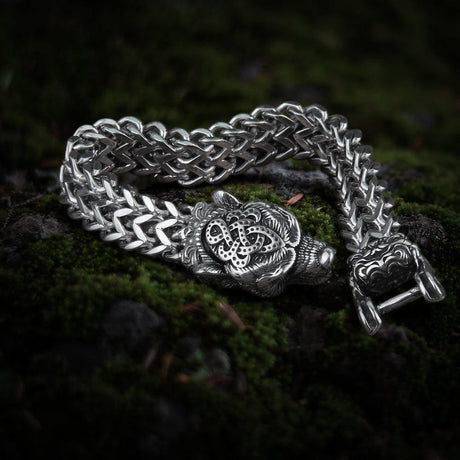
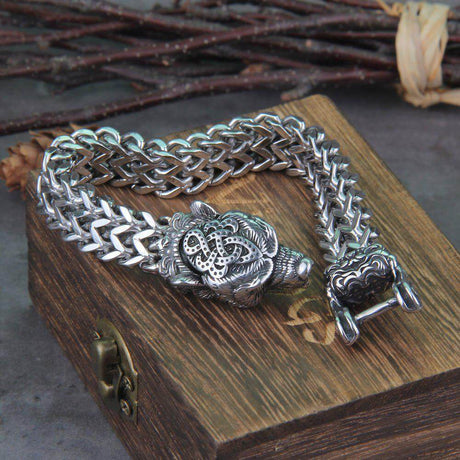
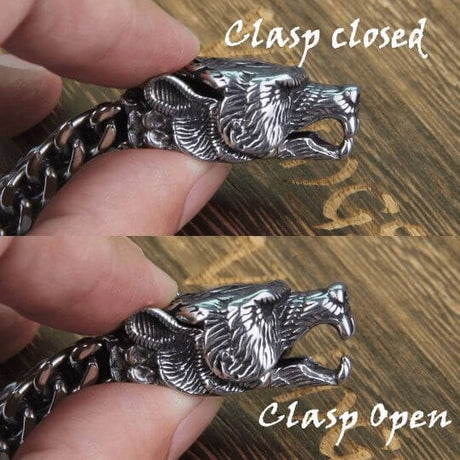
You may also want to check out this product: Mythical Retro Bracelet
Analyzing the Psychology: Why We Still Look at the Sky
Why does the Wild Hunt persist? Why do we keep telling stories about a group of sky-traveling ghosts in an era of light pollution and air travel?
The Sublime Power of Nature
Psychologically, the Wild Hunt is a personification of the "Sublime"—that feeling of awe and terror we experience when faced with something much larger than ourselves. A winter storm is dangerous, but a Wild Hunt is intentionally dangerous. It gives a face and a name to the chaotic forces of the natural world.
The Fear of Being Swept Away
The Wild Hunt also taps into a universal human fear: the loss of agency. In almost every legend, a person caught in the path of the Wild Hunt has two choices: hide or be swept up into the procession. To join the Wild Hunt is to lose your humanity and become part of a faceless, eternal machine of war. In a modern United States culture that prizes individualism, the idea of being forcibly absorbed into a mindless collective is particularly terrifying.
Statistics of the Supernatural: Surveying Mythic Belief
While we can't measure the Wild Hunt with a ruler, we can look at how folk beliefs persist. A study on "Modern Folklore Persistence" in Western cultures suggests that even in secular societies, "liminal" myths (those dealing with the transition between states) are the most likely to survive.
| Factor | Description | Persistence Rating (1-10) |
| Seasonal Connection | Tied to winter/darkness. | 9 |
| Visual Archetypes | Knights, hounds, horses. | 10 |
| Moral Ambiguity | Neither purely good nor evil. | 8 |
| Adaptability | Can be sci-fi, horror, or fantasy. | 9 |
Counter-Arguments: Is the Wild Hunt Just a Weather Pattern?
A common skeptical perspective, often championed by early 20th-century rationalists, suggests that the Wild Hunt is nothing more than "misinterpreted meteorology."
- The Geese Theory: The "baying hounds" are often attributed to the "honking" of barnacle geese migrating at night.
- The Wind Theory: High-altitude winds moving through mountain passes can create low-frequency sounds that mimic moans or whistling.
While these scientific explanations are likely true on a physical level, they fail to address the cultural impact of the myth. To the person living in a thatched-roof hut in 900 AD, the "why" didn't matter as much as the "what." The Wild Hunt wasn't just a sound; it was a story that helped people make sense of a world that felt hostile and unpredictable. Dismissing it as "just wind" ignores the way humans use stories to process environmental trauma.
The Social Function of the Wild Hunt
Historically, the Wild Hunt also served a practical social purpose. It acted as a "supernatural curfew." During the dangerous winter months, when wolves were hungry and the cold was lethal, the myth of the Wild Hunt kept people indoors.
If you told your children that the Wild Hunt was out looking for souls, they were much less likely to wander off into the woods and freeze to death. In this way, the Wild Hunt was a guardian myth, using fear to ensure the survival of the community.
Conclusion: Will the Wild Hunt Ever End?
The Wild Hunt has transitioned from an ancient omen into a modern symbol of the uncontrollable. A recurring shadow within the tales of valhalla, it serves as a chilling reminder of the forces beyond our command.
When the wind howls on a cold night, remember the old warnings: don't look up, and don't call out. The ride never ends, and the Hunt is always looking for new members. Its legacy proves that as long as there are storms in the sky, we will continue to tell stories of the things that haunt us in the dark.
"Tales of Valhalla is an expert chronicler of the Viking Age, blending scholarly research with master storytelling to revive the Old North. From the hidden depths of Norse mythology to the tactical grit of the sagas, they provide authentic, rich insights into the warriors, leaders, and legends that forged history." - Specialist in Norse mythology and Viking history